As researchers create human-inspired eyes that greatly enhance how machines see and respond to the world, a new wave of innovation is transforming the field of robotics. This innovation combines neuromorphic engineering, biomimicry, and bionic eye research to create robotic vision systems that function more like living things than conventional machinery. The technology is already attracting interest in California’s rapidly expanding robotics industry, where businesses are investigating sophisticated robot eye systems for manufacturing, healthcare, and autonomous operation robots.
Microsaccades That Look Like Humans Improve Robot Perception
The incorporation of microsaccade-inspired event cameras, a device that simulates the tiny, quick eye movements people make to improve visual focus, is one of the most impressive developments. Robots’ ability to recognize motion, navigate dynamic settings, and conduct real-time analysis is revolutionized by these cameras.
By capturing only changes in light, event-based vision produces a quicker and more effective type of perception than traditional cameras, which catch entire images frame by frame. This makes it possible for humanoid robots to respond to obstacles, moving objects, and uncertain environments more quickly. According to researchers, this change marks a significant advancement in robot perception and vision, paving the way for devices that can actually “see” rather than just passively capture images.
Machine Intelligence is Improved via Bionic Eye Engineering
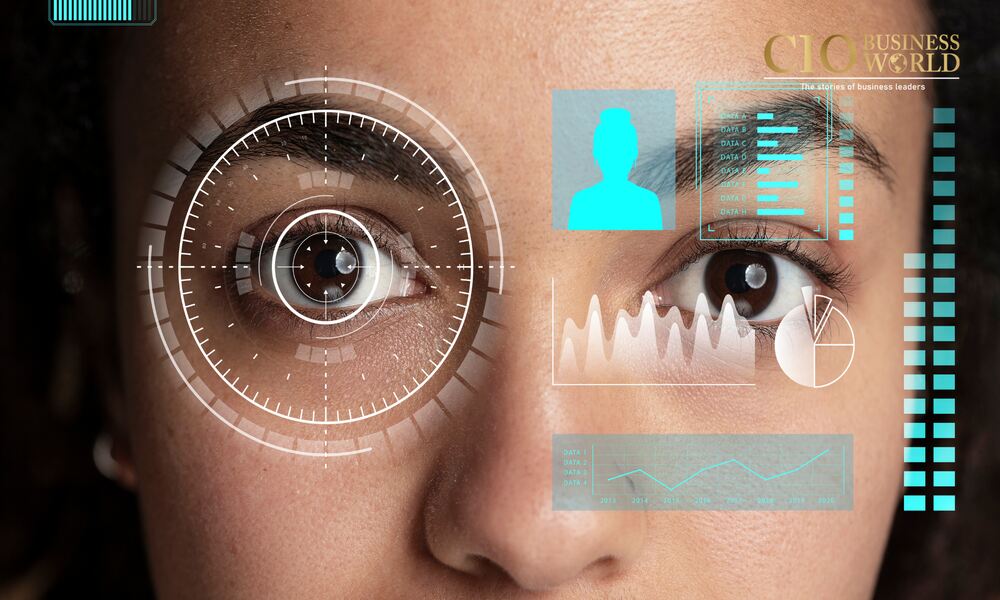
Replicating the intricate anatomy of the human retina has long been a goal for researchers creating prosthetic eye devices. These days, robots using these technologies show better depth awareness, color processing, and object recognition.
These developments have sparked a new generation of humanoid robot eyes that mimic how human pupils adapt to light, enhancing robot navigation in a variety of lighting conditions, from dim warehouse floors to bright outdoor spaces. The objective is to close the gap between artificial and biological sight, enabling robots to process images as efficiently as humans.
These systems are already being tested in industrial robots and autonomous drones at robotics labs in California. Improved picking, sorting, and hazard identification accuracy in early results indicates significant potential for industrial automation.
Reimagining Robotic Eyes for Practical Applications
Robotic vision has been unable to match human flexibility for years. But these new human-biology-inspired robot eyes significantly reduce the performance disparity. Robots can now detect minute features, monitor fast motion, and react more clearly to changing situations. Similar to the transition from early digital cameras to high-resolution smart sensors, engineers say this is a significant advancement.
The advantages extend beyond efficiency and safety. Robots with improved eyes may be able to work more closely with people by recognizing emotions, comprehending gestures, and carrying out sensitive duties in assisted living, healthcare, and rehabilitation.
With allusions to timeless ideas like the designs of the “Eye Robot movie,” the entertainment sector is likewise investigating the technology. However, in contrast to Hollywood depictions, today’s robotic eye development focuses on accuracy and trust rather than menace.
Eyes Inspired by Humans Increase Robot Autonomy
Machine autonomy increases with crisper visual input. Robots can map environments, avoid collisions, and analyze their surroundings with less human intervention when images are clearer. This increases the potential for military surveillance, space exploration, search and rescue operations, and next-generation AI-powered equipment.
According to experts, biology, artificial intelligence, and integrated sensors will all be used in robot eyes in the future. Soft materials that contract like human muscles may even be used in the next generation of robot eye systems, giving them the ability to concentrate immediately and adjust to changing circumstances.
A Time When Robots Will See Us Like Us
The question of whether robots can see has been replaced with the question of how well they comprehend their environment as this research progresses. With eyes inspired by humans, robots can become more intelligent than they are in the actual world, analyzing, adapting, and interacting with their surroundings just like living things do.
California is becoming a center for AI vision engineering and humanoid robots, ushering in a new era in robotics where the distinction between machine and biological perception is becoming increasingly hazy. Furthermore, the future generation of robotics is expected to be more intelligent, capable, and in line with human requirements than ever before as robots develop better eyesight with eyes that resemble those of humans.
Read more: Top 7 Features of Burleson’s Sidewalk Accessibility Program