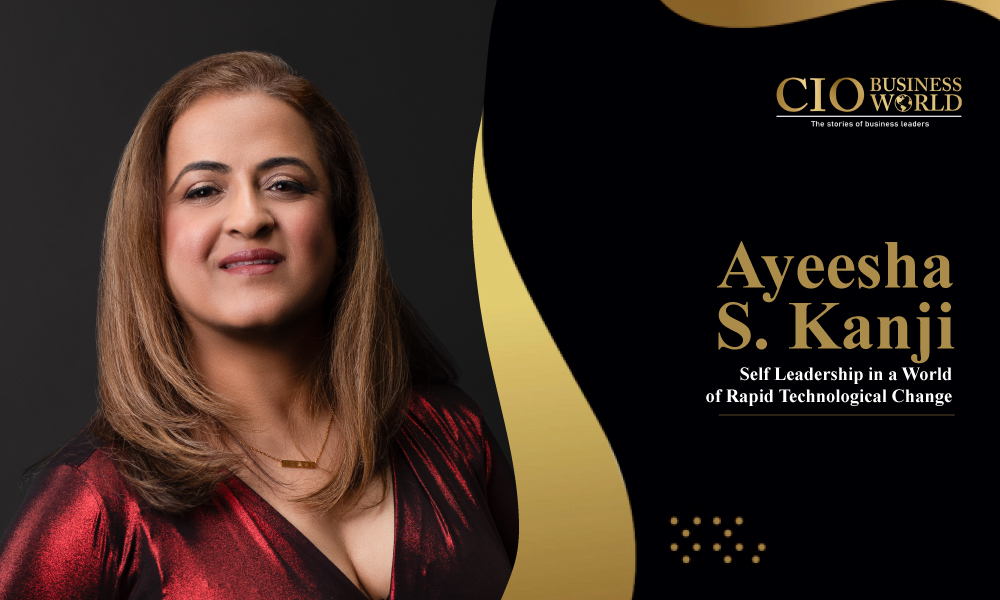
The future of technology is not being built in boardrooms defined by legacy it is being reshaped by women founders who are challenging norms, rewriting narratives, and proving that innovation belongs to those who create, not those who are expected to. In an industry long dominated by bias and imbalance, women are not asking for space anymore they are building their own ecosystems, defining success on their own terms, and ultimately, judging themselves and their work by impact rather than perception.
For decades, the tech ecosystem has operated on a set of unspoken assumptions about leadership, risk-taking, and who “fits” the role of a founder. Women entering this space have often found themselves being evaluated not just on their ideas, but on their identity. Yet, what is emerging today is a powerful shift. Women founders are no longer waiting to be validated by outdated standards; instead, they are creating ventures that stand on merit, data, and results. In doing so, they are forcing the industry to move from subjective judgment to objective evaluation.
Across sectors from artificial intelligence and fintech to health tech and climate innovation women-led startups are demonstrating a unique blend of resilience, empathy, and strategic clarity. These founders often approach problem-solving with a holistic perspective, designing solutions that are not only scalable but also deeply human-centric. This is particularly evident in areas such as digital health, where understanding user behavior and emotional context is as critical as technological advancement, or in fintech, where inclusive financial solutions are opening doors for underserved populations.
However, the journey is far from easy. Access to funding remains one of the biggest challenges. Despite growing awareness, women-led startups still receive a disproportionately small share of venture capital globally. This gap is not just a financial issue it reflects a deeper bias in how ideas are evaluated. Too often, women are questioned on risk and sustainability, while their male counterparts are encouraged to dream bigger. But here lies the turning point: women founders are no longer internalizing these judgments. They are questioning the system itself.
What sets this new generation apart is their refusal to conform. Instead of adapting to existing frameworks, they are redesigning them. They are building companies that prioritize purpose alongside profit, cultures that value collaboration over hierarchy, and products that address real-world challenges with precision. In doing so, they are also redefining leadership not as authority, but as accountability.
The idea of “judging everyone” takes on a new meaning in this context. It is no longer about criticism or comparison; it is about clarity. Women founders are leading with a mindset that evaluates everything markets, systems, opportunities, and even themselves with honesty and insight. They are not afraid to confront uncomfortable truths, whether it is a flawed business model, an unsustainable growth strategy, or an industry practice that no longer serves its purpose. This ability to assess without bias is becoming one of their greatest strengths.
Technology, at its core, is about solving problems. And those who understand problems deeply are best positioned to solve them effectively. Women, often shaped by diverse life experiences and perspectives, bring a level of depth and nuance that is transforming how solutions are designed and delivered. From building AI systems that reduce bias to creating platforms that enhance accessibility, their contributions are not just incremental they are foundational.
Equally important is the ripple effect they are creating. As more women founders succeed, they are inspiring a new generation to step forward with confidence. They are becoming mentors, investors, and advocates, ensuring that the path they walked becomes more accessible for others. This is not just about individual success; it is about collective progress.
At the same time, the broader ecosystem is beginning to respond. Investors are recognizing the untapped potential of women-led ventures. Organizations are creating support systems, incubators, and networks specifically designed to empower female entrepreneurs. While there is still a long way to go, the momentum is undeniable.
Ultimately, the rise of women founders in tech is not just a story of inclusion it is a story of transformation. It is about shifting the lens through which success is measured. It is about moving from assumptions to evidence, from bias to balance, and from limitation to possibility.
In a world that is constantly evolving, the ability to judge clearly to see what works, what doesn’t, and what can be better is invaluable. Women founders are embodying this mindset, proving that the future of tech will not be defined by who fits the mold, but by who dares to break it.
They are not waiting to be judged anymore. They are building, evaluating, and redefining everything on their own terms.