

As with most things related to business, scaling up is a marathon, not a sprint. While it may seem like you need to get a new platform up and running as fast as possible to avoid bottlenecks or other kinds of disruptions, rushing towards a result before you’re 100% sure of what’s involved could end up in tears. While you needn’t take an age getting things sorted, spending some time working your way through a well-thought-out checklist can mean the difference between meeting a deadline or not and spending yet more resources remedying the mistakes you might have made. But that also raises the question, what sort of checklist does one need for this particular scenario? This post will cover a few of the primary points that you ought to cover so you have an idea of what’s involved.
Consider Your Needs And How A New Platform Can Meet Them
A growing company can rapidly hit a “performance” wall where its standard configurations no longer suffice. Such issues could be due to myriad reasons, but the point is that there can come a time when you might need to change vendors to meet updated requirements, or are even worried about becoming locked into a particular vendor and ending up paying a significant amount of money the more you need to move up the food chain. One interesting option to explore in this regard is PostgreSQL, which offers a very similar feature set to Oracle and SQL Server but without the license fees and possibility of being held hostage when you reach a point that you’re too big to change. The only real downside for companies that are already embedded in those ecosystems is that they find the process of change easier said than done. If you have a competent in-house IT department that knows how to make the move, then great, but for all others, there is no shame in outsourcing this task, especially if you’re in any way unsure of what’s involved. Opting to use professional PostgreSQL consulting and management services staffed by those who live and breathe all things database can smooth off the sharp edges of such a task very nicely and ensure that you end up with a migration sans any of the usual gremlins, or if setting a database up from scratch, a seamless experience enabling you to get operational in no time. In any case, making the first point on your checklist to determine whether your current needs are met will make the rest of the job easier.
Core Infrastructure And Storage Layer
The core infrastructure surrounding any platform can be considered the bedrock, the foundation upon which everything else is built. Create a solid foundation, and all your data can be retrieved efficiently and effectively, allowing the kind of workflow that every business strives for. Failure results in slow retrievals, which in turn could either impact backend operations or directly affect your customers on the front end and cause all manner of PR nightmares that are damaging to your brand and your bottom line. As your data volume increases in both size and complexity, the architecture used to process it must also evolve. By establishing a scalable storage foundation early on, potentially using options like PostgreSQL, you will prevent creating data silos (which can massively hinder efficiency and possibly increase costs) and allow you to expand operations without any obstacles.
Governance, Security, And Compliance
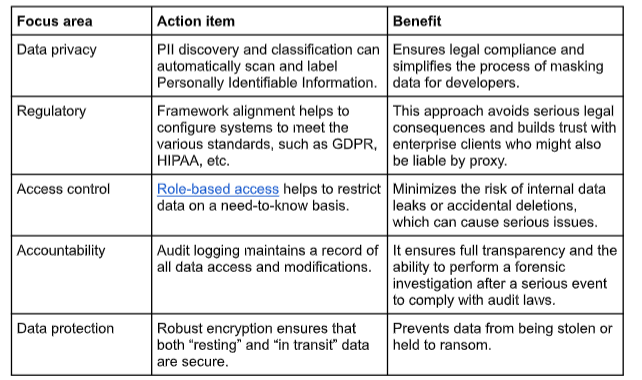
It might have been perfectly adequate using an Excel sheet when you set up and began operations, but as you develop, your needs will outgrow this basic setup and quickly become a huge hindrance, not to mention fall afoul of the vast majority of data laws surrounding how you handle personal data. In this regard, security ought not to be an afterthought but an integral part of the checklist. You should take into account the following compliance points when setting up or expanding a data platform:
There are so many things you have to keep in mind when elevating a business to new heights, and not all of them are as straightforward as which color the background banner on the mobile app ought to be. But by following a strict checklist, particularly for complex actions like setting up or scaling a database, you can make the process far easier to handle and, more importantly, end up with a data platform that meets every one of your requirements and functions efficiently.