

Dental practices now compete for visibility in places beyond traditional search results. Patients ask questions directly to voice assistants, chatbots, and AI-powered search tools, and these tools pull answers from web content that is structured for quick, clear responses. This shift has created a need for professional answer engine optimization experts who know how to shape dental website content so it gets picked up and read aloud or displayed as a direct answer.
Many dental practices still write content the old way, focused only on keywords rather than clear answers. That approach no longer works well when AI tools decide which content deserves a spot. This article looks at how these experts build content that helps with answer engine optimization for dentists.
Structuring Content Around Real Patient Questions
Professional AEO experts spend time researching the exact phrases patients type or speak. They use this research to build FAQ sections, service pages, and blog posts around those specific questions. Short, direct answers placed near the top of a page tend to perform better with answer engines than long, wandering paragraphs.
Experts also format content with clear headers, numbered steps, and bullet points so machines can parse the structure easily. A dental practice that answers “does teeth whitening hurt” in plain, simple sentences stands a better chance of appearing in a voice search result. This method also improves the experience for human readers who want quick, useful information.
Building Trust Through Accurate Medical Content
Accuracy carries extra weight for dental and medical content because search engines apply stricter quality standards to health-related pages. Experts work closely with dentists and hygienists to verify every claim before it goes live. They cite credible sources, use correct terminology, and avoid vague statements that could mislead patients. This attention to detail helps a dental website earn the kind of trust that both patients and AI tools recognize.
According to the American Dental Association, about 65 percent of American adults visited a dentist in the past year, showing how many people rely on accurate dental information online. Reliable content also reduces the chance of patient confusion during appointment scheduling or treatment discussions.
Technical Elements That Support Answer Engine Visibility
Content quality alone does not guarantee visibility, so experts also handle several technical elements:
- Schema markup that labels services, FAQs, and reviews for machine readability
- Fast page load speeds, since slow pages get skipped by crawlers
- Mobile-friendly layouts, as most patients search from phones
- Clean URL structures that reflect the page topic
- Internal links that connect related dental services and questions
These pieces work together so answer engines can crawl, understand, and trust a dental website’s content.
Measuring Results and Adjusting Strategy
AEO work does not stop once content goes live. Experts track which pages appear in voice results, featured snippets, or AI-generated answers. They review this data regularly and adjust headlines, answer length, or structure based on what performs well. A/B testing helps compare different formats to see which version earns more visibility. Common metrics experts track include:
- Featured snippet appearances
- Voice search impressions
- Click-through rates from answer boxes
- Time spent on page after arrival
This ongoing process keeps a dental website aligned with how answer engines evolve.
Comparison of Traditional SEO and Answer Engine Optimization
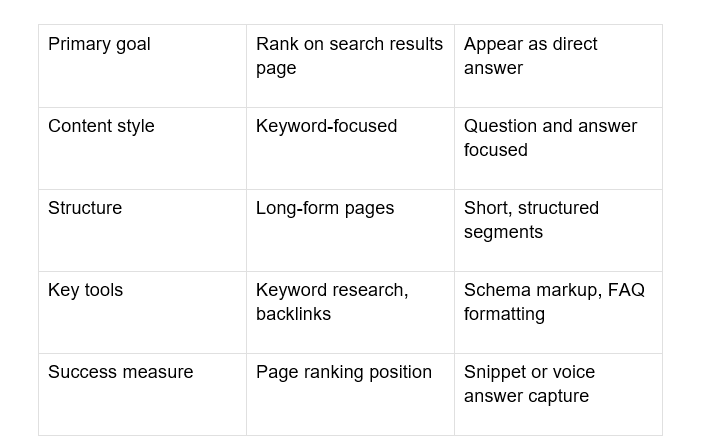
Dental practices that want to stay visible in an AI-driven search environment need content built with answer engines in mind. Professional answer engine optimization for dentists brings research, medical accuracy, and technical skill together to make this happen. Practices that invest in this work now are likely to stay ahead as more patients turn to AI tools for health information.