A leader forged in the field
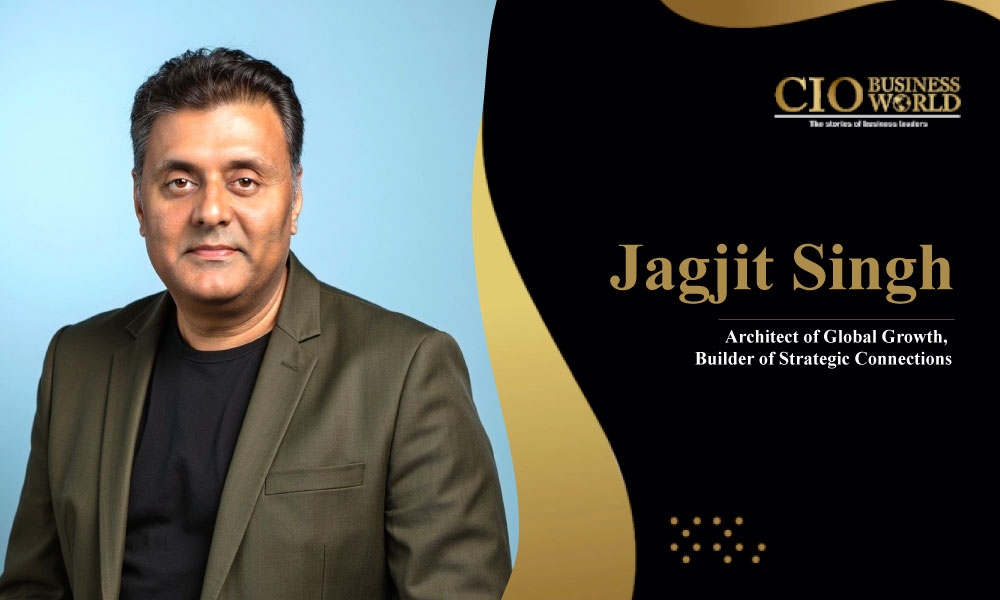
Jagjit Singh’s story does not begin in ivory towers or corporate headquarters. It starts in the heat of operations, with responsibility that few are given so early in their careers. From the outset, Jagjit’s business life has been practical, hands-on, and unapologetically results-driven. When he took the role of Country Manager for European engineering firms in South Asia, he was handed the entire region as a test: a multiyear, multimillion-dollar enterprise, with some 250 employees and contractors, and the challenge of building a business rather than merely running projects.
That beginning into leadership taught him lessons that would anchor every later strategic choice. It taught him the difference between transactions and foundations, between short-term wins and sustainable growth. It taught him how to spot where markets are moving, what clients truly need, and how to give teams permission and resources to deliver. Those early wins — translating into 15–20 per cent annual increases in net profit after tax — did more than validate his approach; they became a source of conviction. There is a distinct thrill in transforming ideas into durable results, and Jagjit’s career has been a continuous pursuit of that thrill on ever larger stages.
This formative period explains why his leadership is practical and pragmatic. He measures impact not in rhetoric but in outcomes. He learned to read market trends, design creative yet implementable solutions, and deliver steady compound growth. The kind of leader who can start a business from scratch in a competitive market usually knows how to do three things very well: prioritise, mobilise, and sustain. Jagjit became fluent in all three.
Leadership Beyond Borders
Jagjit’s work across ASEAN, APAC, and the Middle East did more than broaden his geographic remit; it reshaped his leadership philosophy. He describes his approach as cultural fluency, and that term is worth unpacking. Success in global markets requires more than linguistic ability or familiarity with regulations; it requires a deep appreciation for how relationships are formed, trust is earned, and decisions are made across different contexts.
From the negotiating tables in Southeast Asia to consortium meetings in the Gulf, Jagjit adapted his style to meet local expectations without compromising core principles. He learned to strike a balance between global standards and regional sensibilities. That meant listening longer, asking different questions, and deferring local expertise while holding fast to his strategic vision.
Three pillars emerged from this international exposure. First, adaptability: tailoring communications and plans to meet cultural and business nuances. Second, deference to local knowledge: recognising that ground-level teams hold critical intelligence, and creating forums where those voices inform strategy. Third, high-commitment relationship-building: in many markets, deals are not merely contractual but the start of long-term partnerships. Jagjit invested time, attention, and consistency to demonstrate that his engagement was not transactional but enduring.
Cultural fluency equipped him to build resilient teams across borders — groups that could operate cohesively despite diverse norms and working styles. It also helped him win strategic partnerships where trust, not price, determined the outcome.
Rigour and Entrepreneurship
When organisations move fast and the stakes are high, poor decisions compound quickly. Jagjit’s decision-making is a disciplined blend of analytical rigour and entrepreneurial flexibility. He believes in applying structured evaluation methods — financial models, risk assessments, and frameworks like MEDDICC and SPIN selling for commercial clarity — while preserving the nimbleness to pivot when opportunity demands.
This methodology was not theoretical. It produced tangible results. Under his oversight, tender success rates rose dramatically — from roughly 1 in 10 to 1 in 4. That improvement came from a relentless discipline: evaluate opportunities against strategic fit, stress-test assumptions, and choose the efforts that align with long-term goals. Rather than chase revenue indiscriminately, Jagjit sought the right revenue: contracts that would catalyse sustainable, profitable portfolios.
Taking well-reasoned risks is part of his playbook. When he saw the potential in new energy storage and EV charging ecosystems, he backed bold moves that produced market leaders — companies like Tritium and EVOS emerged as front-runners in AC and DC charging because of decisive strategic choices grounded in market insight. Risk, in Jagjit’s view, is not to be avoided but to be managed: the question is always whether the upside justifies the risk after rigorous analysis.
At the same time, he refuses to let process smother innovation. The balance between structure and entrepreneurial speed is the key: frameworks to keep teams honest, flexibility to seize windows of advantage. This mix — disciplined assessment, strategic patience, and tactical boldness — has defined his tenure across markets.
People-first Leadership
For Jagjit, leadership is a human endeavour. People-first leadership is not a slogan or a platitude; it is a practical policy. Teams are the multiplier of any strategy, and Jagjit’s record shows an enduring commitment to coaching, mentoring, and retention. He invests in people not only to improve business outcomes but to build careers and loyalty.
He has personally coached several team members, improving their capabilities and deepening their commitment. The result is a high-performing, multinational cohort of professionals who are loyal because they feel invested in — not managed. That has both cultural and commercial payoffs: teams that believe their leaders are committed to their growth achieve higher productivity, better client relationships, and lower attrition.
Jagjit’s people-first stance manifests in accessible leadership, transparency about expectations, and tangible development paths. That kind of environment breeds a common purpose across geographies, aligning on both local and corporate objectives. People-first leadership also anchors the difficult moments: during crises or uncertainty, a team that feels supported is more resilient and more willing to go the extra mile.
Core values that never change
Jagjit carries three immutable values into every boardroom he enters: integrity, accountability, and the commitment to long-term partnerships. These values are universal touchstones that transcend cultural boundaries.
Integrity is the bedrock. International business often puts relationships to the test; reputations are fragile, and Jagjit treats his reputation as the single most valuable asset in global operations. Being forthright and honouring commitments builds trust across time and geography.
Accountability is the engine of performance. Leaders and teams must own outcomes, whether success or setback. That sense of ownership creates disciplined execution and continuous improvement. Jagjit fosters cultures where people hold themselves and one another accountable — a crucial factor in consistently delivering on big projects.
Finally, a focus on long-term partnerships: Jagjit does not come to a market or client expecting one-off transactions. He seeks to build ecosystems that benefit clients, partners, and employees for decades. This long-term mindset guides strategic choices and discourages short-termism that can damage reputation and margin.
Navigating global shocks: strategy, flexibility, diversification
What distinguishes seasoned leaders is how they react to disruption. Jagjit’s approach to global challenges is proactive: understand the industry deeply, design flexible strategies, and diversify markets to mitigate risk.
He has spent much of his career in fast-evolving sectors — clean energy, infrastructure, and technology — and he has developed a keen sense for where disruption starts and where it spills over into opportunity. By focusing on the EV ecosystem, renewable energy, and digital infrastructure, Jagjit has situational awareness of the tectonic shifts underway in transport and power.
Operationally, his approach is pragmatic: build resilient operating models that can withstand shocks, nurture a culture of agility, and maintain a diverse geographic footprint. Not putting all eggs in one basket is not risk avoidance but risk management: different markets may behave differently under stress, and geographic diversification can smooth volatility.
When the economy changes, policy shifts, or geopolitical uncertainty arises, Jagjit leans into contingency planning, scenario modelling, and clear communication with stakeholders. His playbook is about preparedness, not panic.
Leading through crisis: Clarity, Calm, Communication
Crisis leadership is the acid test for any executive. According to Jagjit, the most crucial attributes are calmness, decisive action, and transparent communication. Uncertain times breed fear and indecision; leaders must cut through noise and provide a clear path forward.
Jagjit’s experience shows that teams need clarity to function under pressure. That clarity comes when leaders disclose the situation honestly, articulate the plan, and provide the tools for execution. Trust is built on consistent, truthful communication — especially when the news is hard. And trust becomes the glue that holds teams together when operational decisions are difficult.
In essence, the leader’s most important job during a crisis is psychological: to reduce panic, orient the team, and create the conditions for performance. Jagjit has done this repeatedly, guiding teams through complex transitions and turbulent markets while preserving morale and focus.
Mentors and Influences
Jagjit credits his development to a broad set of influences. Rather than a single mentor, his education came from many sources: senior executives who taught strategic thinking, local colleagues who offered operational insight, and clients who shared market truths. He believes everyone you meet has something to teach you — a philosophy that keeps him open to learning regardless of rank or title.
This mosaic of mentorship instilled humility, curiosity, and openness. Learning from both successes and setbacks has shaped his judgement, making him a leader who listens closely and acts deliberately.
Clean energy and the EV revolution
Looking five to ten years ahead, Jagjit places his largest bets on the continued convergence of clean energy and technology. The electrification of transportation — the EV ecosystem — is not merely a product story; it’s an entire value-chain revolution. From DC fast-charging infrastructure and advanced battery storage to smart grids and distributed energy resources, this shift will reshape industries, jobs, and national energy security.
Jagjit is particularly fascinated by the digital infrastructure around EV adoption: chargers, grid integration, and storage. He sees these as enablers of a broader energy transition that will drive jobs and independence, especially for nations that invest early. For him, the excitement is not only environmental but strategic: economies that build robust EV ecosystems stand to benefit from new industries, supply chains, and skills development. The innovations ahead will be transformative in both scale and societal impact.
The leadership legacy he hopes to leave
At the end of the day, Jagjit wants to be remembered as a builder of bridges. That image captures his career in a single metaphor: he brings people together — employees, partners, clients, and cultures — to create opportunities and sustainable growth. He hopes colleagues will remember him as someone who executed with integrity, expanded markets, and invested in people’s development.
His legacy is not simply an accumulation of wins and market entries; it is the people he mentored, the teams he empowered, and the partnerships that endured. He wants to be seen not only as a dealmaker but as a mentor and architect of durable organisations.
The anatomy of his strategic success
Jagjit’s success boils down to a consistent set of practices that any leader can study and emulate:
- Start with operational mastery: Jagjit’s earliest days managing complex operations taught him to be close to the work — to understand flows, costs, and customer pain points.
- Apply disciplined commercial rigour: frameworks like MEDDICC and rigorous financial modelling shaped tendering and go-to-market discipline, driving higher success rates and more profitable contracts.
- Invest relentlessly in people: coaching, mentoring, and professional development are not soft extras but central drivers of retention and performance.
- Adopt cultural fluency: success in international markets depends on genuine respect for local knowledge and a capacity to adapt without losing strategic coherence.
- Balance risk with strategy: well-analysed, high-conviction risks in emerging sectors like EVs delivered outsized returns when combined with operational excellence.
- Communicate and lead during crises: clarity, calmness, and decisive action preserve team cohesion and execution capability even in turbulent times.
- Build for the long term: a focus on enduring partnerships, reputation, and sustainable growth trumps short-term wins.
What aspiring global leaders should take away
Jagjit’s experience offers lessons for leaders at every stage. If you are early in your career, spend time learning the operational and commercial fundamentals. If you are scaling a team, double down on mentoring and career development. If you are moving into international markets, invest in cultural fluency and relationship-building. Across it all, do not abandon the long-term view for short-term gain.
His advice to emerging leaders is practical: be curious, stay humble, and make decisions that align with a strategic vision. The ability to combine rigorous analysis with entrepreneurial courage will serve you in markets that are volatile, complex, and rich with opportunity.
Closing: Bridges built, futures enabled
Jagjit Singh’s career is a ledger of bridges built: between markets, between people, between ideas and execution. His leadership is not flashy; it is constructive, iterative, and deeply human. He has shown that growth can be engineered without sacrificing integrity and that scaling companies are inseparable from developing the people who power them.
Where others see complexity and risk, Jagjit sees patterns and possibilities. He measures success by the structures he leaves behind — resilient teams, loyal partners, and lasting operations. That, in the end, is the mark of a leader who doesn’t merely chase growth but designs it to endure.
Jagjit’s story is a reminder that global leadership is a craft learned in the trenches, refined through varied markets, and validated by the people whose careers you shape. He has chosen to make his mark by building bridges and enabling others to cross them — a legacy that will continue to influence the markets and people he touches for many years to come.