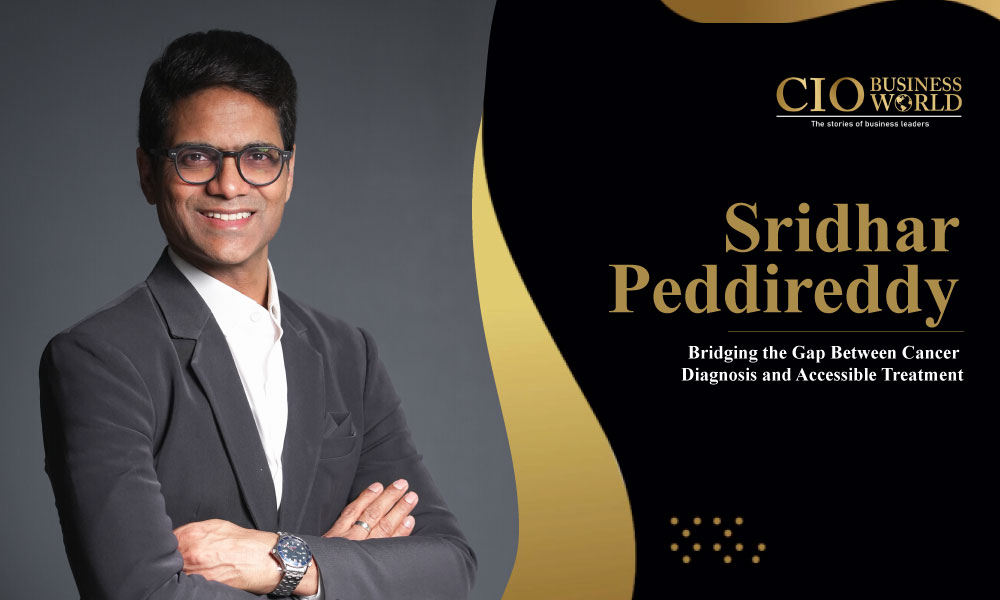
Sridhar Peddireddy has spent more than two decades standing at one of the most critical frontiers in healthcare: the fight against cancer and the systems that determine who receives care and who does not. As a healthcare leader and institution builder, he has witnessed firsthand how the diagnosis of cancer can reshape lives not only medically but socially, financially, and emotionally. Over the years, his work has been driven by a clear and persistent question: how can advanced cancer care reach patients who live far from metropolitan centres where most medical infrastructure traditionally exists?
His journey through India’s oncology landscape reflects a deep commitment to addressing that gap. From his early administrative leadership roles in major hospitals to founding Renova Hospitals, his work has focused on expanding access to modern cancer treatment in Tier 2 and Tier 3 cities. This cover story explores the systems he helped build, the philosophy that guides his work, the transformation of cancer care in India over the past twenty years, and his vision for a future where the geography of a patient’s home no longer determines the quality of care they receive.
A Time When Cancer Meant Leaving Home
To understand Sridhar Peddireddy’s impact on Indian healthcare, it is necessary to revisit the reality of cancer treatment in the early 2000s. At that time, a cancer diagnosis carried two devastating messages for many families living outside metropolitan areas. The first was the diagnosis itself. The second was the realization that treatment would likely require leaving home.
Patients from Tier 2 and Tier 3 cities often had to travel hundreds of kilometres to access specialized oncology hospitals located in metropolitan centres. The journey demanded financial sacrifices that many families were unprepared to bear. Travel costs, temporary housing, extended stays in unfamiliar cities, and the cost of treatment combined into a burden that frequently pushed households into severe financial distress.
The emotional toll was equally significant. Patients were separated from their familiar surroundings, support networks, and livelihoods at the very moment they needed stability the most. For many families, cancer was not only a medical crisis but the beginning of a prolonged struggle involving uncertainty, displacement, and economic pressure.
It was into this environment that Sridhar Peddireddy entered the healthcare industry with a determination to address systemic shortcomings. Rather than accepting the situation as inevitable, he approached it with the mindset of someone who believed that broken systems could be repaired through thoughtful leadership and persistent effort.
Transforming a Modest Hospital Into a Comprehensive Cancer Centre
In 2004, Sridhar Peddireddy took on the role of Chief Operating Officer at the Indo-American Cancer Institute and Research Centre in Hyderabad. At the time, the hospital was a modest 100-bed facility attempting to serve a rapidly growing number of cancer patients in a healthcare environment that was not fully prepared for the scale of the disease.
The challenges were significant. Cancer incidence was increasing, yet specialized infrastructure remained limited. Patients frequently arrived at advanced stages of the disease, having received late diagnoses due to insufficient awareness and lack of screening facilities in smaller towns.
Under Sridhar’s operational leadership, the institution embarked on a period of transformation. Over the next five years, the hospital expanded dramatically, growing from a 100-bed facility into a 450-bed comprehensive cancer centre. The expansion represented more than physical growth. It meant that more patients could access treatment, fewer families were turned away due to capacity constraints, and the institution could offer a broader range of oncology services.
For Sridhar, the numbers themselves were never the ultimate measure of success. What mattered more was the human impact behind those figures. Every additional bed, every new diagnostic system, and every expanded treatment department represented another patient who had a chance to fight the disease rather than being denied care.
The Reality of Cancer Care in Early 2000s India
The broader landscape of cancer care in India during the early 2000s presented numerous challenges. Public awareness of cancer symptoms was limited, and early detection programs were largely absent outside major cities. As a result, many patients were diagnosed in Stage 3 or Stage 4, significantly reducing their chances of successful treatment.
Medical infrastructure also lagged behind global standards in several areas. Radiation therapy machines were scarce and concentrated in a few institutions. Chemotherapy protocols were still evolving and often struggled to keep pace with international advancements. Surgical oncology required highly specialized training, which was available only to a limited number of practitioners.
Another major gap existed in the area of palliative care. The concept of managing pain and maintaining quality of life for patients with advanced disease was not yet widely integrated into hospital systems. Patients were often told that little could be done once curative treatment options were exhausted.
Psychological support was also largely absent. Patients facing life-threatening diagnoses often navigated the experience without counseling, support groups, or structured mental health resources. Caregivers who sacrificed their own responsibilities to accompany patients during treatment received little recognition or assistance from healthcare institutions.
The geographic imbalance of medical infrastructure further compounded these challenges. Advanced oncology facilities were heavily concentrated in metropolitan cities. Patients living outside those areas faced significant barriers to receiving timely treatment.
These realities formed the backdrop against which Sridhar Peddireddy began developing a long-term vision for systemic change.
Building Expertise Through Institutional Leadership
Sridhar’s administrative journey in oncology began at Basavatarakam Hospital, where he served as Chief Operating Officer and played an important role in its transformation into a 500-plus bed multi-specialty tertiary care institution. This experience provided him with deep insight into the complexities of hospital management, infrastructure development, and patient-centered care.
In 2010, he took on a new challenge as the Chief Executive Officer of Omega Hospitals. At the time, Omega was a nascent oncology institution that required strong leadership to establish itself as a significant player in cancer care.
Over the following decade, Sridhar guided Omega Hospitals through a period of rapid growth. The institution evolved into one of the fastest-growing cancer hospital networks in the region.
Those who worked with him during this period observed a leadership style that combined rigorous operational discipline with an unwavering commitment to patient welfare. Inefficiency was addressed directly and systematically, yet the ultimate goal of every process improvement remained patient-centered.
For Sridhar, a hospital was never simply a collection of buildings and equipment. It represented a promise made to individuals facing serious illness. That promise had to be honored consistently through every department, every shift, and every interaction between healthcare professionals and patients.
During this time, he also developed a broader understanding of what the future of oncology required. Specialization alone would not be enough. Cancer care demanded a holistic ecosystem where multiple disciplines worked together.
Surgical oncologists, medical oncologists, radiation oncologists, pathologists, and palliative care specialists needed to collaborate closely to design integrated treatment plans. Diagnostic precision, technological integration, and multidisciplinary teamwork were essential for improving patient outcomes.
Equally important was the need to distribute these capabilities geographically rather than concentrating them in a small number of urban hospitals.
The Vision That Became Renova
By the later years of his tenure at Omega Hospitals, Sridhar had begun shaping a new vision that existing institutions could not fully accommodate. This vision eventually materialized in the creation of Renova Hospitals in 2019.
Renova was founded with a clear and purposeful philosophy. The goal was to build technologically advanced healthcare institutions that remained affordable and accessible. Rather than focusing exclusively on metropolitan markets, Renova aimed to expand into Tier 2 and Tier 3 cities where the demand for quality medical infrastructure was growing rapidly.
The name Renova reflected ideas of renewal, restoration, and transformation. It symbolized the organization’s commitment to rebuilding healthcare systems in ways that better served patients.
The early stages of Renova’s journey coincided with one of the most disruptive periods in modern healthcare history. In 2020, the year the network launched its first 100-bed multispecialty hospital, the COVID-19 pandemic reshaped global medical systems.
A Pandemic That Tested the Model
For many hospital networks, the pandemic created unprecedented operational challenges. Patient flows changed dramatically, resources were strained, and uncertainty dominated decision-making across the healthcare sector.
At Renova, the crisis became an opportunity to test the resilience of the organization’s foundational model. Sridhar responded by accelerating technological adoption and strengthening infrastructure rather than slowing expansion.
Telemedicine capabilities were rapidly implemented to enable patients to consult specialists without travelling long distances. Intensive care units were expanded and strengthened to handle rising demand. Digital medical record systems reduced administrative delays and minimized the potential for errors.
The localized care model proved particularly effective in the post-pandemic environment. Patients increasingly preferred receiving advanced treatment within their own regions rather than travelling to distant metropolitan hospitals. Renova’s strategy of building healthcare infrastructure closer to patients aligned directly with this shift in patient expectations.
Expanding a Network of Accessible Care
Following its initial launch, Renova continued expanding its presence across multiple regions. In 2021, the network established a dedicated oncology hospital. The following year marked expansion into North India. By 2024, a new superspeciality hospital was added to the network.
In September 2025, Renova opened a new branch in Warangal and acquired an established oncology brand, further strengthening its capabilities in cancer treatment.
Today, the Renova Hospitals network includes 18 branches comprising both dedicated cancer hospitals and multispeciality hospitals. Each facility reflects the organization’s commitment to delivering advanced healthcare services closer to the communities that need them.
The expansion plans for 2026 are even more ambitious. Renova intends to establish new cancer centres in Bhubaneswar, Pune with two units, Ranchi, Alwar, Prayagraj, Moradabad, Saharanpur, Raipur, and Khammam.
At the same time, the organization’s strategic growth includes acquiring a 51 percent stake in the International Oncology Cancer Institute. This partnership will extend Renova’s oncology expertise to centres in Noida, Mumbai, Aurangabad, Agartala, Indore, Kanpur, Moradabad, and Raipur.
Together, these initiatives represent a systematic effort to close the geographic gaps in cancer care that Sridhar first identified decades earlier.
A Vision of Cancer Care to 2045
When Sridhar speaks about the future of oncology, his perspective is shaped by twenty years of observing medical innovation unfold.
He believes that by 2045, cancer treatment will look dramatically different from what doctors practiced in the early 2000s. Advances in artificial intelligence and molecular diagnostics will allow diseases to be detected much earlier, sometimes before symptoms appear.
Adaptive intelligence systems may identify malignancies at their earliest molecular stages, allowing physicians to intervene before tumors fully develop.
Surgical technologies will also continue evolving. Robotic surgery systems are expected to deliver levels of precision that surpass even the most skilled human hands. Immunotherapy protocols will harness the body’s immune system to fight cancer with increasing sophistication.
The central question of the future will no longer be whether cancer can be treated but how quickly and precisely treatment can begin.
However, Sridhar consistently returns to the same concern that motivated his career from the beginning. Technological progress alone does not guarantee equitable access. The challenge is ensuring that these advances reach patients in cities such as Warangal, Karimnagar, and countless other towns that historically lacked advanced medical infrastructure.
Health Beyond Hospitals
Sridhar’s vision of healthcare extends beyond oncology. He co-founded ZIVA Fertility Centres to bring advanced reproductive medicine to India through partnerships with leading embryology experts.
His work also includes preventive health initiatives such as Nivhans Fitness and the Core Fitness Station chain of premium gyms. These initiatives reflect a broader belief that disease prevention should begin long before patients require hospital treatment.
Another important part of his work is the Sri Dharani Foundation, which he established in 2019. The nonprofit organization focuses on supporting underprivileged communities through healthcare programs, education initiatives, food distribution, and environmental projects.
The foundation works in areas including rural empowerment, senior citizen support, women’s empowerment, and improving access to essential resources. His advocacy for girl child education and environmental sustainability reflects a belief that strong communities ultimately create healthier societies.
Recognition and Global Acknowledgment
Sridhar Peddireddy’s work has received significant recognition both nationally and internationally. In 2019, he was honored with the Pride of the Nation Award by the Government of India. In 2021, he was named Asia’s Most Trusted CEO.
His leadership has also been featured in prominent publications including Forbes India, Fortune India, and Business Standard. Additional recognition includes the Dadasaheb Phalke International Award and the APJ Abdul Kalam Award.
In 2026, he received international recognition at the International Peace Conclave held at the United Nations Headquarters for his contributions to healthcare.
Further honors in cities including Dubai, Istanbul, London, and Malaysia reflect the growing global recognition of his efforts to expand access to cancer treatment.
Building the Future One Hospital at a Time
The story of Sridhar Peddireddy’s career is not defined by a single moment of transformation but by the steady accumulation of change over two decades.
The early 2000s represented a period when cancer care in India was defined by scarcity, geographic imbalance, and limited awareness. Many patients faced significant barriers to receiving timely treatment.
Today, that story is gradually being rewritten. Advances in technology, improved awareness, and expanding healthcare networks are improving survival rates and treatment experiences.
Sridhar’s work continues to focus on ensuring that these improvements reach patients regardless of where they live.
His mission remains rooted in a simple yet powerful idea: healthcare progress must be distributed equitably. Hospitals must exist not only in wealthy cities but in the communities where patients actually live.
Through Renova Hospitals and his broader initiatives, he continues building a future where cancer care is accessible, advanced, and close to home.
The distance between patients and the care they deserve is shrinking. And Sridhar Peddireddy remains committed to ensuring that it continues to do so.
For Print and Design Purpose:
Quotes:
“The mission remains unchanged: to be a lifelong partner in good health.”
“It is not enough to build the future of cancer care. You have to build it in the right places.”