
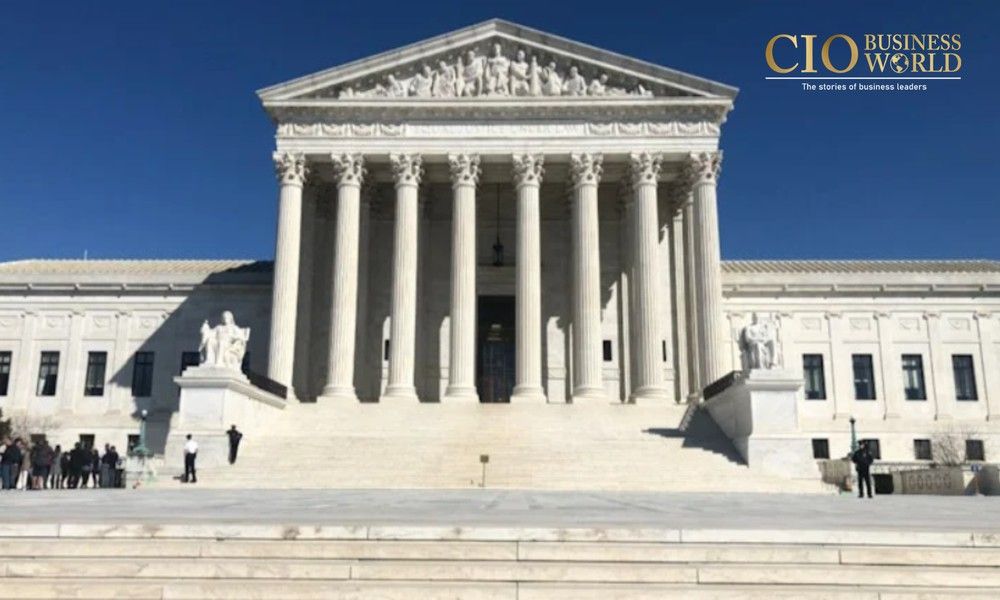
By refusing to examine the Bestwall bankruptcy case, the U.S. Supreme Court has once again brought attention to the contentious “Texas Two-Step” bankruptcy method. A major decision from the Fourth Circuit Court of Appeals remains intact as a result of the Court’s failure to step in, igniting a continuing discussion about the future of corporate restructuring procedures and mass-tort bankruptcy litigation.
Businesses, legal professionals, and plaintiffs involved in large-scale liability cases especially those involving asbestos, consumer goods, and environmental claims—are keenly monitoring the ruling. The Supreme Court’s judgment has significant ramifications for how businesses may use bankruptcy courts to manage legal liabilities, even though it did not render a substantive finding on the case’s merits.
The Texas Two-Step Bankruptcy Strategy: What Is It?
A corporate restructuring technique known as the “Texas Two-Step” enables a business to split into two distinct organizations. While the other corporation takes on liability for legal claims, such as those pertaining to asbestos exposure or defective products, the first entity keeps operating assets.
In order to safeguard the parent firm from direct lawsuit and possibly establish a trust to compensate claimants, the liability-bearing corporation may then file for Chapter 11 bankruptcy protection.
Advocates contend that the approach offers a productive way to settle thousands of claims. However, detractors claim that it allows financially sound businesses to restrict accountability and postpone victim restitution.
Rejecting Intervention Preserves the Fourth Circuit’s Decision
The Supreme Court’s reluctance to consider the Bestwall case is a crucial component of its position on Texas Two-Step bankruptcy.
The Court upheld the Fourth Circuit’s ruling that a subsidiary’s financial stability is not a jurisdictional hurdle that necessitates the dismissal of a bankruptcy case by declining to hear the appeal.
According to the verdict, a business that files for bankruptcy does not necessarily need to demonstrate immediate financial difficulties just because it is solvent at the time of filing. Future cases involving corporate restructurings and mass-tort liability may be impacted by this approach.
Important Lessons from the Supreme Court’s Ruling
The Bestwall bankruptcy case was not reviewed by the Supreme Court.
The Fourth Circuit’s decision is still enforceable.
A bankruptcy petition is not always prevented by financial solvency alone.
Future Texas Two-Step restructurings may be impacted by the ruling.
There is still legal ambiguity with mass-tort bankruptcy.
The Debate Is Still Shaped by Circuit Splits
The Supreme Court’s ruling comes at a time when federal appellate courts are becoming increasingly divided over the validity of Texas Two-Step bankruptcy filings.
When determining whether bankruptcy protection is suitable for entities formed through divisional mergers, different circuit courts have taken different stances.
Courts have disagreed, for instance, on how to evaluate financial distress and whether businesses with substantial resources should be allowed to use bankruptcy procedures to settle legal disputes.
Due to these divergent views, same cases may have different results depending on the jurisdiction in which they are filed.
Areas of Persistent Judicial Conflict
What is financial distress?
Qualifications for bankruptcy protection
Handling of obligations for large torts
Claimants’ rights during the restructuring process
Strategies for corporate restructuring that involve divisional mergers
These circuit splits put more pressure on judges and legislators to clarify the requirements for bankruptcy eligibility.
There are no final agreements in the larger legal dispute.
The larger legal dispute over Texas Two-Step bankruptcy tactics is still unresolved despite the Supreme Court’s rejection to get involved.
There are still a lot of mass-tort cases going through federal courts, with plaintiffs and businesses making conflicting claims about accountability, efficiency, and fairness. The Bestwall case is still a part of a broader debate over how bankruptcy courts should strike a balance between the interests of individuals seeking compensation and those of firms seeking reorganization.
Legal experts point out that the Court’s ruling does not support the Texas Two-Step approach. Rather, it only permits decisions made by lesser courts to remain unreviewed.
Consequently, important legal issues are still unresolved. There are no final agreements in the larger legal dispute.
The larger legal dispute over Texas Two-Step bankruptcy tactics is still unresolved despite the Supreme Court’s rejection to get involved.
There are still a lot of mass-tort cases going through federal courts, with plaintiffs and businesses making conflicting claims about accountability, efficiency, and fairness. The Bestwall case is still a part of a broader debate over how bankruptcy courts should strike a balance between the interests of individuals seeking compensation and those of firms seeking reorganization.
Legal experts point out that the Court’s ruling does not support the Texas Two-Step approach. Rather, it only permits decisions made by lesser courts to remain unreviewed.
Consequently, important legal issues are still unresolved.
Effects on Companies and Claimants
The decision might provide businesses dealing with extensive litigation more leeway when it comes to restructuring choices. The ruling may be interpreted by businesses as proof that bankruptcy courts are still accessible even in cases where financial crisis is contested.
However, concerns about compensation delays and restrictions on traditional legal rights continue to exist for claimants and consumer activists.
The ongoing discussion draws attention to a basic problem with the American legal system: striking a balance between treating impacted parties fairly and resolving large-scale claims in an efficient manner.
The Future of Two-Step Bankruptcy Cases in Texas
Discussions about Texas Two-Step bankruptcy tactics will continue because the Supreme Court declined to consider the Bestwall case. Courts across the nation will probably face similar problems in the years to come because circuit splits are still unresolved and no final agreements have established a national precedent.
The legal position of Texas Two-Step bankruptcies will continue to be one of the most carefully watched developments in corporate restructuring law until a definite decision is made or Congress passes legislative revisions.
Read our latest interview with Felipe Castillo Ducaud