
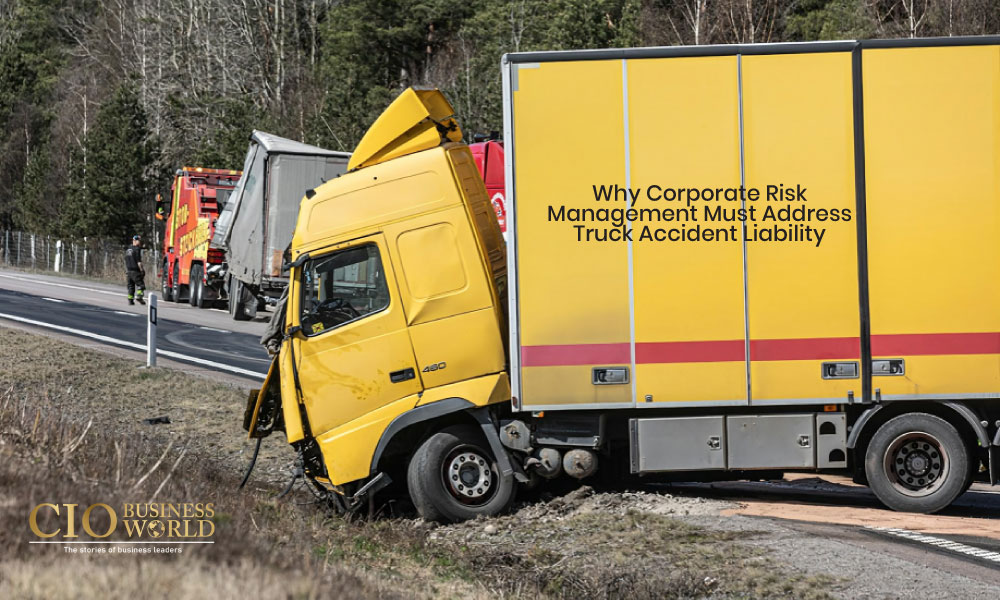
Truck crashes happen far more often than most executives think. In fact, in the U.S. alone, more than 500,000 crashes involving large trucks occur each year. Thousands of those crashes turn fatal, and many more leave people injured and vehicles destroyed.
So if your business operates trucks or just relies heavily on drivers, you already carry this risk whether it appears on your risk register or not.
Truck Accidents Create Business Problems Fast
The financial numbers alone should be enough to get your attention. Studies cited across the trucking insurance industry estimate that a fatal truck crash can exceed $5 million to $7 million in total losses when you combine legal claims, settlements, lost productivity, and operational disruption.
Mind you, those numbers don’t even include the operational costs. Delivery delays. Damaged client relationships. Drivers pulled from service during investigations. Supply chains that suddenly stall out for a week. We could go on.
One crash. Dozens of consequences.
Liability Rarely Stops With the Driver
A lot of companies assume the driver takes the legal hit when something goes wrong. But courts rarely see it that way.
Investigators typically examine the entire system behind that driver. Hiring standards. Training programs. Maintenance records. Dispatch pressure. Load weight and cargo handling. Hours-of-service compliance. The point is, every decision that may have nudged the driver toward a bad moment is often looked into. There’s a reason regulators like the Federal Motor Carrier Safety Administration require strict documentation.
When something goes wrong, those records tell the story of whether safety actually mattered inside the company.
Prevention Is Not Just a Safety Issue
Many fleet operators approach truck safety as a compliance exercise. Keep the paperwork clean, pass inspections, move on. But compliance does not equal risk control. Not even close.
A smarter approach treats truck safety as part of enterprise risk management. The same discipline you apply to financial controls or cybersecurity needs to exist here, too.
What does this mean in practice? Paying attention to signs that predict accidents before they happen. Telematics data showing speeding patterns, and maintenance logs that reveal recurring mechanical issues. Also, driver fatigue patterns after long routes. These can all be small warning signs that tend to show up weeks before a crash.
Companies that track those signals reduce accidents dramatically. Not because they follow rules (that’s just a part of the solution), but because they notice problems earlier.
Legal Strategy Should Exist Before the Accident
Even the safest fleet eventually faces an accident. After all, roads can be unpredictable, other drivers can make mistakes, and the weather can and often does complicate things. What matters then is how prepared your company is when the phone rings.
Early documentation makes a massive difference. Driver logs, GPS data, maintenance reports, inspection history; these records often determine whether a company walks away from a case or spends years in litigation.
This is also where consulting an experienced truck accident attorney can help companies understand their exposure and respond strategically after a crash. Legal teams that focus on commercial vehicle accidents, such as those at DMLawUSA (we’ve linked to their page for a reason), often guide businesses through investigations while protecting both the company and its drivers.
Don’t wait until a lawsuit lands on your desk. That’s the expensive version of risk management.
Safety Records Now Influence Business Deals
Know that something else changed in the last decade. Trucking safety data is public.
Databases maintained by the U.S. Department of Transportation allow insurers, brokers, and corporate clients to review carrier safety performance before signing contracts. And many do.
A clean safety record lowers insurance premiums and opens doors with larger logistics partners. A pattern of accidents does the opposite. Suddenly, your company looks risky to work with (even if most operations run smoothly).
It’s a reality that changes how truck accident risk should be viewed. This is not just a driver issue or a fleet management issue. It’s a leadership issue.
Because the companies that treat safety as a strategic discipline usually run tighter operations everywhere else, too. And the companies that ignore it tend to learn the same lesson eventually, just after something goes very wrong.