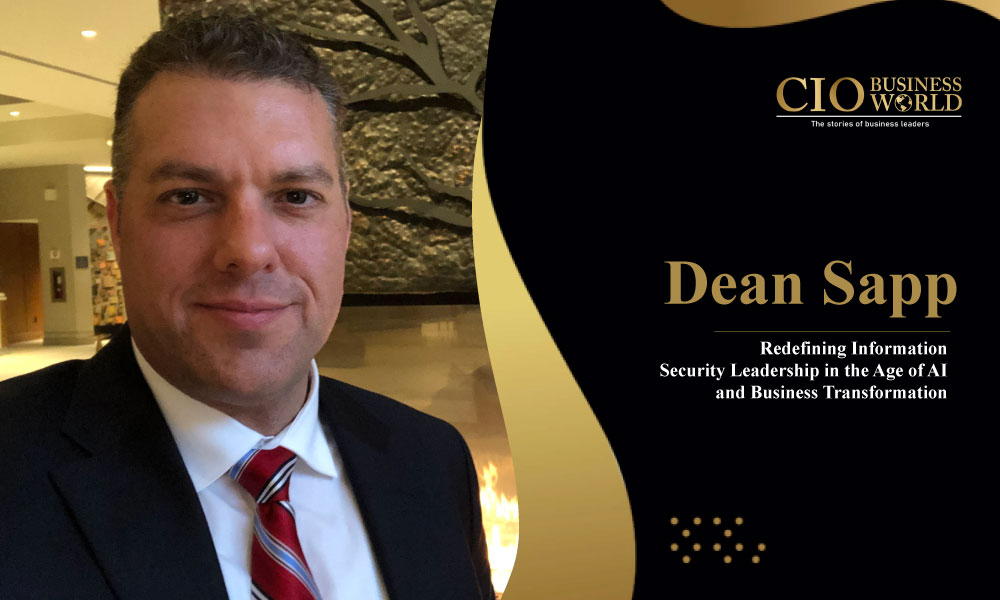
Dean Sapp’s journey through the world of cybersecurity reflects a shift that is reshaping the very identity of Information Security leadership. As Chief Information Security Officer at Filevine, he operates in a landscape where security is no longer confined to firewalls and compliance checklists, but is deeply embedded in business strategy, innovation, and growth. With the rapid acceleration of artificial intelligence and the increasing complexity of digital ecosystems, his leadership philosophy represents a new generation of security thinking—one that balances technical rigor with business enablement.
This story explores how Dean Sapp has redefined the role of Information Security leaders, the pivotal experiences that shaped his approach, and how he navigates the convergence of AI, business operations, and cybersecurity. It also delves into the personal resilience that influences his leadership style, his commitment to mentorship, and his vision for building a future where security operates seamlessly within the fabric of modern organizations.
From Technical Function to Business Enabler
The role of Information Security has undergone a profound transformation over the past decade. For Dean Sapp, this evolution is not theoretical; it is something he has actively shaped throughout his career.
He views modern Information Security leaders as dynamic and adaptive problem solvers who must balance technical expertise with business understanding. The traditional perception of security teams as cost centers or gatekeepers has become obsolete. Instead, today’s security leaders must function as enablers of business success.
This shift requires a new type of leadership—what Dean describes as a renaissance approach to Information Security. In this model, leaders combine business acumen, technical sophistication, and the ability to adapt to rapidly changing threats. They integrate security objectives into broader business goals, ensuring that security initiatives support rather than hinder organizational growth.
Understanding how a business operates is central to this philosophy. Security leaders must identify where revenue is generated, where risks are most significant, and how security controls can be aligned with these factors. A risk-based approach becomes essential, allowing organizations to prioritize the most critical threats while maintaining operational efficiency.
Equally important is the human aspect of leadership. Building relationships across departments, fostering collaboration, and mentoring teams are critical components of a successful security program. Dean emphasizes that leadership in this field extends beyond managing systems; it involves creating environments where security becomes an integrated and valued part of the organization.
A Defining Moment in Leadership Philosophy
Dean’s approach to Information Security leadership was significantly influenced by his early exposure to business education and real-world challenges. His academic background in business provided him with a perspective that extended beyond technical considerations.
One pivotal experience occurred during his time at a large Am Law 100 firm in Florida, where he worked with a major international banking client. The client’s security requirements were highly advanced, demanding significant resources and time to meet.
Under the guidance of CIO Michael Sooley, Dean adopted a strategic approach that focused on progress rather than shortcomings. Instead of emphasizing gaps in the security program, the team documented existing controls, demonstrated their effectiveness, and continuously iterated improvements.
This approach proved highly effective. The client remained engaged, the relationship strengthened, and the security program evolved in meaningful ways over time. The experience reinforced a critical lesson: success in Information Security is not achieved by highlighting deficiencies alone but by demonstrating value, progress, and alignment with client needs.
Navigating the Seismic Shift of AI
The integration of artificial intelligence into business operations has introduced a new level of complexity for Information Security leaders. For Dean, the rise of AI represents a fundamental shift in how security functions must operate.
CISOs now face the challenge of understanding a rapidly expanding ecosystem of AI tools. These tools are used not only within organizations but also by employees in their daily workflows. Each tool introduces considerations related to functionality, permissions, data handling, and security controls.
The challenge extends beyond internal usage. AI is increasingly embedded in the products and services offered by organizations, creating additional layers of risk and responsibility. Open-source tools, autonomous agents, and personal AI assistants further complicate the landscape.
This convergence requires security leaders to manage multiple streams of activity simultaneously. They must evaluate the effectiveness of AI guardrails, monitor permissions, and ensure that security measures keep pace with technological innovation.
The complexity of these responsibilities reflects the broader transformation of the CISO role. Security is no longer confined to protecting systems; it involves overseeing an interconnected network of technologies that continuously evolve.
Resilience Forged Through Personal Challenge
Beyond his professional achievements, Dean’s personal journey reveals a level of resilience that has shaped his approach to leadership.
A severe leg injury thirty years ago presented a significant challenge. The injury, classified as a high-grade peritalar dislocation with fracture of the talus bone, led medical professionals to suggest that he might never return to activities such as running or basketball.
Rather than accepting these limitations, Dean embarked on a decade-long journey to rebuild his physical capabilities. Through determination and disciplined effort, he gradually regained strength and mobility.
Over time, he not only returned to his previous level of activity but surpassed it. His achievements include completing multiple marathons, half-marathons, and endurance races such as Spartan Beast and Spartan Super events. He also became deeply involved in CrossFit and powerlifting, setting new personal records even years after his injury.
This experience instilled a mindset that continues to influence his professional life. The willingness to challenge assumptions, push boundaries, and pursue difficult goals has become a defining characteristic of his leadership approach.
Creativity Through Constraint
Dean’s personal experiences with physical limitations have also shaped his creative thinking. Facing constraints required him to explore alternative approaches to achieving his goals.
This mindset translates directly into his approach to Information Security. Rather than relying solely on tools and technologies, he emphasizes the importance of understanding team capabilities and adapting strategies accordingly.
Building an effective security team involves evaluating existing skills, providing training where necessary, and making strategic decisions about hiring or technology adoption. Leaders must determine whether to invest in upskilling employees, recruit new talent, or replace tools to align with team strengths.
This process requires both creativity and strategic insight. The goal is to create an environment where team members can perform at their best while meeting the organization’s security objectives.
Challenging Industry Norms
One of Dean’s core beliefs challenges conventional approaches to Information Security. He advocates for security systems that operate seamlessly, without disrupting user experience.
Effective security should be largely invisible to end users. For example, multi-factor authentication processes can be designed in ways that minimize friction while maintaining high levels of protection. By implementing certain factors in the background, organizations can ensure that security measures do not interfere with usability.
This approach reflects a broader philosophy of integrating security into everyday operations rather than imposing it as an external layer. When done correctly, security enhances user experience rather than hindering it.
Building the Future of Secure Infrastructure
Looking ahead, Dean envisions ambitious projects that push the boundaries of what Information Security can achieve. One such goal involves developing a high-security environment capable of handling sensitive data at advanced classification levels.
This includes building infrastructure that meets stringent regulatory standards while supporting modern cloud-based and AI-driven applications. Achieving this requires a combination of technical expertise, strategic planning, and organizational alignment.
The objective is to create environments where security, compliance, and innovation coexist, enabling organizations to operate securely without compromising performance.
The Evolving Role of Security Leadership
As artificial intelligence continues to reshape the digital landscape, the role of Information Security leaders will continue to evolve.
Dean emphasizes the importance of adopting AI technologies to counter emerging threats. Just as adversaries use AI to enhance their capabilities, organizations must leverage similar tools to strengthen their defenses.
This requires a proactive approach to learning and adaptation. Security leaders must stay informed about technological advancements and integrate them into their strategies.
The ability to balance innovation with risk management will define the effectiveness of future security leadership.
Maintaining Balance in a High-Demand Environment
The demands of cybersecurity leadership can be intense, requiring constant vigilance and rapid response to emerging threats. Maintaining balance is essential for sustaining performance over the long term.
Dean prioritizes physical fitness as a way to manage stress and maintain mental clarity. Activities such as CrossFit provide both physical and psychological benefits, helping to build resilience and focus.
Taking breaks from the constant demands of incident response and security monitoring is also important. Delegation ensures that responsibilities are managed effectively, allowing leaders to step away when necessary.
This approach highlights the importance of maintaining both physical and mental well-being in a demanding professional environment.
Defining Success Through Legacy
For Dean, success extends beyond titles and professional achievements. It is defined by the impact he has on others, particularly through mentorship and leadership development.
Inspired by a mentor who successfully guided numerous professionals into leadership roles, Dean has adopted a similar approach. He measures success by the growth and achievements of those he mentors.
Developing future cybersecurity leaders ensures that the industry continues to evolve and adapt to new challenges. It also reflects a broader commitment to contributing to the long-term success of the field.
Shaping the Future of Information Security
Dean Sapp’s journey represents a broader transformation within Information Security. As organizations navigate an increasingly complex digital landscape, the role of security leaders will continue to expand.
His approach emphasizes the integration of security into business strategy, the importance of adaptability in the face of technological change, and the value of resilience in both professional and personal contexts.
Through his leadership, he continues to shape a future where security is not a barrier but a foundation for innovation and growth.