Most HR teams aren’t drowning in complicated strategy work. They’re buried in spreadsheets, chasing approvals, and manually updating records that should update themselves. The best HR workflow automation tools exist precisely to fix that, but picking the wrong one means fragmented systems, compliance gaps, and frustrated employees. After reviewing five platforms built for this space, this guide breaks down which tools actually deliver on automation, which suit growing UK businesses best, and what to look for before you commit.
How this ranking was put together
Every tool in this list was assessed using publicly available information gathered from official product pages, user reviews, software directories, and real-world case studies. Only platforms with a clear track record in HR workflow automation were considered for inclusion. Think of it as a research-first shortlist, not a vendor catalogue.
→ See the full research breakdown
- SenseHR – Best for flexible workflow automation across frontline and field-based teams
- Zoho People – Best for affordable, customisable HR management at SMB scale
- Namely – Best for small to mid-sized company HR and payroll management
- BambooHR – Best for connected HR ecosystems across the full employee lifecycle
- PeopleHR – Best for modular HR operations with built-in AI assistance
Why HR Workflow Automation Tools Are Worth a Closer Look
Manual HR tasks drain more time than most people realise. Chasing line managers for holiday approvals, re-entering the same employee data across three different systems, watching audit trails evaporate because nothing talks to anything else. The admin burden adds up fast.
And when your HR tools don’t communicate, errors creep in quietly. That’s not just inconvenient. For businesses operating across multiple sites or jurisdictions, it’s a genuine compliance risk. The right automation platform cuts through this by routing processes, triggering actions, and keeping records consistent without needing a human to intervene at every single step. Teams that get this right typically see faster completion of initial employee setup, shorter HR process cycle times, and far higher employee self-service adoption. That’s the kind of measurable shift that makes a real difference to both HR staff and the people they support.
Comparing the 5 Best HR Workflow Automation Tools
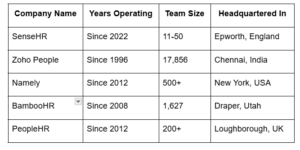
Note: All data in this table is sourced from review platforms and the official websites of the listed companies.
-
SenseHR – Best for Flexible Workflow Automation Across Frontline and Field-Based Teams
How Is SenseHR Different in Its Industry?
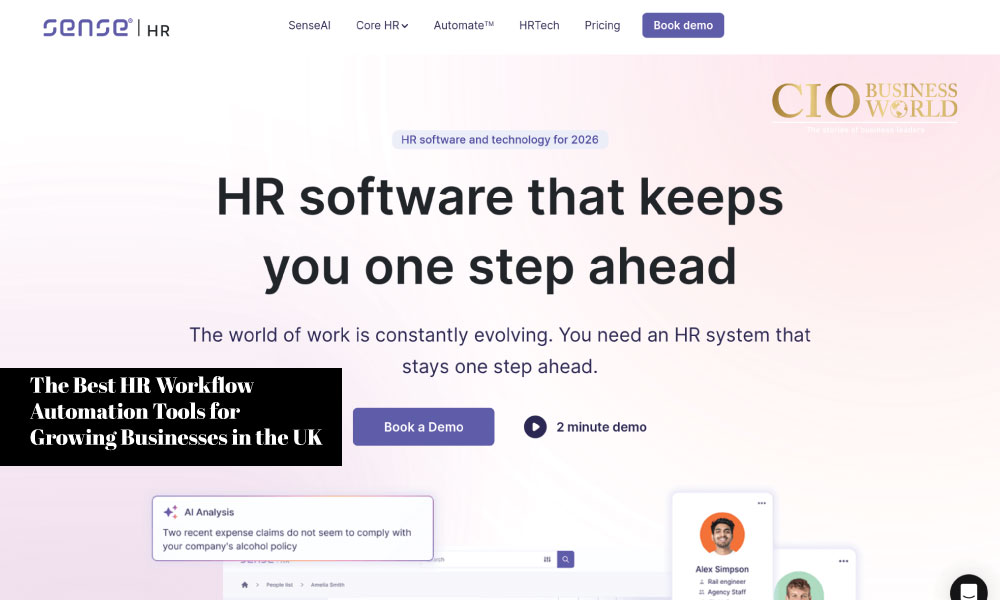
SenseHR sits in an interesting position in the market. They cover all the standard people management ground: employee records, holiday tracking, document storage with e-signature, and time and attendance, but they pair that with something most competitors skip entirely: wearable hardware built for frontline workers. The AI co-pilot for HR administrators is also a genuinely practical touch. For construction firms, healthcare providers, or manufacturers juggling shift workers across remote sites, that combination is hard to match.
What Sets SenseHR Apart for HR Workflow Automation Tools?
The platform is built to handle genuinely complex workflow requirements, not just tick-box automation for simple office environments. For businesses with a mixed workforce spread across multiple sites, the flexibility SenseHR offers in designing custom workflows is the kind of thing that actually gets used day-to-day, not just demoed once and forgotten.
What Users Are Actually Saying:
Users consistently point to the platform’s flexibility and the quality of support they receive when configuring workflows. The pricing structure (starting at £2 per employee per month, which is genuinely accessible for SMEs) also gets mentioned regularly as a reason teams felt comfortable trialling it. That kind of affordability without sacrificing configurability is rare in this space.
-
Zoho People – Best for Affordable, Customisable HR Management at SMB Scale
How Is Zoho People Different in Its Industry?
Zoho People covers a broad range of HR functions, from initial employee setup and attendance to performance management, learning, and an HR help desk, all within a single cloud platform. What makes it stand out is the combination of genuine affordability (pricing from £0.95 per user per month) and the depth of customisation on offer. The Zoho ecosystem also means businesses already using Zoho tools can bring HR data into a broader workflow without stitching together separate systems.
What Sets Zoho People Apart for HR Workflow Automation Tools?
The platform directly addresses the problem of HR functions living in disconnected tools by pulling everything into one configurable environment. That usually means HR teams spend considerably less time on data reconciliation and more time on actual people work.
What Users Are Actually Saying:
Users tend to comment on how much they can customise the platform without needing developer support, which matters a lot for smaller HR teams without dedicated IT resource. The breadth of features relative to the price point is consistently mentioned as the main reason businesses choose Zoho People over pricier alternatives. Recognition by Deloitte as one of India’s best-managed companies in 2022 also reinforces that this isn’t a fly-by-night operation.
-
Namely – Best for Small to Mid-Sized Company HR and Payroll Management
How Is Namely Different in Its Industry?
Namely brings HR, payroll, benefits, and talent tools together in a single cloud-native platform, but the design philosophy is what actually sets it apart. The interface borrows usability cues from social media, which sounds gimmicky until you realise it dramatically improves employee adoption. They also offer managed services for businesses that want someone else to handle the processing entirely. For smaller companies without a large HR team, that option removes a lot of operational pressure.
What Sets Namely Apart for HR Workflow Automation Tools?
Namely tackles one of the most common frustrations in smaller businesses: employees who refuse to engage with clunky HR systems and end up routing everything through email instead. Their 2022 ‘Overall HR Solution Provider of the Year’ award at the RemoteTech Breakthrough Awards reflects real market validation, and with over 1,000 clients served, they’ve clearly built something people stick with.
What Users Are Actually Saying:
The dominant theme in user feedback is how easy the system is for non-HR employees to actually use, which is a bigger deal than it sounds. Engagement levels tend to be higher with Namely than with more complicated alternatives, and that knock-on effect on HR process completion rates is where the real value shows up.
-
BambooHR – Best for Connected HR Ecosystems Across the Full Employee Lifecycle
How Is BambooHR Different in Its Industry?
BambooHR covers the full employee lifecycle in one platform: applicant tracking, initial employee setup, payroll, benefits administration, and performance management. The differentiator is their unified data model, which keeps all people data in one place rather than syncing between modules that were never designed to work together. With embedded AI and native apps across the platform, BambooHR serves over 34,000 customers and 3 million employees across 190 countries (enterprise reach with SMB-friendly pricing).
What Sets BambooHR Apart for HR Workflow Automation Tools?
Where many platforms still rely on third-party connections to link their own modules, BambooHR’s native app architecture means data flows consistently without the usual friction or lag. That kind of connected setup tends to produce noticeably lower HR task error rates compared to organisations running fragmented systems.
What Users Are Actually Saying:
Reviews frequently mention how clean the data experience feels when everything sits in one model, particularly during initial employee setup and payroll runs where accuracy matters most. The 2025/26 Cloud Awards recognition for Best HR Tech is worth a mention too, since that kind of industry acknowledgement tends to reflect sustained product quality rather than a one-off release. Users across industries, from startups to established organisations like Quora and MasterClass, report consistent satisfaction with how the platform scales.
-
PeopleHR – Best for Modular HR Operations with Built-In AI Assistance
How Is PeopleHR Different in Its Industry?
PeopleHR covers five main modules: HR management, payroll, talent, learning, and employee engagement, all within a modular structure that lets businesses start small and add capability as they grow. The built-in AI assistant, Evo, is available across all pricing tiers (not just the premium plans, which is a deliberate choice that separates it from competitors who gate AI behind expensive licenses). Backed by Access Group, one of the UK’s largest software companies, PeopleHR serves over 7,000 UK customers and 75,000 companies globally.
What Sets PeopleHR Apart for HR Workflow Automation Tools?
PeopleHR solves the scaling problem particularly well, addressing the challenge of outgrowing your HR system every few years and having to migrate everything from scratch. With 97% of reviewers praising ease of use, the adoption curve for HR staff is genuinely low, which matters enormously when rolling out new automation workflows across a growing business.
What Users Are Actually Saying:
Cost-effectiveness comes up repeatedly in user feedback, with 88% of reviewers noting value for money. Users appreciate that the AI tools don’t feel bolted on as an afterthought but are woven into the daily HR experience from day one. That kind of product maturity, combined with UK-based headquarters in Loughborough, gives it particular relevance for UK businesses working through local HR requirements.
Methodology Behind These Picks
Gathering Baseline Information and Metrics
Building the longlist started with a broad sweep across HR software directories, product review platforms, and publicly available case studies. The focus was on tools with documented experience in workflow automation, not just general HR management. Platforms were sourced from multiple channels to avoid relying too heavily on any single directory or publisher. Company age, team size, geographic focus, and stated feature sets were recorded for each option at this stage.
The Shortlist Cut
From the initial pool, platforms without verifiable presence in the HR technology space were removed first. After that, review patterns across multiple platforms were analysed to identify whether user sentiment was consistent over time or clustered around a single event. Options with sparse or unverifiable review histories were set aside. The shortlist retained only those platforms where both product claims and user experiences could be reasonably cross-referenced.
Fact-Checking the Picks
Each shortlisted platform was examined by comparing what the official product pages claim against what users describe in their actual experience. Where marketing copy described automation capabilities, those claims were checked against feature documentation and customer accounts. Gaps between stated functionality and real-world user experience were flagged and, in some cases, resulted in a platform being removed from consideration entirely. Pricing structures were also checked for transparency, since hidden costs are a consistent frustration in this space.
Authority Signals and Industry Standing
Recognition from credible sources played a role in the final weighting. Industry awards, mentions in HR technology publications, and original research published by the platforms themselves were all factored in. Awards were treated as one signal among many rather than a decisive factor on their own. A platform that wins an award but has declining review sentiment over the same period is worth less than one with consistent ratings and no trophy cabinet.
HR Workflow Automation Tools Track Record
The final check focused on each platform’s demonstrated experience with workflow automation. Dedicated feature pages for automation were reviewed alongside verified customer accounts that mentioned automation outcomes. Case studies describing before-and-after results, particularly around HR process cycle time, initial setup speed, or administrative hours saved, carried more weight than general capability descriptions. Platforms with clear, repeatable evidence of automation outcomes across different business sizes and sectors made the final list.
Picking the Right HR Workflow Automation Tools for You
Choosing the right HR workflow automation tool isn’t just about feature lists. The best fit depends on your team’s size, the requirements of your HR processes, and how much internal resource you have to configure and maintain a new system. Here’s what to weigh up before you decide.
- Industry and Domain Experience: Look for platforms that understand your sector’s specific HR pressures, whether that’s shift work and frontline workforce management, or white-collar onboarding at scale. A tool built for your context will require far less workaround.
- Features and Service Range: Not every business needs every module from day one. Modular platforms like PeopleHR let you start lean and expand, while all-in-one options like BambooHR suit businesses that want everything connected from the start.
- Pricing Structure: Per-employee-per-month models (like SenseHR’s £2 entry point) work well for growing teams because costs scale predictably. Watch for platforms that lock workflow capabilities behind premium tiers.
- Results Measurement: Any serious platform should give you visibility into process completion rates, time-to-hire, and initial setup speed. If you can’t measure improvement, you can’t justify the investment.
- Industry Knowledge and Compliance: For UK businesses, GDPR adherence and support for local labour law requirements aren’t optional extras. Confirm that your chosen platform keeps pace with regulatory changes without requiring manual configuration updates on your end.
The Verdict
HR workflow automation is no longer a nice-to-have for growing UK businesses. The right tool removes the manual drag that slows HR teams down, reduces compliance risk, and gives employees a better experience from day one. SenseHR suits businesses needing flexibility and hardware support, whilst BambooHR and PeopleHR work well at scale. For budget-conscious SMBs, Zoho People and Namely both deliver strong value. The space is maturing fast, and businesses that invest now will be better placed as headcount grows.