Business technology has always evolved around one basic goal: helping people access information faster and work more efficiently.
Desktop computers moved work from paper into digital systems. Laptops made those systems portable. Smartphones then placed email, messaging, navigation, cameras, and business applications in a device that could fit inside a pocket.
Now another transition is beginning.
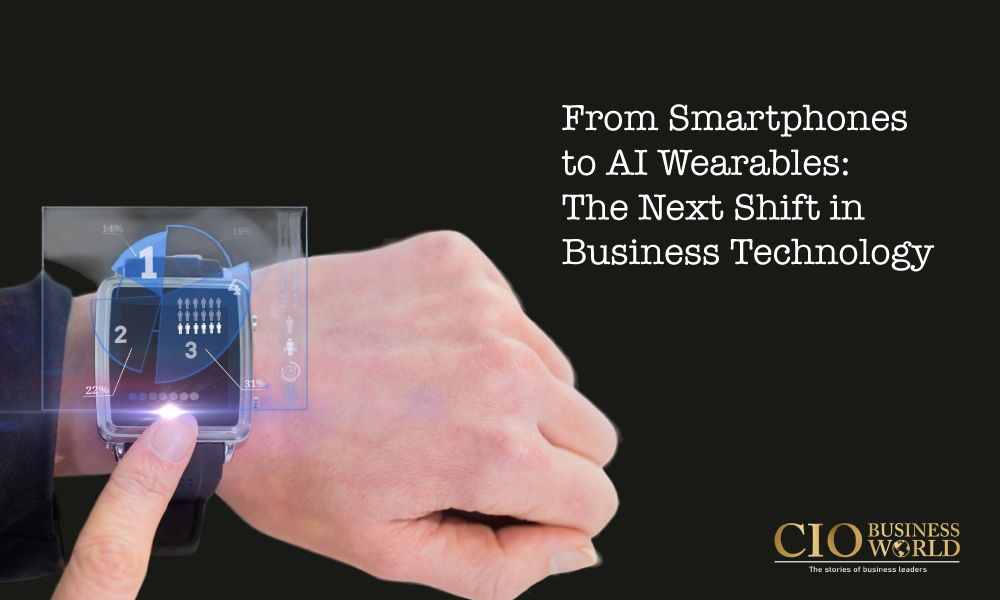
Artificial intelligence is moving beyond traditional screens and into wearable devices that can interact with people throughout the day. Smart glasses, watches, audio devices, and other AI-powered wearables are creating new possibilities for how employees communicate, document information, and access digital tools.
Smartphones Changed How Work Happens
It is difficult to overstate the effect smartphones have had on modern business.
Employees no longer need to be sitting at a desk to respond to email, join meetings, approve documents, check analytics, or communicate with customers.
Mobile technology also changed entire industries. Retail employees use phones and tablets for inventory checks. Delivery drivers rely on navigation apps. Sales representatives access customer information while traveling.
The smartphone became a universal business tool because it combined many functions into a single portable device.
AI wearables may represent the next stage of that evolution.
Why Businesses Are Looking Beyond Screens
Screens are powerful, but they also require attention.
Every time someone checks a smartphone, they need to stop what they are doing, look down, unlock the device, and navigate to the appropriate app.
Wearables can reduce some of that friction by allowing technology to operate more naturally alongside physical activity.
For example, Ray-Ban Meta AI glasses are part of a broader category of smart eyewear that demonstrates how digital features can be integrated into something people already wear.
The larger business trend is not about replacing smartphones immediately. It is about creating additional ways to interact with information when using a phone is inconvenient.
Hands-Free Technology Could Reshape Field Work
Some of the clearest opportunities for wearable technology exist in jobs where employees need both hands free.
Technicians, warehouse staff, event teams, construction professionals, healthcare workers, and field service employees often work in environments where repeatedly checking a phone is impractical.
Wearable devices may help employees receive instructions, communicate, document work, or access information without stopping the physical task in front of them.
This could reduce interruptions and make certain workflows more efficient.
AI Assistants Are Becoming More Contextual
Traditional digital assistants depend heavily on specific commands and screen-based interaction.
AI systems are increasingly capable of processing natural language and responding in more conversational ways. When these systems are integrated into wearable devices, assistants may become easier to access during everyday tasks.
That could make it possible for employees to quickly retrieve information, create reminders, summarize notes, or communicate without opening several applications.
The value comes from reducing the number of small steps required to complete routine digital tasks.
Wearables Could Change Business Communication
Smartphones made communication constant. Wearables may make it more ambient.
Instead of repeatedly switching between apps and devices, employees could potentially interact with communication tools through voice, audio, or other lightweight interfaces.
This may be particularly useful for workers who spend much of the day moving between locations.
However, businesses will need clear expectations around when wearable communication is appropriate. Constant access can easily become constant interruption if technology is not managed thoughtfully.
First-Person Content Has Business Potential
Camera-enabled wearables may also create new possibilities for documentation and content creation.
A technician could record a repair process for training purposes. A tourism company could create first-person destination content. A retail team could document store setups. Event organizers could capture behind-the-scenes footage.
This perspective can be valuable because it shows tasks from the user’s point of view.
At the same time, organizations need clear consent and privacy rules before introducing recording-enabled wearables into workplaces.
Privacy and Security Will Matter
The convenience of wearable technology also creates new questions.
Businesses adopting AI wearables will need to think carefully about data security, recording policies, customer privacy, and employee expectations.
Organizations may need guidelines covering when devices can be used, what information can be captured, and where data is stored.
These policies are especially important in industries dealing with confidential, personal, or regulated information.
Technology adoption works best when privacy and security are considered from the beginning rather than added later.
Smartphones Are Not Going Away
AI wearables should not be viewed as an immediate replacement for smartphones.
Phones remain far better for many tasks, particularly those involving large amounts of text, detailed visual information, complex applications, or extended communication.
Instead, wearable technology may complement smartphones.
Employees could use wearables for quick interactions and hands-free tasks while relying on laptops and smartphones for more complex work.
This layered approach is similar to how smartphones did not eliminate computers. Each device became useful for different situations.
Businesses Should Focus on Use Cases
New technology often attracts attention before organizations understand how it should actually be used.
Companies considering AI wearables should begin with specific problems rather than purchasing technology simply because it is new.
A useful evaluation might ask:
- Does the device reduce interruptions?
- Does it make a hands-free task easier?
- Can it improve documentation or communication?
- Does it integrate with existing workflows?
- Are privacy and security risks manageable?
If the answers are unclear, the technology may not yet be necessary.
The Next Interface May Be Less Visible
Business computing has gradually become more portable.
Large desktop systems became laptops. Laptops were joined by smartphones. Smartphones are now being complemented by watches, earbuds, smart glasses, and other connected devices.
The next major shift may therefore be less about carrying another screen and more about making technology less visible.
AI-powered wearables suggest a future in which digital tools remain available without demanding constant visual attention.
For businesses, the real opportunity will not come from adopting every new device. It will come from identifying situations where wearable technology genuinely makes work easier, safer, or more efficient.