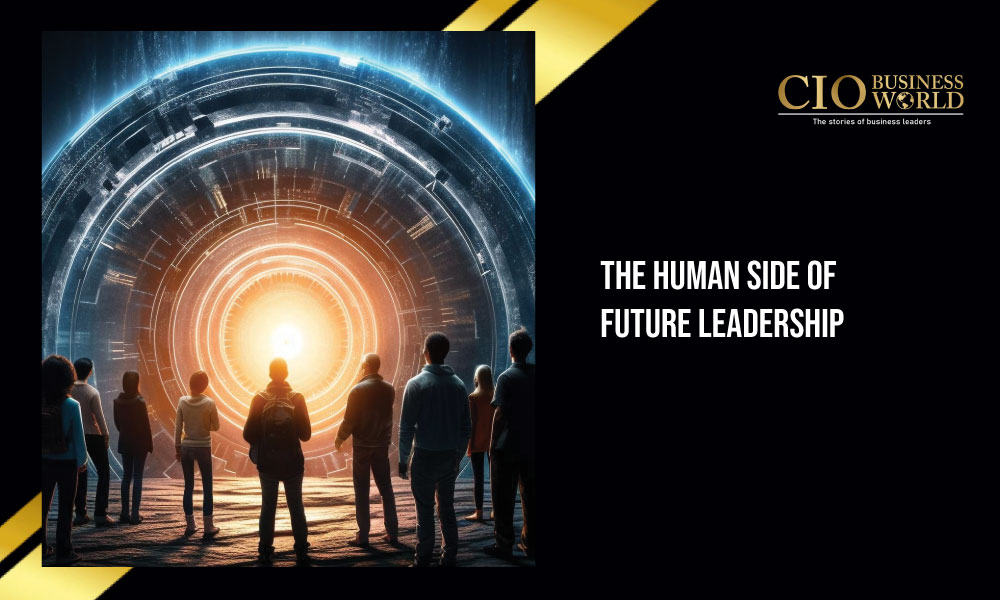
The future of business is often discussed through technology, artificial intelligence, innovation, markets, and growth. Yet behind every transformation are people. Employees build products, customers create demand, partners enable expansion, and communities experience the consequences of business decisions. For CEOs shaping the future, understanding these human dimensions requires something that cannot be measured only through data: empathy.
Empathy allows leaders to understand experiences beyond their own. It encourages CEOs to listen carefully, recognise different perspectives, and consider how strategic decisions affect the people connected to an organisation. In an increasingly complex business environment, empathy is becoming not merely a personal quality but a leadership capability.
Understanding Before Deciding
Leadership often involves making decisions with incomplete information. Financial reports may show what is happening, but they do not always explain why it is happening.
An empathetic CEO looks beyond the numbers. They speak with employees, listen to customers, understand operational challenges, and remain curious about experiences that may differ from their own. This deeper understanding can improve decision-making because it brings human context into strategic thinking.
Empathy does not mean avoiding difficult decisions. It means making those decisions with greater awareness of their consequences.
Listening to the Customer
The future of business will increasingly belong to organisations that understand customers deeply. Customer expectations are changing rapidly, and traditional assumptions can become outdated.
CEOs who listen carefully can discover frustrations, unmet needs, and emerging expectations before they become visible through conventional market indicators. Customer conversations, feedback, behavioural insights, and service experiences can all reveal opportunities for improvement.
Empathy transforms customer understanding from a marketing activity into a strategic capability.
Employees Are Part of the Future
Technological transformation often raises questions about automation, artificial intelligence, productivity, and changing job roles. While CEOs must consider efficiency and competitiveness, they must also understand how transformation affects employees.
People may need new skills, new responsibilities, or support while adapting to unfamiliar technologies. An empathetic CEO recognises that transformation is not simply a technology implementation; it is a human transition.
Investing in learning, reskilling, communication, and career development can help employees become participants in transformation rather than feeling that transformation is happening to them.
Empathy Strengthens Innovation
Innovation requires people to speak openly. Employees need to feel comfortable proposing unconventional ideas, questioning existing practices, and acknowledging problems.
A culture without empathy can discourage this behaviour. When people fear criticism or dismissal, important ideas may remain unspoken.
Empathetic leadership creates psychological space for curiosity. When employees believe that their perspectives are respected, they are more likely to contribute ideas and challenge assumptions.
This can make empathy an unexpected driver of innovation.
Leading Through Uncertainty
The future will inevitably contain uncertainty. Economic shifts, technological disruption, geopolitical events, organisational change, and unexpected crises can create anxiety within companies.
During such periods, employees often look to CEOs for more than strategic direction. They look for clarity and reassurance.
Empathetic communication does not require leaders to pretend that everything is certain. Instead, it requires honesty about what is known, what remains uncertain, and what the organisation is doing to respond.
A CEO who communicates with empathy can help people navigate uncertainty with greater confidence.
Respecting Different Perspectives
The future cannot be shaped effectively through one perspective. Organisations increasingly bring together people from different disciplines, generations, cultures, professional backgrounds, and experiences.
Empathetic CEOs recognise the value of these differences. They create environments where disagreement can be constructive and where people can challenge ideas without feeling personally challenged.
Diverse perspectives become valuable when people are given the respect and opportunity to express them.
Empathy and Responsible Growth
Business growth creates consequences beyond financial performance. Decisions about products, technology, employment, sustainability, data, and markets can affect wider communities.
Empathetic leadership encourages CEOs to consider these broader consequences. It asks not only whether something can be done, but whether it should be done and how it will affect the people involved.
This perspective can strengthen responsible innovation and long-term decision-making.
From Authority to Connection
The traditional image of the CEO often centres on authority, control, and decision-making. The future of leadership requires something broader: connection.
CEOs cannot personally understand every aspect of a large organisation, but they can create mechanisms for understanding. They can listen, ask questions, encourage dialogue, visit operational teams, speak with customers, and remain open to perspectives that challenge their own.
Connection makes leadership more informed and more human.
Building an Empathetic Culture
Empathy becomes most powerful when it moves beyond individual behaviour and becomes part of organisational culture.
When leaders demonstrate active listening, teams learn to listen. When leaders acknowledge employee concerns, managers become more attentive. When leaders treat customers with understanding, service cultures become stronger.
The CEO therefore influences culture not only through policies but through everyday behaviour.
The Future Needs Human Leadership
Technology will continue to change how businesses operate, but technological progress does not eliminate the need for human understanding. In fact, as organisations become more digital, the ability to understand people may become even more valuable.
CEOs shaping the future will need to combine analytical intelligence with emotional intelligence, technological capability with human awareness, and ambition with responsibility.
Empathy allows leaders to see beyond the organisation’s systems and understand the people within them.