
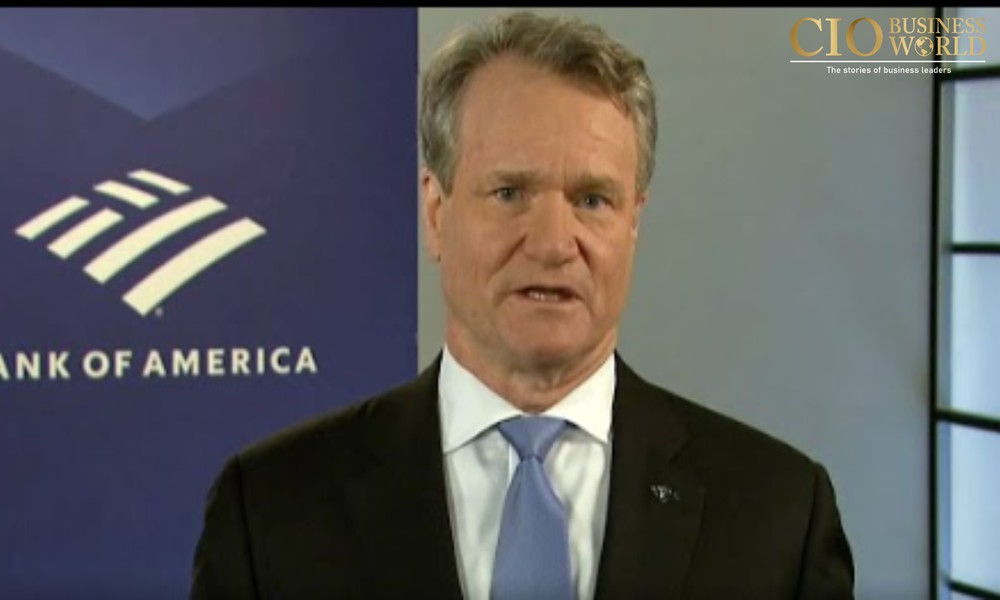
Bank of America expects its third-quarter investment banking fees to decline by at least 10% from a year earlier, as deal activity remains under pressure. The bank expects fee revenue to reach between $1.6 billion and $1.8 billion, compared with about $2 billion in the same quarter last year.
Bank of America Expects Lower Investment Banking Fees
The expected decline reflects a slower investment banking environment. Companies have been more careful about major transactions and financing decisions as borrowing costs and economic uncertainty continue to influence corporate plans.
Bank of America CEO Brian Moynihan said the bank’s investment banking pipeline remains healthy, but current market activity is not as strong as it was during the same period last year.
Why Are Banking Fees Falling?
Investment banking fees are closely linked to activities such as mergers and acquisitions, stock offerings, debt issuance, and corporate advisory services. When fewer companies pursue these transactions, banks generally generate less fee income.
Interest rates are also an important factor. Higher borrowing costs can make businesses more cautious about taking on new debt, expanding through acquisitions, or raising capital for large projects.
This environment has created a more selective market, where companies may delay transactions until financial conditions become more favorable.
Trading Revenue Could Remain Stable
Bank of America’s trading business is expected to provide a more stable source of revenue during the quarter.
Moynihan expects sales and trading revenue to be roughly flat compared with $5.4 billion in the third quarter of last year. This outlook contrasts with the expected decline in investment banking fees and shows how different parts of the bank are responding to current market conditions.
Trading revenue can benefit from continued activity among institutional clients, even when corporate dealmaking slows.
Bank Sees Strength in the U.S. Economy
Despite the weaker outlook for investment banking fees, Bank of America remains positive about the broader U.S. economy.
Consumer spending continues to support economic activity, while credit conditions remain relatively strong. This gives the bank some confidence that the investment banking slowdown does not necessarily signal a major deterioration in the overall economy.
The bank’s strong deal pipeline could also provide opportunities if market conditions improve and companies become more willing to move forward with planned transactions.
What Could Happen Next?
The performance of Bank of America’s investment banking business will depend on several factors, particularly interest rates, corporate confidence, and deal activity.
If financing conditions improve, companies could return to the market with more mergers, acquisitions, and capital-raising plans. That could help investment banking fees recover.
For now, however, the outlook remains mixed. Bank of America sees lower third-quarter investment banking fees, while trading revenue is expected to hold steady. The combination highlights the different pressures and opportunities facing major banks as businesses adjust to changing financial conditions.
Read our latest interview with Anil Solleti