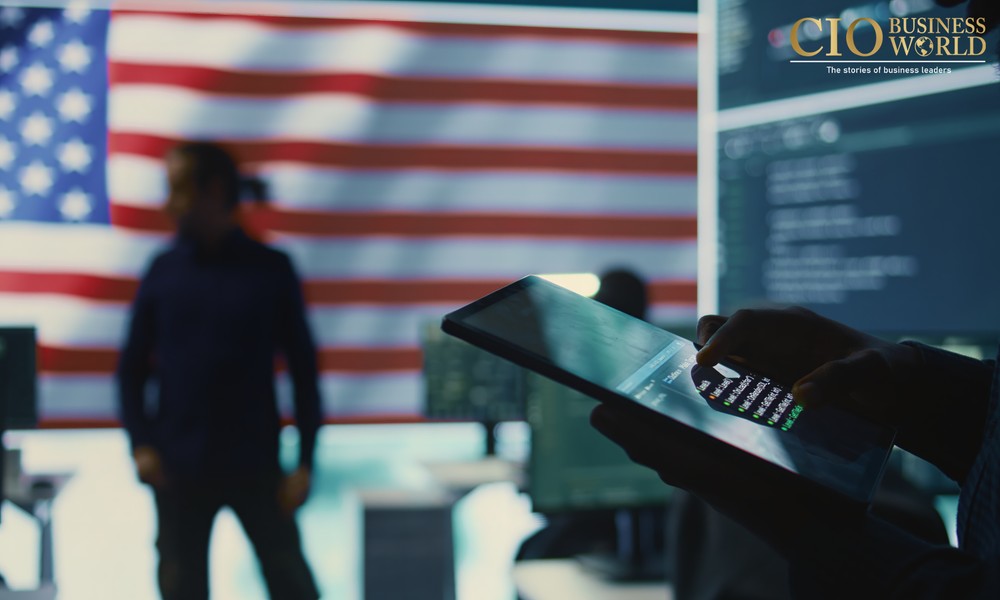
A new technology dispute between the United States and China is raising concerns about intellectual property, fair competition, and national security. The controversy follows a joint cybersecurity advisory from the U.S. National Security Agency (NSA), the Cybersecurity and Infrastructure Security Agency (CISA), and the Federal Bureau of Investigation (FBI).
The agencies accused several China-based technology companies of conducting large-scale efforts to extract capabilities from American artificial intelligence models and use those outputs to develop their own systems.
U.S. Agencies Raise Concerns Over Model Copying
The U.S. National Security Agency, Cybersecurity and Infrastructure Security Agency, and FBI issued a joint statement accusing major Chinese artificial intelligence companies of maliciously copying American AI models on an industrial scale.
According to the advisory, the companies allegedly used a technique known as knowledge distillation. The method itself is a legitimate technology-development practice in which the outputs of a larger model can help train a smaller or more specialized model. However, U.S. officials argue that its alleged use in these cases goes beyond normal research and involves systematic extraction of proprietary capabilities.
The advisory identifies companies including DeepSeek, Moonshot AI, Alibaba, MiniMax, StepFun, and Z.AI. U.S. officials say these companies collectively extracted billions of tokens through millions of interactions with American frontier models since at least late 2024.
How the Technology Dispute Works
The central issue is not simply whether companies are using another model’s output. It is how that access is obtained and at what scale.
U.S. agencies allege that some China-based companies used multiple access routes, including application programming interfaces, cloud services, third-party platforms, and proxy networks. These methods allegedly helped bypass geographical restrictions and make large-scale extraction harder to detect.
The concern is that such activity could allow companies to reduce the time, computing resources, electricity, and research investment normally required to develop advanced systems independently.
Why the Controversy Matters
The dispute has consequences beyond competition between technology companies. U.S. officials argue that faster access to advanced capabilities could strengthen China’s position in military, cybersecurity, economic, and critical infrastructure applications.
For American technology companies, the controversy also highlights the growing challenge of protecting proprietary models and preventing unauthorized large-scale use of their services.
The agencies have advised technology providers to improve monitoring, identify unusual account and network behavior, coordinate intelligence across providers, and strengthen defenses against suspected extraction campaigns.
A Larger U.S.-China Technology Rivalry
The latest accusations add another layer to the broader technology competition between Washington and Beijing. Both countries are seeking leadership in advanced computing, automation, cybersecurity, and next-generation digital technologies.
At the same time, the controversy raises an important question for the global technology industry: where should the line be drawn between legitimate learning from existing systems and unauthorized replication of proprietary capabilities?
What Comes Next for the Global Technology Race
The U.S.-China technology copying controversy is likely to remain a major issue for businesses, policymakers, and technology developers. While knowledge distillation can have legitimate uses, American agencies argue that industrial-scale extraction from proprietary models presents a serious competitive and security concern.
As advanced technologies become increasingly important to national economies and security, companies will face growing pressure to protect intellectual property while maintaining an environment where legitimate innovation can continue. The dispute could also influence future technology policies, cybersecurity measures, and the way companies protect their most valuable digital assets.
Read our latest interview with Sanjiv Lal