
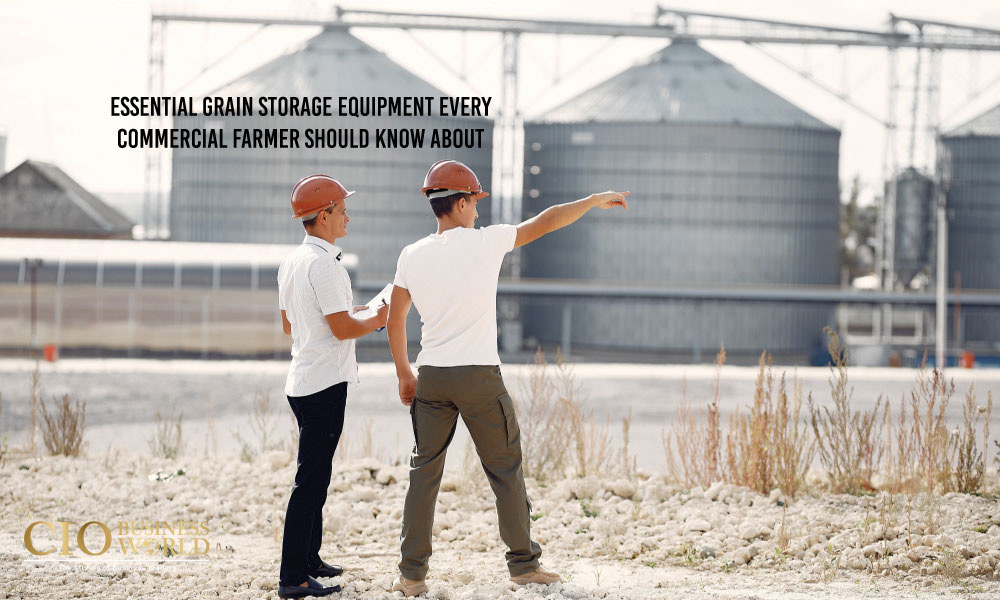
A successful harvest is only part of a commercial farming operation. Once crops are harvested, protecting them from moisture, pests, temperature fluctuations, and contamination becomes equally important. Without appropriate storage and handling equipment, grain can lose quality before it reaches the market or is used as livestock feed. The right storage setup also makes everyday farm operations more manageable by simplifying loading, unloading, and inventory management.
Whether a farm stores grain for a few weeks or several months, understanding the available equipment helps farmers make practical decisions. Well-planned storage can support more efficient farm management, reduce avoidable losses, and help agricultural businesses prepare for future seasons.
1. What Equipment Is Essential for Commercial Grain Storage?
Commercial grain storage involves more than placing harvested crops in a container. Different equipment serves specific purposes, from holding bulk grain to transferring it efficiently and protecting its quality.
Common equipment used in grain-storage operations includes:
- Storage bins and silos: Provide space for holding grain after harvest and help protect it from outside elements.
- Aeration systems: Circulate air through stored grain to help manage temperature and moisture conditions.
- Grain dryers: Reduce moisture levels when crops need additional drying before long-term storage.
- Augers and conveyors: Transport grain between harvesting equipment, storage units, and unloading points.
- Moisture meters and temperature sensors: Help farmers monitor grain conditions and identify potential storage problems.
Choosing the right combination depends on crop type, storage duration, farm capacity, and handling requirements.
2. How to Choose the Right Grain Bin for Your Farm
A suitable grain bin can simplify bulk storage and make grain handling more efficient. Among the available options, hopper-bottom bins are particularly useful for farms that regularly unload grain or feed, as their sloped design allows stored material to move toward the discharge opening.
Key features to consider include:
- Capacity: Choose a bin that accommodates the quantity of grain you expect to store without unnecessarily exceeding your storage requirements.
- Material: Galvanized steel and polyethylene bins offer different characteristics. Steel provides a sturdy storage structure, while polyethylene options offer smooth interiors and corrosion resistance.
- Bottom design: Hopper-shaped bottoms allow stored material to move toward the discharge opening, helping with unloading.
- Access and handling: Consider the fill opening, lid access, discharge height, and whether the setup can accommodate an auger.
Commercial farms may benefit from larger-capacity bins, while smaller operations may need compact storage units. Matching bin capacity to the farm’s handling system can help prevent unnecessary bottlenecks.
3. Hopper-Bottom Bins, Slide Gates, and Auger Transitions
Hopper-bottom bins are designed with a sloped bottom that directs stored material toward a discharge opening. This design can make unloading easier, particularly when farmers need to move feed or grain into containers or handling equipment.
Two useful discharge options include:
- Slide gates: Allow grain or feed to flow out of the bin into a bucket, tote, or other suitable container. They provide a straightforward way to control the discharge.
- Auger transitions: Connect compatible bins to rigid or flexible auger systems, helping transfer bulk material to another location.
These features can help reduce the need for manual handling and make bulk storage more practical. However, the correct transition, discharge height, and handling equipment should be selected based on the bin design and the intended material.
4. Galvanized Steel and Polyethylene Storage Bins
Storage material is an important consideration when selecting equipment for a commercial farm. Both galvanized steel and polyethylene bins are available in different sizes and configurations, but they are not interchangeable for every application.
- Galvanized steel bins: Suitable for many dry, free-flowing materials, including grains and livestock feed. Their construction and support systems should be appropriate for the intended capacity and installation.
- Polyethylene bins: Offer smooth internal surfaces and corrosion-resistant construction. Some models are designed to handle certain dry or moist feed materials, depending on the manufacturer’s specifications.
Farmers should check the bin’s intended use, material compatibility, capacity, assembly instructions, and discharge options before purchasing. A bin should not be used to store materials that its manufacturer does not approve.
5. Equipment That Helps Protect Stored Grain Quality
Even a suitable storage bin cannot prevent spoilage if grain is stored under unsuitable conditions. Moisture and temperature management are essential for limiting mold growth, insect activity, and deterioration.
The following equipment can help:
- Moisture meters: Measure grain moisture levels before storage and during inspections when needed.
- Temperature monitoring systems: Help identify temperature changes within stored grain.
- Aeration fans: Circulate air to help cool grain and reduce moisture migration under appropriate conditions.
- Grain dryers: Help reduce moisture content before grain is placed into storage or when additional drying is required.
The USDA’s guidance on safe grain storage explains how aeration can help maintain grain condition by managing temperature and moisture. Storage requirements vary by crop, moisture content, temperature, and storage duration, so farmers should use crop-specific recommendations.
6. Safety and Installation Considerations for Grain Storage Equipment
Grain storage equipment requires proper installation, inspection, and maintenance. Bins should be placed on suitable foundations designed for the equipment, local soil conditions, and environmental loads. Manufacturer instructions should guide assembly, anchoring, and installation.
Farmers should also remember that grain-bin entry can be extremely dangerous because of engulfment, entrapment, and other hazards. Whenever possible, inspections should be conducted from outside the bin using appropriate equipment. If entry is unavoidable, it should only take place under proper safety procedures, with trained personnel and suitable protective equipment.
Planning storage access, delivery space, and unloading arrangements can also make equipment easier to use and maintain.
Conclusion
Reliable grain storage equipment helps commercial farmers protect harvested crops, simplify handling, and manage storage more efficiently. Selecting suitable bins, discharge systems, monitoring equipment, and installation arrangements can make a meaningful difference to everyday operations. Careful planning also supports long-term farm management, helping agricultural businesses adapt to changing needs while maintaining practical, dependable storage systems.
FAQs
How often should grain storage equipment be inspected?
Storage equipment should be inspected regularly, including before filling, during storage, and before the next harvest season, to identify damage, leaks, blockages, or wear.
Can the same storage bin be used for different crops?
Some bins can accommodate different crops, but compatibility, cleaning requirements, and material flow should be checked before changing the stored commodity.
Why should farmers plan grain storage around future farm needs?
Planning ahead helps farmers accommodate changing production volumes, handling requirements, and operational priorities as their farm businesses evolve.