
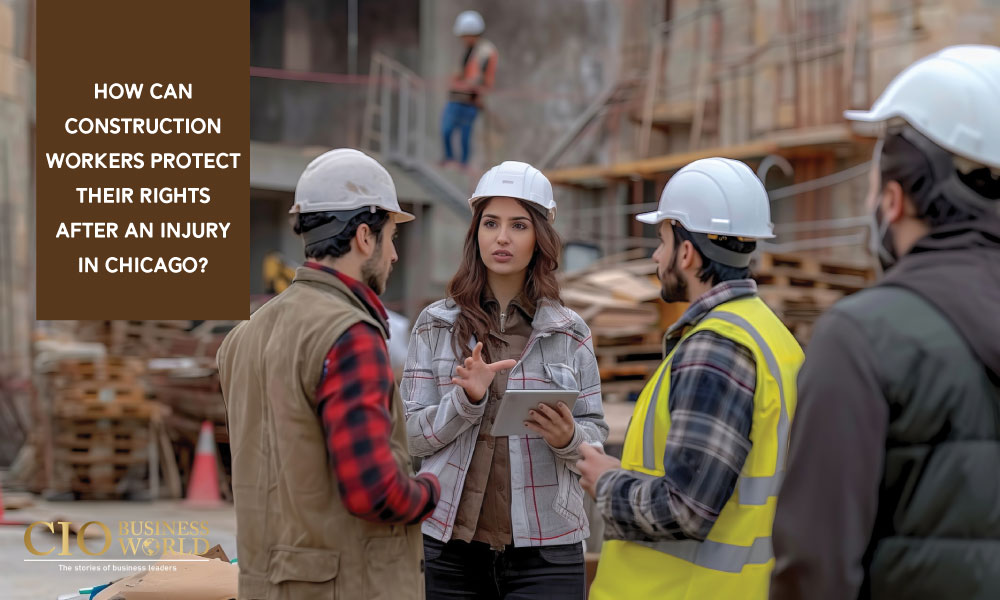
Construction sites rank among the most physically punishing workplaces in Illinois. Falls from scaffolding, electrocutions, caught-in machinery incidents, and struck-by accidents send Chicago construction workers to the hospital every year. A lot of them don’t know what to do next, or they make early decisions that quietly gut their legal claims. Here’s the thing: the steps you take in the hours and days after a construction site injury have a direct bearing on the compensation you can actually recover. If you’re a worker in Chicago who’s been hurt on the job, you have a legal right to benefits and, in many situations, damages that reach well beyond the workers’ compensation system. This article breaks down what those rights look like, what actions protect them, and what pitfalls to sidestep, so you can go into the process clear-eyed with your case still intact.
Understanding Your Legal Rights at a Chicago Construction Site
Illinois law gives injured construction workers two separate legal paths, and most people only know about one. When workers get hurt on a job site, construction accident lawyers in Chicago are often the first point of contact because they can assess which path fits the specific facts of a case. The first is the workers’ compensation system; it applies when your employer carries workers’ comp coverage and pays for medical expenses plus a share of lost wages. The second is a third-party personal injury claim, which opens up when someone other than your employer (a general contractor, subcontractor, equipment manufacturer, or property owner) caused or contributed to the accident. These two claims can run simultaneously; they don’t cancel each other out. Many injured workers leave money on the table simply because they assumed workers’ comp was their only option.
What Illinois Law Covers for Injured Workers
Under the Illinois Workers’ Compensation Act, nearly every employee hurt on the job is entitled to medical treatment, temporary disability payments, and permanent disability benefits if the injury causes lasting limitations. Your employer can’t retaliate against you for filing a claim. That protection is written into Illinois law – it’s not something an employer can contract away or erase with a written policy. Illinois also requires employers to carry workers’ comp insurance, so the process isn’t contingent on your employer’s goodwill. What it IS contingent on is proper reporting. You must notify your employer of the injury as soon as possible; delays beyond 45 days can jeopardize your right to benefits entirely. The written notice doesn’t need to be formal or lengthy – it just needs to exist and be timely. Keep a copy for yourself, document the date you delivered it, and don’t assume a verbal conversation is enough.
When a Third-Party Claim Goes Beyond Workers’ Comp
A third-party claim is often worth far more than a workers’ compensation benefit because it can include pain and suffering, full lost wages, and other damages that workers’ comp won’t touch. The key question is whether someone outside your direct employer contributed to what happened. On large Chicago construction sites, multiple contractors and subcontractors share the same space, and any one of them might have created a hazard, an improperly stored load, a faulty scissor lift, a missing safety barrier. Equipment manufacturers face liability when a defective product causes the injury. Property owners bear responsibility when a site-wide safety standard goes unmet. Identifying every responsible party matters because it expands the pool of available recovery; a third-party claim carries a two-year statute of limitations in Illinois, so workers can’t afford to sit on the facts while evidence goes cold.
Steps to Take Right After a Construction Site Injury
The window immediately following a construction site injury is the most critical stretch for protecting your rights after an injury in Chicago. Evidence disappears fast on active job sites, equipment gets moved, surfaces get repaired, and witnesses scatter to new projects within days. Don’t assume the foreman, the general contractor, or anyone else will preserve the scene on your behalf. They have their own interests, and keeping a hazardous condition on display often isn’t among them. Those first 24 to 72 hours shape everything that follows, both for your physical recovery and for your legal claim.
You are responsible for creating your own record.
Document the Scene Before You Leave
If you’re physically able, photograph and video exactly where the accident happened before anyone cleans up or rearranges the site. Capture whatever specific factor caused the injury, the hazard that triggered the fall, the condition of the equipment, the absence of warning signs, the state of the scaffolding. Get names and contact details from any coworkers who witnessed what happened. Written accounts, even informal ones texted to your own phone that same day, carry more weight than memories pieced together six months later. Also request and keep a copy of any incident report your employer fills out; you’re entitled to that document. These records directly support both a workers’ comp claim and a potential third-party lawsuit. Missing documentation is one of the most common reasons legitimate claims don’t reach their full value.
Seek Medical Care and Follow Every Instruction
Get medical attention the same day – even if the injury feels minor. Construction site injuries often involve soft tissue damage, internal injuries, or traumatic brain injuries that don’t show obvious symptoms for hours. A treatment delay creates two headaches at once: it slows your physical recovery, and it hands an insurer grounds to argue the injury wasn’t serious or wasn’t caused by the accident. Go to the emergency room or an urgent care facility, describe exactly how the accident happened and which part of your body was affected, and hold onto every record you receive. But don’t stop there – follow through on every follow-up appointment, physical therapy order, and specialist referral. Gaps in treatment, even a handful of missed appointments, become arguments against the severity of your claim. Consistent medical documentation is the backbone of any successful construction injury case.
Conclusion
Construction workers in Chicago who get hurt on the job have real legal protections, but those protections don’t activate on their own. You have to report the injury on time, document the scene, get consistent medical care, and pin down every party that may share responsibility for what happened. The Illinois workers’ compensation system provides a baseline; it’s rarely the ceiling of what an injured worker can recover. Third-party claims – where another contractor, an equipment manufacturer, or a property owner played a role – often carry far greater value. The trick is acting quickly, keeping thorough records, and recognizing that protecting your rights after an injury in Chicago starts in the days right after the accident, not months later once the evidence has vanished, and the deadlines have closed in.