The semiconductor industry has shaped the modern world in ways few industries ever have. From powering consumer electronics and enabling artificial intelligence to transforming healthcare, automotive systems, communications, and defense technologies, semiconductors remain at the core of global technological progress. Yet behind every breakthrough lies an ecosystem of innovators, researchers, entrepreneurs, investors, and advisors working together to transform complex ideas into commercially successful businesses. Throughout his career, Mike Beunder has been deeply embedded in that ecosystem, witnessing its evolution from the earliest days of Very Large Scale Integration (VLSI) to today’s rapidly expanding deep-tech landscape.
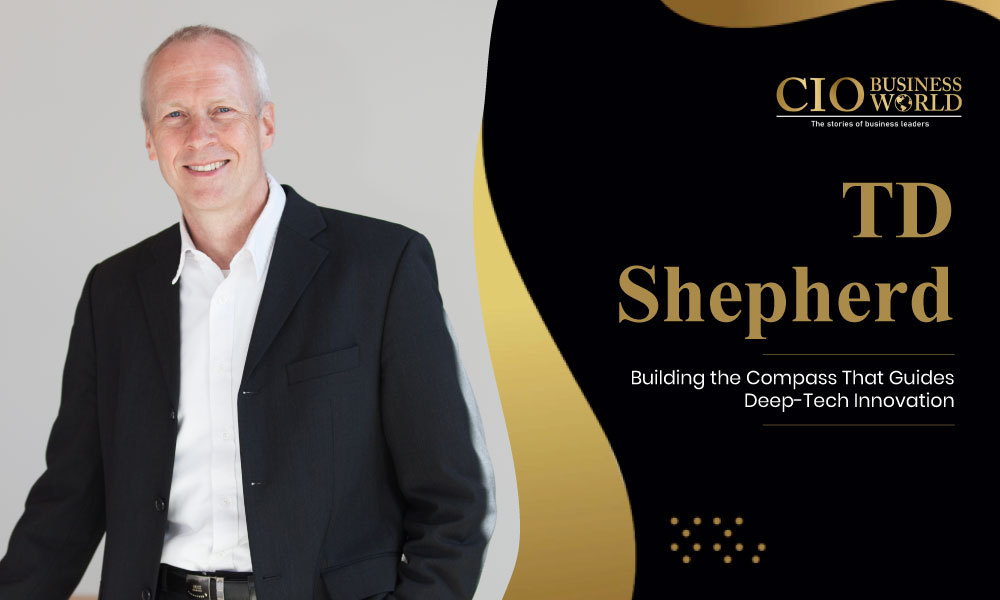
As the Founder and Managing Partner of TD Shepherd, Mike has built his career on one enduring belief: extraordinary technology alone is never enough. The success of a deep-tech startup depends equally on strategic direction, market understanding, experienced leadership, disciplined execution, and the ability to make the right decisions long before they become obvious. After spending decades working across research institutions, multinational technology companies, Silicon Valley startups, venture-backed scale-ups, and investment advisory, he now dedicates his expertise to helping deep-tech founders transform groundbreaking technologies into sustainable businesses. His journey reflects not only remarkable technical depth but also an unwavering commitment to mentoring entrepreneurs, strengthening Europe’s innovation ecosystem, and improving the long-term success rate of deep-tech ventures.
A Career Built Alongside the Evolution of the Semiconductor Industry
Mike Beunder’s professional journey began during one of the most exciting periods in semiconductor history. The emergence of the Mead & Conway revolution fundamentally changed integrated circuit design, making VLSI technology more accessible while opening entirely new possibilities for innovation. During the early 1980s, Mike had the opportunity to become part of Australia’s VLSI Program at CSIRO, an experience that would define the trajectory of his entire career.
Working alongside pioneers such as Dr. Craig Mudge introduced him to an industry that combined scientific curiosity with relentless technological advancement. Participating in the development of one of the world’s first 100K chips placed him among exceptionally talented engineers despite having relatively limited experience at the time. The challenge was demanding, but it also demonstrated what ambitious teams could accomplish when united by a shared purpose. During this same period, Mike experienced a life-changing personal incident after being struck by a train while driving his car—an event that reinforced the importance of resilience and perspective throughout both life and career.
The next major chapter unfolded in 1985 when Professor Bernd Hoefflinger invited Mike to join the founding team at IMS in Stuttgart, Germany. Building a semiconductor fabrication facility from the ground up provided an extraordinary opportunity to contribute to every stage of technological development, from manufacturing processes and silicon platforms to advanced design methodologies. Rather than joining an established organization, Mike became part of creating one from its very foundation, gaining practical experience that few professionals ever encounter.
At the same time, he pursued his PhD while helping establish the new organization. Balancing doctoral research with the responsibilities of building a cutting-edge semiconductor facility created enormous professional and personal demands. The workload extended well beyond conventional working hours and required unwavering commitment from both Mike and his family. Looking back, he recognizes that this period reflects the broader reality of the semiconductor industry itself—an industry defined by continuous learning, relentless innovation, and an expectation that professionals constantly evolve alongside rapidly advancing technologies.
During these formative years, Mike also began engaging with the wider international semiconductor community through IEEE conferences, particularly the Custom Integrated Circuits Conference (CICC). Exposure to Silicon Valley’s entrepreneurial culture introduced him to a very different way of thinking about technology, innovation, and business. It demonstrated that technical excellence and commercial ambition could coexist, planting the seeds for the entrepreneurial path he would later pursue.
Learnings that Shaped an Entire Industry
Following his years in research and development, Mike transitioned into the commercial semiconductor sector by joining VLSI Technology at its research and development center in Sophia Antipolis, France. The move represented far more than a change of employer. It introduced him to an environment where engineering excellence needed to align with commercial realities, customer expectations, competitive positioning, and product strategy.
The subsequent spin-out into COMPASS Design Automation eventually took him to Silicon Valley in 1995, placing him at the center of one of the world’s most dynamic technology ecosystems. Throughout this period, Mike benefited enormously from the guidance of respected industry leaders including Yves Saboret and Albert Stritter. Their mentorship reinforced a lesson that continues to influence his leadership philosophy today: every professional, regardless of experience or seniority, benefits from trusted mentors who are willing to provide honest feedback, challenge assumptions, and help navigate complex decisions.
Those experiences would eventually shape the advisory model Mike later built at TD Shepherd, where strategic guidance extends far beyond fundraising advice to encompass long-term business development, leadership coaching, and sustainable company building.
From Silicon Valley Startups to Building Europe’s Deep-Tech Ecosystem
Mike’s first true immersion into startup life came following the acquisition of COMPASS Design Automation by Avant!, an experience that exposed him to both the extraordinary opportunities and the difficult realities of high-growth technology companies. While startups are often celebrated for innovation and ambition, this period also revealed how the absence of integrity and empathy at leadership level can undermine even the most promising organizations. It became an equally valuable lesson in understanding not only how successful companies are built, but also how leadership failures can derail them.
Among the many companies that left a lasting impression during this period was 3dfx Interactive. Mike witnessed firsthand the remarkable capabilities of leaders such as Brian Kelleher, Joe Minacapelli, and Doug Quist, whose work later became an important foundation for NVIDIA’s rise. Their experience demonstrated how exceptional teams, when supported by the right vision and execution, could fundamentally reshape entire industries.
The next defining chapter came with the founding of Silicon Access, where Mike and his team set out to establish embedded DRAM as a standard component within CMOS technologies through close collaboration with TSMC. He often describes those years as operating at Formula One speed. Long working hours, nights spent sleeping on a futon beneath the office desk, and relentless efforts to complete tape-outs before critical deadlines became part of everyday life. Yet despite the intense workload, the experience reinforced the value of highly motivated teams working toward a common objective. The ability to execute rapidly, solve problems collaboratively, and maintain momentum under pressure became qualities that Mike would continue to value throughout his career.
Seeking a more balanced family life eventually brought him back to the Netherlands, where he joined Philips Semiconductors. Although Philips possessed tremendous engineering talent and technical capability, Mike quickly realized that the corporate culture differed dramatically from the entrepreneurial environments in which he had previously thrived. The transition from agile, fast-moving startups to a large corporate structure highlighted how bureaucracy, organizational politics, and competing internal priorities could limit innovation. While the experience broadened his understanding of global semiconductor businesses, it also reinforced his preference for organizations driven by execution, accountability, and entrepreneurial thinking rather than hierarchy.
That realization ultimately led him back into startup life through the co-founding of Cavendish Kinetics alongside Professor Charles Smith and one of the company’s earliest team members, Rob van Kampen. Established initially in the Netherlands before expanding into Germany and Silicon Valley, Cavendish Kinetics focused on developing breakthrough RF MEMS technology. Building the company across multiple continents required not only technological excellence but also the ability to attract investment, build international teams, and scale complex engineering operations.
One of the most significant milestones in Cavendish Kinetics’ journey came during its Series B financing round, when Wellington and Tallwood Venture Capital joined the company. Mike credits industry veteran Dado Banatao and later Board Chairman Luis Arzubi with providing both strategic guidance and invaluable Silicon Valley connections that helped accelerate the company’s growth. Their leadership ultimately contributed to Cavendish Kinetics achieving a successful acquisition by Qorvo, demonstrating the importance of pairing exceptional technology with experienced investors, strong governance, and long-term strategic planning.
Following several additional startup ventures, Mike gradually expanded his focus beyond company building into fundraising support, mergers and acquisitions, and strategic advisory. Initially working independently before joining a boutique corporate finance firm, he advised organizations across diverse industries ranging from national postal services and automotive leasing companies to fintech businesses. Although the projects varied significantly, they all reinforced a common principle: successful transactions begin with a deep understanding of technology, markets, competitive positioning, and long-term business strategy.
By 2015, however, Mike and his colleagues recognized that supporting companies across too many industries limited their ability to establish a distinctive reputation. Rather than continuing as generalists, they made the strategic decision to focus exclusively on deep technology. That decision led to the creation of TD Shepherd.
Today, TD Shepherd has become a specialist advisory firm dedicated entirely to the deep-tech ecosystem. Combining decades of practical experience across semiconductors, photonics, integrated circuit design, embedded software, venture capital, and corporate finance, the firm exists with a singular mission: improving the success rate of deep-tech startups. Rather than limiting its services to fundraising support, TD Shepherd works across the entire innovation ecosystem, helping founders develop long-term strategies, supporting venture capital firms through comprehensive technical due diligence, and facilitating early exits when joining larger organizations creates greater long-term value.
The firm’s philosophy begins with understanding every moving part of a business before making strategic recommendations. Technology roadmaps, competitive positioning, customer segmentation, business models, market entry strategies, product differentiation, and long-term ambition are all evaluated together. One of TD Shepherd’s signature methodologies, known as the Circle of Ambition, encourages founders to think well beyond their next funding round. In semiconductor startups, where successful exits often require eight to ten years, Mike believes that focusing only on immediate milestones almost always limits long-term success. Instead, every strategic decision must support the company’s ultimate ambition from its earliest stages.
Building Teams That Strengthen the Entire Innovation Ecosystem
While technology remains central to TD Shepherd’s work, Mike believes people ultimately determine whether innovation succeeds or fails. Building the firm’s team therefore requires far more than recruiting experienced professionals. TD Shepherd continuously seeks accomplished C-suite executives, vice presidents, and senior industry leaders who wish to remain actively engaged in the deep-tech ecosystem while sharing decades of accumulated expertise with the next generation of founders.
The onboarding process is intentionally rigorous. Beyond technical credentials, every potential associate must demonstrate an ability to collaborate effectively within multidisciplinary project teams while integrating seamlessly with startup founders and management teams. Since TD Shepherd’s associates are geographically distributed across multiple countries, collaboration depends heavily on trust, professional integrity, and clearly defined responsibilities. Every project is carefully structured to avoid conflicts of interest, ensuring that confidential information remains protected and that each associate contributes objectively to the success of the engagement.
What continues to attract senior professionals to TD Shepherd is the diversity of technologies and markets they encounter. Every deep-tech startup presents a unique combination of technical challenges, commercial opportunities, and strategic decisions. Rather than repeating the same assignments, associates continuously engage with emerging technologies that demand fresh thinking and collaborative problem-solving. That constant exposure to innovation keeps experienced industry veterans intellectually engaged while allowing startups to benefit from knowledge accumulated over decades.
Looking ahead, Mike’s vision for TD Shepherd is both ambitious and clearly defined. Over the next five years, the firm aims to establish itself as a trusted strategic partner for at least five of Europe’s leading deep-tech incubators, becoming an integral part of their support structure for companies progressing from seed funding through Series A and later investment rounds. Partnerships with organizations such as Silicon Catalyst and ChipStart.EU already demonstrate how specialized advisory can significantly improve startup preparedness and investor confidence.
A second priority is strengthening TD Shepherd’s reputation for facilitating successful early exits. Mike believes acquisitions should not be viewed as an indication that a startup has fallen short of its ambitions. Instead, when executed strategically, an early exit can provide founders, investors, employees, and customers with far greater long-term value by allowing promising technologies to scale within established global organizations. Building on previous successes, TD Shepherd intends to support at least five additional early exits over the coming years.
The firm also continues expanding its relationships with venture capital firms across Europe. By establishing long-term due diligence partnerships with at least fifteen specialist deep-tech investors, TD Shepherd hopes to create a more robust investment ecosystem where technical analysis extends beyond simple investment decisions and continues supporting portfolio companies throughout their growth journey.
Today, the firm actively participates in leading innovation initiatives including TechTour, Cassini, High-Tech Venture Days, and Silicon Catalyst while evaluating approximately four hundred to four hundred and fifty startup opportunities annually. Although most engagements originate within Europe and the United Kingdom, TD Shepherd’s growing international presence now extends across North America, Australia, and other global innovation hubs, reflecting the increasingly interconnected nature of deep-tech entrepreneurship.
Shaping the Future of Venture Advisory Through Technology, Trust, and Long-Term Thinking
As artificial intelligence rapidly transforms professional services, Mike sees enormous opportunities to enhance how advisory firms operate. TD Shepherd is actively integrating AI-powered tools into its Discovery and Ambition methodologies, enabling deeper analysis of markets, competitors, product positioning, and technology landscapes while significantly improving efficiency. Intelligent visualization tools help simplify highly complex datasets, allowing founders and investors to understand strategic opportunities with greater clarity.
AI is also enabling entirely new forms of benchmarking. By identifying companies that have followed similar technological and commercial development paths, TD Shepherd can extract valuable lessons that help founders anticipate challenges long before they arise. At the same time, Mike believes traditional startup databases are gradually losing relevance as AI systems become capable of generating richer, faster, and more comprehensive market intelligence.
Despite these technological advances, he remains convinced that successful advisory will always depend on human judgment. Technology can accelerate analysis, but it cannot replace the experience required to interpret complex business dynamics, evaluate leadership teams, or understand the subtle strategic decisions that determine long-term success.
This philosophy also shapes Mike’s perspective on work-life balance. Reflecting on the years spent balancing a demanding PhD with the creation of IMS, he recognizes both the rewards and the personal sacrifices associated with deep-tech entrepreneurship. Those experiences taught him that no commercial success can justify neglecting personal health or family relationships. Throughout his leadership career, he has never hesitated to send exhausted employees, founders, or colleagues home to rest, even when doing so delayed important projects. Sustainable performance, he believes, is built by protecting people rather than exhausting them.
Trust remains the defining value underpinning every engagement at TD Shepherd. Every client relationship begins with an extensive Discovery phase, during which both parties assess not only the technical and commercial opportunity but also the strength of their mutual confidence. The firm intentionally declines a significant percentage of potential projects because Mike believes that without genuine trust and complete confidence, no fundraising process, merger, acquisition, or strategic advisory engagement can succeed.
His broader vision for the venture capital industry also reflects this long-term mindset. Mike believes Europe must improve how it measures startup success. While many venture capital firms focus primarily on identifying a handful of exceptional returns within large portfolios, he argues that smaller successful exits also create significant economic value by producing experienced founders who often establish future companies. Likewise, startups that fail quickly and responsibly return skilled talent to the entrepreneurial ecosystem far more effectively than businesses artificially sustained through continuous grant funding without realistic commercial prospects.
He also advocates for making far better use of the enormous amount of insight generated during due diligence. Rather than treating due diligence as a simple investment approval process, Mike believes its findings should evolve into living strategic dashboards that strengthen communication between founders, investors, and boards throughout the company’s growth journey.
For aspiring entrepreneurs and advisors entering the deep-tech sector, his guidance reflects the lessons accumulated over four decades of experience. Building successful advisory businesses requires collaborative teams rather than individual consultants. Diverse expertise consistently produces stronger strategic decisions while creating healthier, more sustainable working environments. Above all, advisors must demonstrate measurable value to both founders and investors, ensuring that every recommendation strengthens not only individual companies but the wider innovation ecosystem itself.
Mike Beunder’s remarkable career mirrors the evolution of the semiconductor and deep-tech industries over the past forty years. From pioneering VLSI research and Silicon Valley startups to building globally recognized advisory capabilities, his journey demonstrates that breakthrough technology alone rarely guarantees success. Sustainable innovation depends on thoughtful leadership, disciplined execution, trusted relationships, and an unwavering commitment to helping others succeed. Through TD Shepherd, he continues to shape the future of deep technology by ensuring that visionary founders are equipped not only to build extraordinary technologies but also to build enduring companies capable of changing industries for decades to come.
For Print and Design Purpose:
Quotes:
“In all its simplicity, our mission is to improve the success rate of deep-tech startups.”
“Our focus is on improving the success rate of startups by providing them with better tools and insights to drive their roadmap”
“I learned to ensure that employees, fellow founders and co-founders as well as startup teams guard their personal health and family life.”
Explore the Full Digital Edition → Most Trusted Venture Capital and Startup Advisory Solution Providers