
The AI Divide: Innovation vs. Regulation
The fundamental conflict in today’s tech revolution AI era is between rapid innovation and growing calls for regulation. While businesses worry that excessive regulation could impede progress, governments are pushing for safeguards to prevent misuse. Recent developments indicate that policymakers are intervening more aggressively, particularly in areas like cybersecurity, autonomous systems, and data governance, while tech leaders caution that excessive control could reduce global competitiveness.
Rapid innovation and growing calls for regulation are the main points of contention in the current AI phase of the tech revolution. While businesses worry that excessive regulation could impede innovation, governments are advocating for safeguards to prevent abuse.
Policymakers are becoming increasingly involved, particularly in areas like data governance, autonomous systems, and cybersecurity, according to recent trends. Tech executives caution that an excessive amount of control could reduce global competitiveness.
Who is in charge of fundamental AI models?
Whether closed ecosystems or open-source AI systems should be maintained
The harmony between innovative pace and safetyThe norms of the AI technology revolution are being redefined by this continuing conflict, where control and trust are becoming just as crucial as performance.
AI Governance Divides Tech Giants
Some businesses support open innovation, which makes AI models collaborative and openly available. To lower risk and safeguard intellectual property, others favor strictly regulated systems.
Closed systems put security and profitability first.
Governments are finding it difficult to keep up with both approaches.These disputes demonstrate the division among digital companies about the regulation of AI, resulting in a disjointed global tech order.
AI Tech War: International Competition
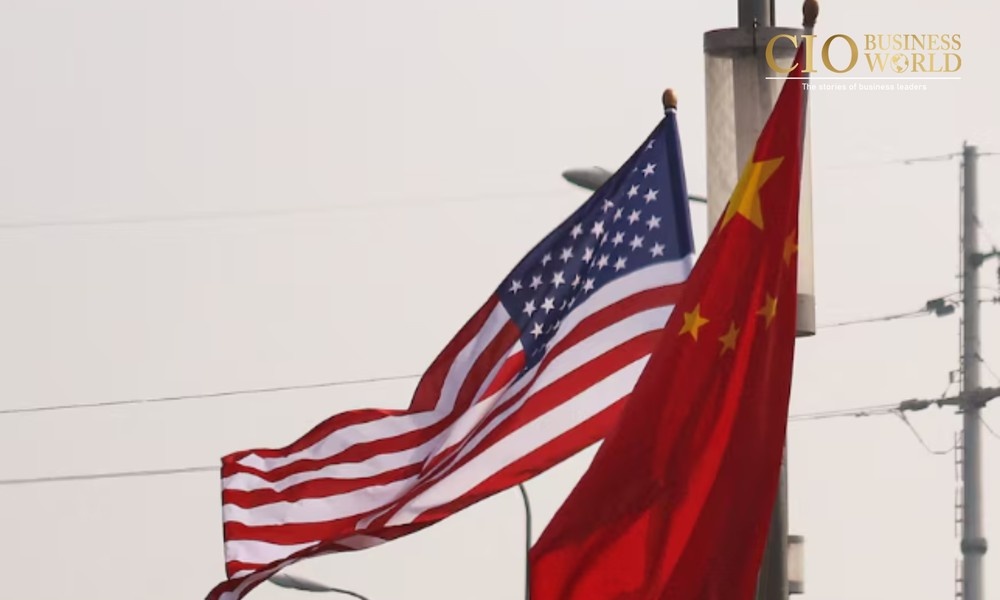
The emergence of the AI tech war affects nations as well as businesses. Europe, China, and the US are vying for control of AI talent, infrastructure, and legal frameworks.
Both significant investment and strategic caution are being fueled by this competition. Like energy or defense technologies, nations are increasingly viewing AI as a vital asset.
Among the main trends are:
Government support for AI research is substantial.
Limitations on the export of chips and data between borders
National guidelines for AI safety
Corporate collaborations with the public and defense sectors
These days, economics, diplomacy, and even security policy are being shaped by the global AI race.
Tech Titans Rebound as AI Fuels Optimism
Despite tensions, the industry is also growing rapidly. Many businesses are recovering from periods of volatility as AI adoption spreads throughout manufacturing, healthcare, finance, and logistics. This change is being referred to as a new wave of optimism where tech titans rebound from difficult times as AI fuels optimism. Investors are increasingly placing bets on long-term transformation and productivity gains driven by AI.
The sector is growing rapidly despite the conflicts. As AI use spreads throughout healthcare, banking, logistics, and manufacturing, many businesses are recovering from periods of turbulence.
As AI boosts optimism, this change is being characterized as a new wave of optimism where tech titans recover from difficult times. Investors are placing more and more bets on long-term transformation and productivity increases led by AI.
Expensive infrastructure for implementing AI
Lack of talent in cutting-edge AI engineering
Risks to ethics associated with autonomous systems
Long-term regulatory uncertainty
Nevertheless, momentum is growing, indicating that AI is a structural change in global technology rather than a passing fad.
The Future: Fragmented but Accelerating
According to experts, AI will not be unified but rather fragmented across industries, regions, and ideologies. While some systems will remain tightly controlled, others will be open and collaborative. At the same time, AI capabilities are rapidly expanding into autonomous decision-making, signaling the rise of more agent-like systems across digital ecosystems. This evolution will redefine how humans interact with technology, from simple tools to independent digital collaborators. The key question is no longer whether AI will change the world, but who will drive that change.
The future of AI, according to experts, will be dispersed over many businesses, locations, and ideologies rather than being unified. While some systems will continue to be strictly regulated, others will be transparent and cooperative.
The emergence of more agent-like systems throughout digital ecosystems is shown by the rapid expansion of AI capabilities into autonomous decision-making. From basic tools to autonomous digital collaborators, this trend will completely change how people engage with technology.
The key question now is not whether AI will change the world, but rather who will influence that change.