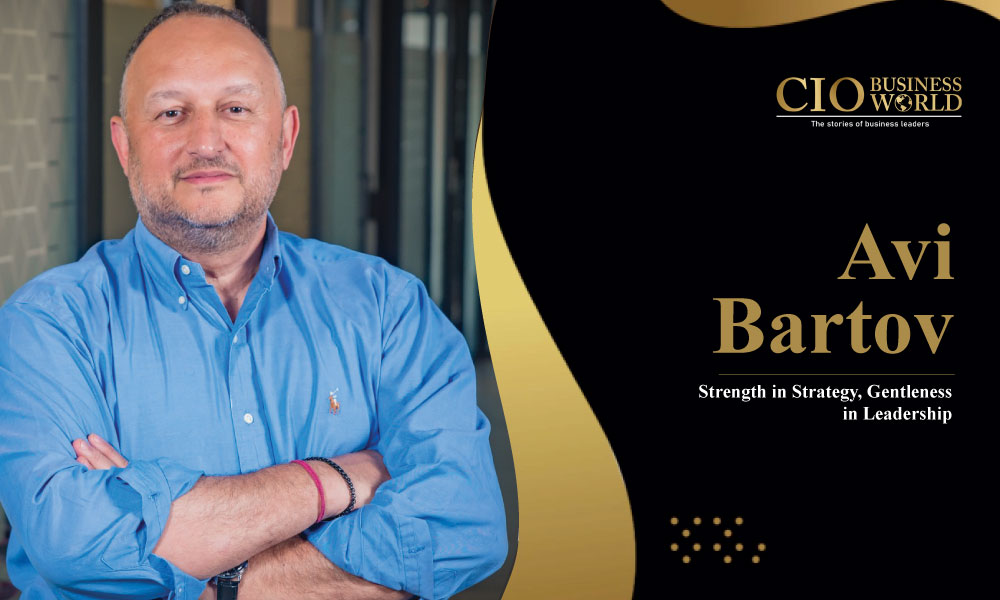
For Avi Bartov, the journey to building Menaya did not begin with a product it began with a realization. In a world moving at relentless speed, where organizations were constantly reacting to threats, he saw something others overlooked: attackers were always one step ahead, not because they had better tools, but because they had a clearer perspective. They didn’t see systems or software they saw opportunity.
That understanding became the turning point. What started as a strong but limited solution evolved into a much larger vision to help organizations finally see themselves the way attackers do, from the outside in. Avi knew that true cybersecurity wasn’t just about response; it was about visibility before the breach, awareness before the damage. Building that vision into reality, however, was no easy task. It required not only innovation, but the resilience to challenge how the market itself understood security.
Inside Menaya, that same philosophy defines the culture. Speed is essential, but ownership is everything. People are not just expected to complete tasks they are trusted to drive outcomes. Transparency is not optional; context, challenges, and even mistakes are shared openly, because that is how teams grow stronger, faster, and more aligned. Avi believes that when people feel heard, trusted, and part of something meaningful, they don’t just work they build, they innovate, and they lead.
Because at its core, his mission is simple yet powerful: the best attack to handle is the one that never happens. And building something that prevents, rather than reacts, requires a certain kind of strength the kind that chooses clarity over comfort, vision over limitation, and ownership over ease.
At Menaya, that belief stands firm because true foresight, bold thinking, and the courage to redefine an industry are qualities to be expected only from the strong.
From Limited Visibility to Complete Control
For Avi, the journey into cybersecurity innovation began with his work at Gamasec, where he helped build a virtual hacker web scanning solution. While the product was strong and effective, he gradually recognized a critical limitation it focused primarily on web applications, whereas real-world attackers operate with a much broader perspective. They don’t limit themselves to a single layer; instead, they assess an organization’s entire external digital footprint, including both known and unknown assets.
This realization became the catalyst for founding Menaya. Avi set out to create a more comprehensive solution one that provides a complete outside-in view of an organization, rather than a fragmented or internal perspective. However, transforming this vision into reality came with its own challenges. Beyond building the technology, he needed to shift market understanding helping organizations recognize that true cybersecurity begins with visibility.
At Menaya, this philosophy is central. The team operates on a simple but powerful insight: most organizations are trying to protect assets they don’t fully see. By studying how attackers think, Avi understood that threats are not defined by systems or tools, but by opportunities exposed assets, forgotten domains, or misconfigured services that can serve as entry points.
Menaya was built to address this exact gap. Its mission is to enable organizations to see themselves as attackers would—from the outside capturing their real, complete digital presence on the internet rather than relying on internal assumptions. More than just a platform, Menaya represents a shift in mindset: from reacting to incidents after they occur, to identifying and understanding exposure before any breach happens.
At its core, Avi’s approach is guided by a simple belief if organizations can truly see their digital footprint, they can secure it.
Building a Culture of Ownership, Trust, and Purpose-Driven Innovation
For Avi, leadership is rooted in clarity, trust, and deep human understanding. At Menaya, he ensures that every team member not only understands their role, but also the larger mission why the work matters and the impact it creates. From there, he places real ownership in their hands, empowering individuals to make decisions and take responsibility for outcomes, not just tasks.
Avi places strong emphasis on listening understanding what drives each person, what challenges them, and what they need to perform at their best. He believes that when people feel genuinely trusted, heard, and connected to a meaningful purpose, they naturally become more motivated and effective. This foundation is reinforced by a culture of openness, where context, challenges, and even mistakes are shared transparently to encourage learning and continuous improvement.
Operating in the fast-evolving cybersecurity space, flexibility is essential. The team stays closely connected to partners and real-world use cases, constantly adapting whether in product development, messaging, or go-to-market strategies. This responsiveness ensures that Menaya remains aligned with the realities of the field rather than assumptions.
At its core, the organization thrives on an entrepreneurial mindset encouraging initiative, creativity, and the confidence to challenge the status quo. It is a culture built not just on performance, but on purpose where people care deeply about what they are building, the impact it creates, and the real-world problems it aims to solve.
Shifting Cybersecurity from Reaction to Prevention Through Visibility, Simplicity, and Real-World Impact
For Avi, the future of cybersecurity lies not in reacting faster, but in seeing earlier. He observes that many organizations are still focused on detecting and responding to attacks after they begin when, in reality, by the time an alert is triggered, much of the damage may already be underway. Through Menaya, he advocates for a fundamental shift in mindset: moving upstream to focus on exposure and visibility first. Understanding what assets exist, what is accessible, and what is vulnerable—before it becomes an incident is, in his view, the true foundation of security.
He also emphasizes the need to simplify. In an industry crowded with tools and complexity, teams often lose sight of actual risk. For Avi, the path forward is about returning to fundamentals clearly seeing exposure, reducing it early, and prioritizing prevention over reaction. Because ultimately, the most effective attack to handle is the one that never happens.
For aspiring entrepreneurs in cybersecurity, his advice is grounded in practicality. Start with the problem, not the technology. Spend time in the field, listen closely to CISOs, partners, and operators, and understand the real challenges they face. He cautions against over-engineering, noting that the most successful solutions are often those that are simple, intuitive, and deliver value quickly.
Finally, he underscores the importance of patience and resilience. Cybersecurity is a trust-driven space where credibility is built over time. Staying close to real problems, maintaining a practical approach, and persisting through challenges are, in his view, the keys to building something meaningful and lasting.