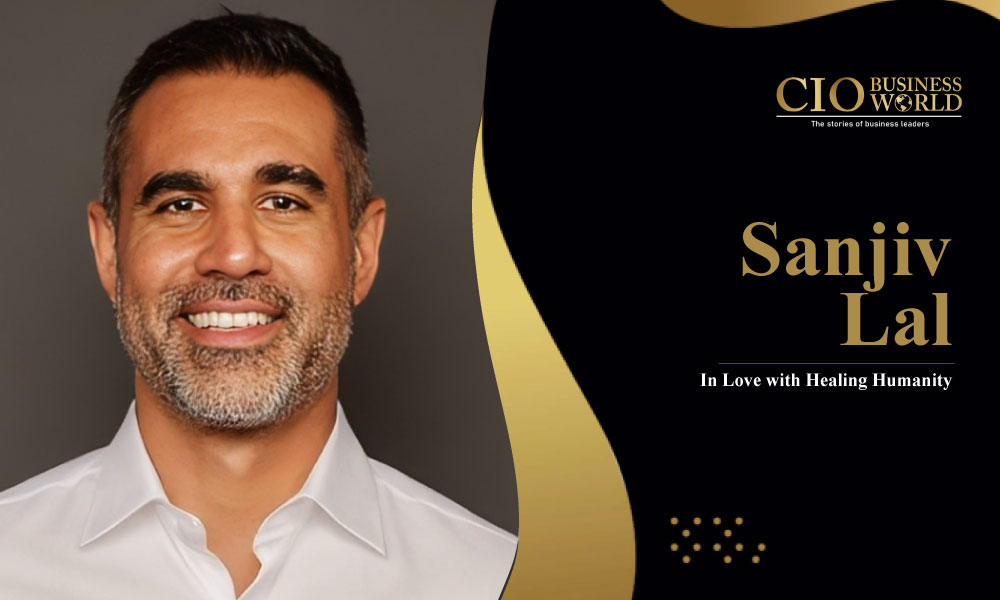
After spending more than two decades across pharmaceuticals, biotechnology, and molecular genetics, Sanjiv Lal came to a defining realization: the future of healthcare could no longer revolve solely around disease management. It had to evolve toward regeneration, resilience, recovery, and longevity. This belief became the driving force behind Regen Therapy, the company he co-founded with a vision to bridge the gap between cutting-edge regenerative science and everyday medical practice.
As CEO & Co-Founder of Regen Therapy, Sanjiv has dedicated his journey to transforming how healthcare systems approach healing and long-term wellness. His mission extends far beyond developing products or introducing emerging therapies. At the heart of his work lies a deeper commitment helping patients reclaim quality of life through innovations rooted in science, empathy, and accessibility.
Under his leadership, Regen Therapy has emerged as a platform that combines regenerative medicine, artificial intelligence, and longevity science to create scalable and clinically relevant healthcare solutions. He strongly believes that the future of regenerative medicine is not simply about cells, but about understanding the biological instructions that guide cells to coordinate repair, recovery, and resilience within the human body.
Recognizing the growing role of technology in healthcare transformation, Sanjiv has also embraced the integration of AI-driven insights into regenerative medicine. By analyzing biomarkers, treatment responses, recovery patterns, and patient outcomes at a scale beyond human capability alone, AI enables more precise, personalized, and data-driven healthcare decisions. For him, this convergence of biology and intelligent technology represents one of the most significant breakthroughs in modern medicine.
Yet despite the technological advancements, he continues to emphasize the importance of preserving the human side of healthcare. Behind every protocol, innovation, and scientific breakthrough, he believes there is always a patient seeking hope, dignity, and a better future. This philosophy has shaped Regen Therapy’s collaborative approach, where clinicians, scientists, longevity experts, and healthcare innovators work together to build an interconnected healthcare ecosystem rather than isolated silos.
Driven by curiosity, purpose, and long-term impact, Sanjiv continues to champion a future where regenerative healthcare is not reserved for a select few, but becomes an accessible and transformative force capable of redefining how humanity experiences healing, aging, and quality of life.
Creating a Smarter, Regenerative Future for Human Health and Longevity
Regen Therapy was founded on the belief that modern medicine needed to evolve beyond symptom management and move toward restoring biological function at the cellular level. After spending more than two decades across pharmaceuticals, biotechnology, and molecular genetics, Sanjiv recognized that the future of healthcare would not be defined solely by disease treatment, but by regeneration, resilience, recovery, and longevity.
What fascinated him most was the body’s innate intelligence and communication network. Human cells constantly communicate through signaling molecules that regulate healing, tissue repair, inflammation control, remodeling, and recovery. However, as the body ages, these communication pathways gradually become disrupted, impacting the body’s natural ability to restore itself.
This realization became the foundation for Regen Therapy’s focus on cellular signaling science and the development of Cell Factors a regenerative signaling platform centered around the secretome and biologically active signaling environment derived from placental tissue. Rather than concentrating solely on cell replacement strategies, the company shifted its focus toward restoring communication between cells to support the body’s own regenerative capabilities.
Under Sanjiv’s leadership, Regen Therapy was created to responsibly and ethically bring regenerative technologies into real-world clinical practice at scale, while helping shift healthcare toward a more preventative, restorative, and longevity-focused future.
His core mission has been to build a regenerative healthcare ecosystem that combines science, clinical implementation, education, and technology into one scalable platform. He recognized that while many healthcare providers were interested in regenerative medicine and longevity science, they often lacked the infrastructure, protocols, compliance guidance, and educational support necessary for effective implementation.
A major aspect of his work has also centered around advancing the understanding of cellular signaling and Cell Factors. He strongly believes that the future of regenerative medicine lies not only in replacing cells, but in supporting and optimizing the body’s communication systems to improve healing, performance, and long-term vitality.
Ultimately, his broader vision is to help redefine healthcare from a reactive disease-management model into a proactive system focused on human optimization, restoration, and overall well-being.
As a leader, Sanjiv believes innovation in healthcare must always be grounded in vision, responsibility, and measurable impact. One of his defining leadership principles is maintaining intellectual curiosity in an industry that continues to evolve rapidly. He believes the leaders who create lasting impact are those willing to challenge outdated assumptions and rethink how healthcare can be delivered more effectively.
Transparency has also remained central to his philosophy, particularly within the regenerative medicine industry, where scientific potential often coexists with misinformation and exaggerated claims. Under his guidance, Regen Therapy has prioritized scientific credibility, ethical communication, and responsible education surrounding emerging regenerative therapies and cellular signaling technologies.
Most importantly, he believes the future of medicine will be built through collaboration. Scientists, clinicians, technologists, and entrepreneurs must work together to shape the next era of healthcare innovation and create systems capable of delivering more personalized, regenerative, and human-centered care.
Building Trust in Regenerative Medicine
One of the biggest challenges Sanjiv faced while building Regen Therapy was establishing credibility within a rapidly evolving regenerative medicine industry. While the field holds extraordinary potential, it has also been surrounded by confusion, inconsistent standards, and exaggerated claims. From the beginning, he understood that long-term success would depend on scientific responsibility, transparency, and building trust through measurable outcomes rather than hype.
Another significant challenge involved operational scalability. Developing innovative regenerative solutions was only one part of the equation. Helping clinics responsibly integrate those therapies into real-world medical workflows required an entirely different level of infrastructure. Under his leadership, Regen Therapy focused heavily on building systems around physician education, compliance frameworks, diagnostics, patient communication, treatment protocols, and workflow consistency to ensure regenerative medicine could be implemented responsibly and sustainably at scale.
Introducing Cell Factors into the healthcare conversation also required a major shift in industry thinking. Traditionally, regenerative medicine has largely focused on stem cells and exosomes. However, Sanjiv and his team chose to focus on cellular signaling itself the biological instructions cells use to coordinate healing, repair, recovery, and communication throughout the body. He strongly believes that the future of regenerative medicine is not simply about introducing new cells, but about restoring and optimizing the body’s internal communication systems that direct regeneration.
Today, Regen Therapy serves as both a scientific and operational partner for healthcare providers. The company supports medical practices through clinical education, regenerative protocols, workflow integration, patient engagement systems, and technology-driven implementation strategies. Its mission extends far beyond product distribution. Instead, the organization is focused on helping clinics build ethical, scalable, and outcome-driven regenerative medicine programs capable of delivering long-term patient value.
Within this ecosystem, Cell Factors have emerged as a versatile regenerative platform supporting applications across longevity science, aesthetics, recovery optimization, orthopedic wellness, mitochondrial health, and broader performance-focused healthcare protocols.
Sanjiv believes one of the most exciting advancements in modern healthcare is the growing scientific understanding of cellular signaling and the secretome. For many years, regenerative medicine focused heavily on stem cells themselves. Today, however, researchers increasingly recognize that much of the regenerative impact actually comes from the signaling environment cells create including proteins, peptides, cytokines, growth factors, and extracellular communication networks that orchestrate healing and tissue repair.
This scientific evolution is precisely why he views Cell Factors as such a transformative category within regenerative medicine. Rather than focusing solely on introducing foreign cells into the body, the platform is designed to support biological communication, coordination, and the body’s own regenerative intelligence.
Beyond cellular signaling, he also sees major advancements emerging across mitochondrial medicine, peptide therapeutics, AI-driven diagnostics, biologic age testing, precision longevity programs, and highly personalized regenerative healthcare protocols. Together, these innovations are shaping a future where healthcare becomes increasingly predictive, preventative, regenerative, and personalized.
Redefining Regenerative Medicine Through Cellular Signaling, AI, and Longevity Science
One of the most rewarding aspects of Sanjiv’s journey with Regen Therapy has been witnessing patients regain quality of life after years of struggling with chronic inflammation, fatigue, recovery limitations, and degenerative health conditions. Through regenerative signaling therapies such as Cell Factors integrated within broader wellness and recovery protocols, many individuals have reported improvements in mobility, energy levels, recovery capacity, exercise tolerance, sleep quality, and overall vitality.
Beyond patient outcomes, Regen Therapy has also helped medical practices strengthen long-term patient engagement by building regenerative medicine programs grounded in trust, education, and measurable wellness outcomes. Under his leadership, the organization has focused on creating regenerative healthcare models that patients not only believe in, but continue to adopt as part of their long-term health optimization journey.
Sanjiv strongly believes that technology and artificial intelligence will fundamentally reshape regenerative medicine over the next decade. Regenerative healthcare generates enormous biological complexity, involving vast amounts of patient data, biomarkers, recovery trends, diagnostics, and treatment responses. According to him, AI provides the ability to identify meaningful patterns and correlations at a scale far beyond what human analysis alone can efficiently process.
At Regen Therapy, AI is increasingly viewed as a critical component for personalized protocol development, diagnostic interpretation, predictive longevity modeling, treatment optimization, and precision wellness planning. He envisions a future healthcare system where regenerative biologics, advanced diagnostics, wearable technologies, AI-driven analytics, and preventative medicine converge into one integrated longevity ecosystem.
For Sanjiv, the future of healthcare lies in creating systems that are not only technologically advanced, but also deeply personalized, preventative, and capable of helping individuals optimize health, resilience, and human performance throughout every stage of life.
Rebuilding Healthcare Through Regenerative Science and Human-Centered Innovation
Sanjiv strongly believes that collaboration is essential to the future of regenerative medicine because the field exists at the intersection of biology, technology, data science, and clinical care. In his view, meaningful healthcare transformation cannot happen in isolation. Researchers drive scientific discovery, clinicians contribute real-world patient experience, entrepreneurs help scale innovation, and technology experts build the infrastructure and analytical systems required to support next-generation healthcare solutions.
This philosophy has become a core pillar of Regen Therapy’s operational model. Under his leadership, the company actively collaborates with healthcare providers, scientists, longevity experts, and innovators to build integrated regenerative healthcare ecosystems. He firmly believes the future of medicine will be shaped through collaboration and interconnected systems rather than isolated silos.
What motivates him most is the opportunity to help people reclaim quality of life while participating in what he sees as one of the most significant transformations in modern healthcare. For decades, aging and physical decline were widely accepted as unavoidable realities. Today, advances in regenerative medicine, longevity science, and cellular signaling are beginning to demonstrate that many aspects of biological aging may actually be modifiable.
Witnessing patients regain energy, mobility, resilience, recovery capacity, and confidence continues to be one of the most rewarding aspects of his work. The deeper he explores cellular communication, mitochondrial function, inflammation science, and regenerative signaling, the more convinced he becomes of the body’s extraordinary potential to heal, restore, and optimize itself when supported correctly.
For aspiring entrepreneurs entering healthcare innovation, Sanjiv emphasizes the importance of solving meaningful problems rather than simply chasing trends. While longevity and regenerative medicine represent rapidly growing industries, he believes sustainable success comes only through genuine value creation and measurable impact.
He also stresses the importance of scientific integrity and credibility, particularly within healthcare, where trust compounds over time and responsible leadership is critical. According to him, the future belongs to integration — combining diagnostics, regenerative therapies, AI, data analytics, patient engagement, and personalized medicine into connected healthcare ecosystems capable of delivering more precise and preventative care.
Above all, he believes innovators must never lose sight of the human side of medicine. Behind every protocol, technological advancement, and regenerative therapy is ultimately a patient searching for a better quality of life. For Sanjiv, that responsibility remains the central mission driving Regen Therapy’s vision for the future of healthcare.