
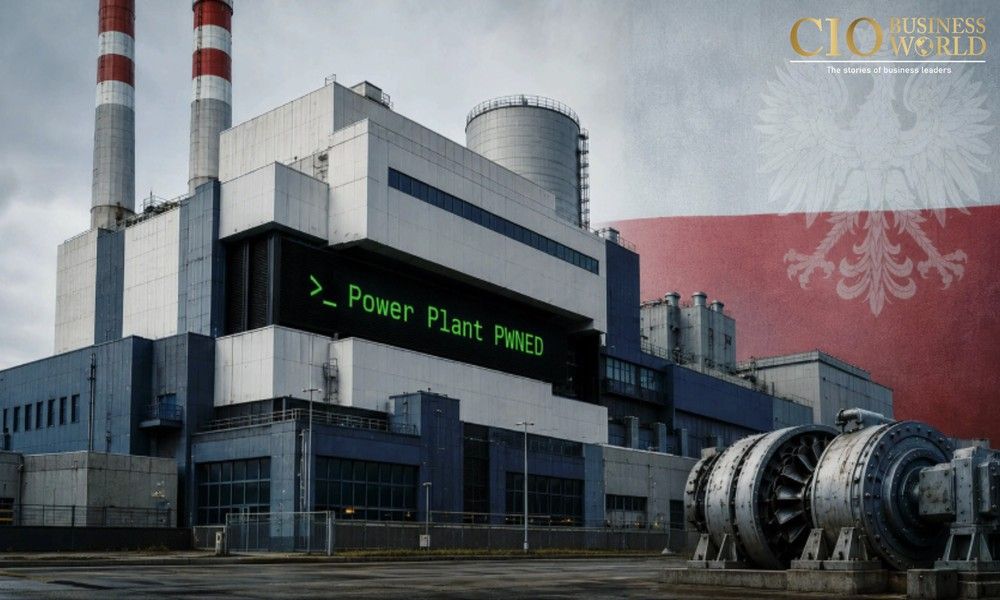
A recent Polish cyberattack has raised fresh concerns about the security of critical energy infrastructure after hackers gained access to controls at a power plant in Poland and disrupted a turbine. The incident highlights how cyber threats can move beyond computers and networks to affect real-world industrial operations.
The attack involved a private cellular network used to connect and manage industrial equipment. Security researchers linked the activity to Static Tundra, a threat group associated with sophisticated attacks against critical infrastructure.
Hackers Target Power Plant Controls
The incident involved unauthorized access to operational technology systems at a Polish power facility. Attackers were able to reach systems responsible for controlling industrial equipment and ultimately shut down a turbine.
Unlike a typical data breach, the incident had a direct impact on physical operations. The ability to interfere with a turbine demonstrates the potential consequences of weaknesses in industrial control environments.
The attack also shows why power companies need to protect both their traditional information technology systems and operational technology networks.
Private Cellular Network Becomes Attack Path
A key element of the incident was the use of a private cellular network supporting communications within the industrial environment. These networks are increasingly used by energy companies because they provide reliable connectivity for equipment and operational systems.
However, connected infrastructure can create additional entry points if security controls are not properly configured and monitored.
The attackers reportedly used access to the cellular environment to reach systems connected to the power plant’s operational technology. This highlights the importance of strong authentication, network segmentation and continuous monitoring across industrial networks.
Poland’s Energy Sector Faces Growing Cybersecurity Concerns
The incident adds to wider concerns surrounding the security of Poland’s energy infrastructure. A power grid cyber attack can potentially disrupt electricity generation, transmission, or distribution, creating consequences for businesses, public services and households.
For this reason, energy companies are increasingly reviewing how industrial control systems are connected and protected.
The energy sector incident report for 29 December discussions has also highlighted the importance of learning from previous incidents and strengthening protections around critical infrastructure.
Poland-Russia Cyber Attack Concerns
The incident has also renewed attention around possible links between cyber activity targeting Poland and wider regional tensions. Concerns about a Poland-Russia cyber attack remain particularly significant because Poland plays an important role in Europe’s energy and security infrastructure.
However, attribution in cyber incidents can be difficult. Researchers generally examine technical evidence, attack methods and infrastructure before connecting an incident to a particular group or country.
The reference to Static Tundra is therefore important because understanding the group’s methods can help organizations identify similar activity and strengthen their defenses.
OT and ICS Security Gaps Remain a Concern
The incident demonstrates why poland energy sector cyber incident highlights ot and ics security gaps is an increasingly important issue for security teams.
Operational technology (OT) and industrial control systems (ICS) are designed primarily to keep industrial processes running safely and efficiently. Many systems were not originally built with today’s level of network connectivity and cyber threats in mind.
Organizations can reduce risks by separating critical systems from less trusted networks, limiting remote access, using strong authentication and continuously monitoring unusual activity.
Why the Incident Matters
The attack is a reminder that cybersecurity incidents affecting critical infrastructure can have consequences far beyond stolen information.
When attackers gain control of industrial equipment, the impact can include equipment shutdowns, production delays, financial losses and potential safety concerns.
Energy companies therefore need to treat cybersecurity as an essential part of operational resilience rather than a separate technical function.
Strengthening Poland’s Energy Cybersecurity
The Polish power plant incident highlights the growing risks facing connected energy infrastructure. The successful disruption of a turbine shows how attackers can potentially move from digital systems into physical operations.
For Poland and other countries protecting critical energy infrastructure, stronger OT and ICS security, network segmentation and continuous monitoring will remain essential. The incident also reinforces the need for energy operators to regularly review connected systems and prepare for attacks that could directly affect industrial operations.
Read our latest interview with Sanjiv Lal