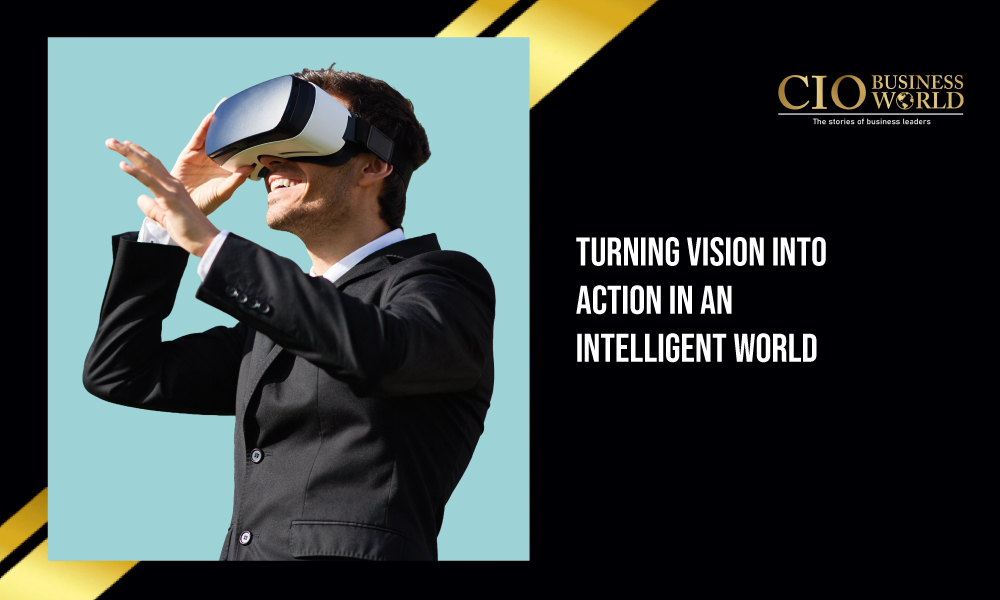
The next era of business will not be shaped by technology alone. It will be shaped by the people who recognise its potential, make courageous decisions, and turn emerging possibilities into meaningful progress. Technology executives stand at the centre of this transformation, guiding organisations through artificial intelligence, automation, data-driven decision-making, and rapidly changing customer expectations. Their greatest responsibility is not simply to understand what technology can do, but to determine what must be done next.
In a world where opportunities can disappear as quickly as they emerge, one principle becomes increasingly relevant: Whatever you’re meant to do, do it now.
This is a call to purposeful action. For technology leaders, it means recognising that innovation cannot remain a presentation, a strategy document, or an ambitious idea waiting for perfect conditions. It must become a commitment supported by decisions, people, resources, and execution.
Intelligent Transformation Begins with Leadership
Intelligent transformation is more than adopting artificial intelligence or replacing traditional systems with modern platforms. It involves rethinking how organisations operate, how employees collaborate, how decisions are made, and how value is delivered to customers.
Technology executives must therefore look beyond individual tools and consider the entire organisation. Implementing AI without a clear business purpose may create complexity rather than progress. Automating inefficient processes may simply make inefficiency faster. Collecting vast amounts of data is of limited value if leaders cannot translate that information into responsible, actionable decisions.
Effective transformation begins with asking the right questions. What problems genuinely need solving? Where can technology improve outcomes? Which processes should be redesigned before automation? What safeguards are necessary to protect customers, employees, and the organisation?
The answers provide a foundation for purposeful innovation. Once the direction is clear, the next responsibility is to act.
Why Waiting Can Become the Greatest Risk
Technology executives often face competing demands: limited budgets, legacy infrastructure, regulatory requirements, talent shortages, and uncertainty about emerging technologies. Waiting for every condition to become favourable may appear prudent, but prolonged hesitation carries its own costs.
Competitors continue experimenting. Customer expectations change. Skills become outdated, and opportunities to improve performance may be lost.
This does not mean organisations should pursue every new technology without careful evaluation. Intelligent leadership distinguishes between reckless urgency and deliberate action. Leaders can begin with a focused pilot, test assumptions, measure results, and expand only when the evidence supports further investment.
The principle of doing what one is meant to do now is therefore not about abandoning planning. It is about refusing to use planning as a permanent substitute for progress.
A small, well-designed experiment today may teach an organisation more than months of theoretical discussion. An honest assessment of an outdated system may initiate a transformation that has been postponed for years. A conversation about workforce readiness may prevent future disruption.
Progress begins when intention becomes action.
Building Human-Centred Artificial Intelligence
As artificial intelligence becomes more deeply integrated into business, technology executives must balance innovation with human responsibility. Intelligent systems can support research, improve operational efficiency, identify patterns, and assist employees with complex tasks. Yet their implementation also raises questions about privacy, security, bias, transparency, reliability, and accountability.
The next era of intelligent transformation will require leaders who understand that technological capability alone does not guarantee meaningful progress.
Employees need opportunities to develop new skills. Customers need confidence that their information is handled responsibly. Organisations need clear governance and appropriate human oversight. Business decisions must remain connected to measurable outcomes rather than technological excitement.
Technology should strengthen human capability, not diminish human dignity. The executives who embrace this responsibility can help build organisations that are both innovative and trustworthy.
The Courage to Begin Before Everything Is Perfect
Every significant transformation begins with a degree of uncertainty. Leaders rarely possess every answer at the beginning, and waiting for complete certainty can prevent valuable initiatives from ever starting.
Courageous leadership means taking informed action while remaining willing to learn. It requires acknowledging limitations, seeking expertise, listening to employees, and adapting when evidence challenges initial assumptions.
A technology executive may recognise the need to modernise cybersecurity, redesign a customer experience, improve data governance, or prepare employees for AI-enabled work. The first step may appear small compared with the overall ambition, but it establishes momentum.
The ability to begin is particularly important when organisations have become comfortable with established processes. Familiarity can create the illusion that existing methods are sufficient, even when changing circumstances demand a different approach.
Leaders must challenge this comfort without creating unnecessary disruption. They must help people understand why change matters and demonstrate that transformation is a shared responsibility rather than an isolated technology project.
Creating a Legacy Through Timely Action
The influence of technology executives extends beyond quarterly results and successful product launches. Their decisions can shape organisational culture, create career opportunities, improve access to services, and determine how responsibly technology is used.
A meaningful legacy is built through consistent choices: investing in people, addressing risks before they escalate, encouraging responsible experimentation, and ensuring that innovation serves a clear purpose.
Executives should ask themselves not only what their organisations can achieve, but also what they are postponing despite knowing that action is necessary.
Sometimes the next step is a major strategic investment. At other times, it is a difficult conversation, a commitment to learning, or the decision to stop funding an initiative that no longer serves its purpose.
Leadership becomes meaningful when vision is translated into these everyday decisions.