In every corner of the hospitality world whether it’s a grand hotel lobby filled with the aroma of fresh flowers, a cozy café humming with friendly chatter, or a luxury resort bathed in sunlight there’s one quiet force guiding every great guest experience: leadership. True leaders in hospitality don’t just manage; they understand people. They delight in serving others. They create spaces where guests feel cared for, staff feel valued, and everyday moments become unforgettable.
Hospitality, at its heart, is about humanity. It’s about how we make people feel. And leaders who succeed in this industry are those who lead with both understanding and delight balancing empathy and enthusiasm in everything they do.
Leading with Understanding
To understand hospitality means to see beyond the surface. It’s noticeable when a guest hesitates at the front desk because they’re unsure about their booking. It’s recognizing that a team member’s frustration might stem from being overwhelmed, not careless. Understanding is what transforms ordinary service into genuine care.
Leaders with deep understanding cultivate emotional intelligence. They listen not just to words, but to tone, posture, and unspoken needs. When a guest arrives after a long flight, a leader anticipates that they need comfort and speed not formality. When a new staff member struggles to remember menu items, an understanding leader doesn’t scold; they guide, encourage, and practice together.
Such leaders create environments where empathy thrives. They train their teams to think beyond transactions and to see guests as people with stories, preferences, and emotions. They remind everyone that hospitality isn’t only about providing food, rooms, or entertainment it’s about providing belonging.
An understanding leader also knows that their team is their greatest asset. They listen to staff feedback, respect cultural differences, and ensure everyone feels part of the same mission. In a hotel, this could mean inviting the housekeeping team to share insights during morning briefings, or celebrating the maintenance crew’s contributions with the same enthusiasm shown for front-desk achievements. When people feel understood, they give their best.
Leading with Delight
If understanding is the heart of hospitality, delight is its smile. Delight is that spark that turns a simple stay into a lasting memory. It’s the small gestures, a handwritten welcome card, a remembered favorite drink, a surprise upgrade that make guests feel truly special.
Leaders who lead with delight bring joy into their operations. They inspire their teams to have fun with service, to celebrate creativity, and to take pride in making people happy. When delight becomes a part of workplace culture, every shift feels lighter, every challenge more manageable.
A delighted leader leads by example. They greet guests with genuine warmth, thank their staff often, and maintain a calm, positive energy even in busy moments. Their enthusiasm is contagious. A team that sees their leader enjoying their work will mirror that joy in their service.
Delight also comes from innovation. Great leaders constantly look for new ways to surprise and please their guests introducing themed events, personalized welcome experiences, or local cultural touches that make their brand distinctive. They know that in hospitality, it’s the feeling of delight that guests remember long after they check out.
Balancing Understanding and Delight
The most effective leaders in hospitality know that understanding and delight are inseparable. One without the other can fall flat: empathy without enthusiasm can feel heavy, while joy without understanding can seem superficial. When both are present, magic happens.
Imagine a restaurant manager who notices a guest celebrating an anniversary. With understanding, they quietly inform the team, ensuring the service is smooth and respectful. With delight, they arrange a surprise dessert with a “Happy Anniversary” message and a candle. That blend of care and cheer creates a moment that guests will never forget.
Balancing understanding and delight also strengthens team culture. A leader who understands their team’s challenges and delights in their successes builds loyalty that no paycheck alone can buy. Staff feel proud to work under someone who genuinely cares and celebrates them. The result? Lower turnover, stronger morale, and consistently excellent service.
The Legacy of Understanding and Delight
Leaders in hospitality don’t just create operational success they create emotional legacies. They shape how people remember their experiences and how teams remember their time together. Guests may forget the décor or the price, but they’ll never forget how a place made them feel. Likewise, staff will remember the leaders who believed in them, guided them, and made work meaningful.
When leaders lead with understanding and delight, they bring the true spirit of hospitality to life. They remind us that service isn’t a job it’s an art form, a human connection, a chance to make someone’s day brighter.
Hospitality is, after all, about moments: a warm smile after a long journey, a shared laugh over dinner, a heartfelt “thank you” at checkout. Leaders who understand and delight ensure that these moments are never forgotten. They turn service into memory, and memory into loyalty.
Hospitality is more than a profession, it’s a calling. While anyone can learn procedures, memorize standards, and follow checklists, the most extraordinary hospitality leaders don’t just know their craft; they feel it. They lead from the heart.
To “get it by heart” in hospitality means going beyond knowledge; it means embodying kindness, empathy, and intuition so deeply that service becomes second nature. These leaders don’t need to think about what to do to make guests feel special; they simply do it, because it’s who they are. Their actions are guided not by policy, but by genuine care.
Heart as the Foundation of Leadership
In a world increasingly driven by technology, automation, and data, the heart remains the defining difference in hospitality. A computer can remember a guest’s birthday, but only a person can make that moment meaningful. A training manual can explain service recovery, but only a caring heart can turn a complaint into loyalty.
Hospitality leaders who lead by heart are those who make everyone around them feel valued. They take time to connect with guests, to understand their teams, and to express gratitude often. They know that people may forget the details of their stay or meal, but they’ll never forget how it felt to be there.
Think of the hotel manager who quietly ensures that a returning guest’s favorite flowers are waiting in their room or the restaurant supervisor who senses a nervous new server’s jitters and offers a reassuring smile before service. These are not acts of obligation; they’re acts of heart.
Learning Hospitality “by Heart”
When someone truly understands hospitality, they don’t rely on memorized scripts or rigid rules. They respond naturally, with warmth and sincerity. Leaders who have “got it by heart” demonstrate consistency not because they’re trained to be polite, but because kindness has become instinctive.
Learning hospitality by heart takes time and experience. It comes from observing people closely, listening deeply, and reflecting on what makes others comfortable. It’s built through countless small moments: the morning greetings, the problem-solving under pressure, the thank-you notes to guests, and the quiet encouragement to teammates after a long shift.
A good leader can teach tasks; a great leader teaches by example. When staff see their manager patiently helping a guest or graciously handling a mistake, they absorb the essence of service not from a manual, but from the heart of their leader.
Heartfelt Leadership in Action
Leadership in hospitality means setting the emotional tone of the establishment. A leader who operates with compassion inspires their team to do the same. The tone they create ripples through every interaction from the kitchen to the concierge desk.
Imagine a guest arriving late, frustrated by travel delays. A leader who has hospitality “by heart” will instantly recognize the guest’s need for empathy, not explanation. Instead of saying, “Check-in is closed,” they might say, “You’ve had a long journey, let’s get you settled in quickly.” That single moment transforms stress into relief, and relief into gratitude.
The same principle applies behind the scenes. A leader who notices an exhausted team member and steps in to help clear tables or run room service is showing heart in action. They’re saying, “I see you. I’m with you.” That kind of leadership builds loyalty stronger than any incentive program could.
Balancing Heart and Mind
Leading by heart doesn’t mean ignoring structure or strategy. The most successful hospitality leaders balance both. The mind organizes, plans, and drives performance. The heart connects, uplifts, and gives meaning to the work.
A leader who combines the two is unstoppable. They make thoughtful business decisions while staying deeply human. They know when to hold a standard and when to show flexibility. They measure success not only in revenue, but in the smiles of guests and the pride of their team.
This balance also shows up in how leaders handle mistakes. A heart-led leader views errors as learning opportunities, not failures. When a guest experience falls short, they don’t assign blame, they take responsibility and make it right with sincerity. They understand that recovery done with the heart often creates a stronger bond than perfection ever could.
The Legacy of Heartfelt Leadership
Leaders who get hospitality by heart leave behind more than successful businesses; they leave legacies of kindness. They shape memories that linger in the hearts of guests and employees alike. Their teams remember them not for how strict they were, but for how supported they felt. Guests remember them not for perfection, but for the feeling of being at home.
In an industry built on service, leading with heart is the greatest competitive advantage. Technology may change, trends may evolve, but warmth, empathy, and authenticity never go out of style.
So, as we continue to grow in this beautiful field, let’s remember: hospitality isn’t something we perform, it’s something we become.
When we lead with heart, we don’t just create satisfied guests. We create joy, trust, and connection and that’s what hospitality, at its truest, is all about.
Hospitality, for all its warmth and emotion, also demands clear thinking. Behind every seamless check-in, every beautifully plated meal, and every satisfied guest is a leader who uses not only heart and instinct but also head.
To “get it by head” means understanding hospitality through logic, systems, and sound judgment. It means thinking strategically about people, processes, and performance. In a business where every smile matters, great leaders know that good intentions alone aren’t enough planning, precision, and professionalism bring those intentions to life.
The Head as the Guiding Compass
Leadership in hospitality is often described as an art, but it’s equally a science. The head is what gives structure to the passion that fuels this industry. It’s the compass that keeps service consistent and sustainable.
A leader who “gets it by head” is analytical and observant. They know how to interpret guest feedback, forecast demand, and allocate resources wisely. They understand budgets, occupancy trends, menu engineering, and staff scheduling. These may seem like administrative details, but together they create the foundation on which exceptional service stands.
For example, a hotel general manager uses occupancy reports not just to fill rooms, but to anticipate staffing needs and energy usage. A restaurant manager analyzes sales patterns to design promotions that drive business on slower days. These leaders rely on data and observation not guesswork to make choices that benefit both the guest and the team.
Thinking Ahead: Strategy in Service
Hospitality moves fast, but the best leaders think ahead. Strategic thinking separates those who react from those who prepare. Leaders who get hospitality “by head” understand patterns—seasonal trends, customer behavior, and the small shifts that hint at bigger changes.
They ask:
How can we improve guest flow during peak hours?
What can we do to anticipate guest expectations before they’re voiced?
How do we ensure our team stays motivated during slow seasons?
By asking these questions, head-led leaders turn everyday operations into deliberate design. They build systems that ensure consistency, efficiency, and quality.
At the same time, they know that logic doesn’t mean rigidity. True strategic thinkers in hospitality build frameworks flexible enough to accommodate human moments, the surprise upgrades, the spontaneous celebrations, the special requests. They create order not to limit emotion, but to support it.
Decision-Making with Clarity and Confidence
In hospitality, leaders make hundreds of decisions each day, some small, some critical. A leader who gets it by head approaches each with composure and clarity. They gather information, weigh consequences, and make timely choices that serve both guest satisfaction and business sustainability.
They know when to say yes and just as importantly, when to say no. For instance, offering complimentary services to resolve a complaint can build loyalty, but offering too many discounts without evaluation can weaken long-term profitability. The head helps balance generosity with judgment.
Head-driven leaders also excel at problem solving. When an unexpected issue arises a power outage, a double booking, or a last-minute event they don’t panic. They assess, prioritize, and delegate. Their teams trust them because they radiate calm, and that calm stems from preparation and knowledge.
The Role of Knowledge and Continuous Learning
To lead with head means to stay curious. The hospitality industry evolves constantly, technology, guest preferences, and sustainability standards shift rapidly. Effective leaders remain students of their craft.
They attend workshops, read industry research, and benchmark against competitors. They encourage their teams to do the same, knowing that learning sharpens not only skills but also confidence. A well-informed team delivers smoother service and feels empowered to make smart decisions on the floor.
Head-strong leaders also invest in cross-training. They understand that when staff grasp the “why” behind procedures, they perform them with greater consistency and pride. Explaining how reservation forecasts link to food cost control, for instance, helps teams see the bigger picture and make choices that benefit the operation as a whole.
The Balance of Head and Heart
The greatest hospitality leaders understand that leading with head doesn’t mean being cold or detached. Rather, it’s about creating structure so the heart can shine freely.
The head designs the system; the heart delivers the soul. A perfectly scheduled shift ensures no one is overworked allowing staff to smile sincerely. A well-trained team understands their duties clearly, freeing them to focus on connection rather than confusion.
Consider a banquet manager who uses checklists, seating charts, and contingency plans. These tools may seem technical, but they’re what allow the event to flow effortlessly. Guests feel cared for not because of the checklist itself, but because it enables staff to serve confidently and joyfully.
The head creates confidence; the heart creates warmth. Together, they create hospitality.
The Legacy of Head-Led Leadership
Leaders who “get it by head” leave behind organizations that run smoothly, teams that think critically, and guests who feel consistently cared for. They build systems that outlast them and mentor future leaders who understand the business of hospitality as much as its emotion.
Their legacy isn’t just in the smiles they inspire, but in the excellence they sustain the procedures, policies, and insights that keep quality steady no matter who’s on shift.
In the end, hospitality leadership is about balance: the heart gives warmth, and the head gives wisdom. When the two work together, service becomes seamless, meaningful, and memorable.
Discover how easyAML simplifies AML compliance with a platform purpose-built for Australian businesses.
The software provides step-by-step guidance, making it easy to manage customer identification and risk assessments.
Benefit from automated tools for ongoing monitoring to detect and report suspicious activity.
Stay prepared for Tranche 2 regulations with features designed for real estate, legal, and accounting professionals.
This all-in-one compliance software helps you meet AUSTRAC obligations without needing prior experience, protecting you from the risks of money laundering.
Introduction
Navigating the world of Anti-Money Laundering (AML) compliance can feel overwhelming, especially with regulations constantly evolving. Businesses have a critical role to play in preventing illegal activities like money laundering, but meeting these obligations requires time and expertise. Are you looking for a way to simplify this complex process? The right compliance software can make all the difference, turning intricate requirements into manageable tasks. An effective platform offers the tools you need to protect your business and stay compliant with confidence.
Understanding easyAML for Australian Compliance Requirements
Managing your AML/CTF (Anti-Money Laundering and Counter-Terrorism Financing) duties is essential for operating legally and ethically in Australia. With specific regulatory requirements set by AUSTRAC, you need a solution that is tailored to the local landscape. This is where a dedicated compliance program becomes invaluable.
EasyAML is designed to help you meet your AUSTRAC obligations with ease. The platform streamlines customer due diligence and provides clear guidance every step of the way, ensuring your business adheres to all necessary rules. Let’s explore what this platform is and the key benefits it offers.
What is easyAML and its role in AML/CTF compliance
So, what exactly is easyAML? It’s an all-in-one AML/CTF platform created specifically for Australian businesses. Think of it as a complete solution that combines powerful compliance software with easy-to-follow guidance. It’s built to help you manage every aspect of your AML compliance, from initial setup to ongoing management, without you needing to be a compliance expert.
The platform plays a crucial role in your AML/CTF program by automating and simplifying key tasks. It helps you conduct thorough risk assessments to understand your business’s vulnerabilities. With tools for transaction monitoring, you can effectively identify and flag suspicious activity that might indicate illegal financial behavior.
Ultimately, easyAML acts as your partner in compliance. It provides the structure and tools needed to build and maintain a robust CTF program, ensuring you can confidently meet your obligations and report to AUSTRAC when necessary.
Key benefits of using easyAML for businesses in Australia
Choosing the right AML solutions can transform how your business handles its regulatory duties. For businesses in Australia, particularly small businesses, easyAML offers distinct advantages that streamline complex processes and reduce the compliance burden. It’s more than just software; it’s a complete support system.
One of the primary benefits is its local focus. The platform is purpose-built for Australian laws and is supported by a local team. This means you get guidance that’s directly relevant to your situation, removing the guesswork that can come with global providers. The workflows are tailored to meet AUSTRAC’s unique framework.
Other key benefits for your business and compliance officer include:
Simplified Workflows: The platform simplifies everything from the verification of identity to ongoing monitoring.
Audit-Ready Reporting: All compliance activities are securely logged, making it easy to generate reports for audits.
All-in-One Solution: It covers ID checks, training, policies, and reporting in a single, user-friendly platform.
EasyAML and Tranche 2 Regulations Explained
The upcoming Tranche 2 regulations will expand AML/CTF obligations to new sectors, including real estate agents, lawyers, and accountants. If your business falls into one of these categories, you will soon need a formal AML program to meet this updated regulatory framework. Preparing for these changes now is crucial.
EasyAML is specifically designed to help these newly affected businesses navigate Tranche 2. The compliance software provides the tools and step-by-step guidance needed to establish a compliant program from the ground up, ensuring a smooth transition. The following sections explain how it simplifies the process and supports your obligations.
How easyAML simplifies Tranche 2 compliance processes
For professionals facing Tranche 2 for the first time, AML compliance can seem daunting. EasyAML simplifies this transition by breaking down the requirements into clear, actionable steps. You don’t need any prior compliance experience to get started and build an effective compliance program.
The platform guides you through the entire process, starting with the core components of due diligence. It integrates seamlessly into your existing workflows, making compliance a natural part of your operations rather than a disruptive add-on.
Here’s how easyAML makes Tranche 2 easier:
Guided Setup: The software provides a clear path to establish your AML program, from policies to procedures.
Automated Due Diligence: It automates the verification of identity and other due diligence checks, saving you time and reducing manual errors.
Purpose-Built for You: The entire platform is tailored for professionals in real estate, law, and accounting who are new to these regulations.
Features supporting ongoing regulatory obligations
AML compliance isn’t a one-time task; it requires continuous attention. EasyAML is equipped with features that support your ongoing regulatory obligations, helping you stay compliant long after your initial program is set up. This ensures your business remains protected as regulations and risks evolve.
One of the most important features is ongoing monitoring. The AML compliance software automatically tracks transactions and client activities against risk rules, flagging potential red flags for your compliance officer to review. This proactive approach allows you to identify and investigate suspicious behavior before it becomes a major issue.
Furthermore, easyAML helps with critical reporting tasks, such as preparing and submitting Suspicious Matter Reports (SMRs) to AUSTRAC. The platform also provides resources for staff training, ensuring everyone on your team understands their responsibilities. As regulations change, easyAML updates its system to keep you aligned with the latest requirements.
Essential easyAML Features for Business Compliance
A powerful AML compliance software should offer a suite of features that work together to create a comprehensive compliance program. The goal is to automate as much as possible while giving you full control and visibility over your risk management activities. This helps you build an accurate risk profile for each client.
EasyAML provides essential tools designed to streamline customer due diligence and simplify reporting. From automated verification to audit-ready logs, the platform equips you with everything needed to manage your obligations efficiently. Let’s look at some of these core features in more detail.
Automated client verification and risk assessments
A cornerstone of any strong AML program is knowing your customers. EasyAML automates the client verification and risk assessment process, embedding it directly into your onboarding process. This ensures that essential customer identification and ID checks are completed before you provide any services.
The system simplifies the process of identifying beneficial owners and assessing the risk profile of new clients. By automating these checks, you reduce the chance of human error and create a consistent, compliant onboarding experience for everyone. This helps you build a clear picture of who you are doing business with from the very beginning.
Here’s how the automated process works:
Feature
Description
Digital ID Verification
Securely verifies customer identities using electronic methods and document checks.
Risk Assessment Tools
Automatically assesses a client’s risk level based on predefined rules and information provided.
Secure Record Keeping
Stores all verification records and risk assessments in a centralized, audit-ready format.
Reporting tools and audit support functions
Being prepared for an audit is a critical aspect of compliance. EasyAML is designed with audit-readiness in mind, providing robust reporting tools and support functions. The platform centralizes and securely stores all your compliance-related records, including customer identification data, transaction data, and program documentation.
Should you face a regular independent review or an audit from AUSTRAC, you can generate required reports instantly. The system maintains a detailed, time-stamped audit trail of all compliance activities, giving you verifiable proof of the steps you’ve taken. This eliminates the stress of scrambling to find records and demonstrates a transparent approach to compliance.
Key reporting and audit features include:
Automated Report Generation: The system helps generate reports like SMRs for detecting suspicious activity, ensuring timely submission.
Centralized Record-Keeping: All required records are securely stored for the mandatory seven-year retention period.
Instant Access: Easily retrieve any compliance record or report when needed for reviews or investigations.
Who Benefits Most from easyAML Solutions?
While many businesses can benefit from streamlined AML compliance, certain groups will find easyAML particularly valuable. The platform is designed to act as a compliance partner for organizations that may not have dedicated compliance teams or extensive resources, just like many financial institutions do.
From small businesses to professionals in specific industries, the software offers tailored support to meet unique needs. If you’re a compliance officer looking to implement an efficient system, this solution provides the tools you need. Below, we’ll examine who benefits most from easyAML.
Small businesses handling AML requirements
For small businesses, managing AML obligations can be a significant challenge. Limited resources, time, and in-house expertise can make it difficult to develop and maintain a compliant program. EasyAML is an ideal solution for small businesses because it was designed with simplicity and affordability in mind.
The platform acts as a guide, helping you create every necessary written document for your program, from your written AML plan to risk assessments. Instead of starting from scratch, you can use the platform’s readiness list and step-by-step instructions to ensure you cover all your bases without needing to hire expensive consultants.
With its user-friendly interface and dedicated local support, easyAML empowers small businesses to handle their AML requirements confidently. It takes the complexity out of compliance, allowing you to focus on running your business while knowing your legal duties are being met.
Legal, accounting, and real estate professionals
Professionals in the legal, accounting, and real estate sectors are on the front lines of the upcoming Tranche 2 regulations. These industries will soon be required to implement a formal compliance program, and easyAML is perfectly positioned to help them prepare. The platform offers tailored solutions for lawyers, conveyancers, and accountants.
Whether you’re a property lawyer associated with the Australian Institute of Conveyancers or an accountant offering business advice, the software provides the specific tools you need. It helps you appoint and support a CTF compliance officer within your firm and manage client due diligence without disrupting your practice.
EasyAML understands the unique workflows of these professions and integrates compliance checks seamlessly. It removes the burden of interpreting complex legislation and provides practical, sector-specific guidance, ensuring your firm can meet its obligations efficiently without needing external legal advice on compliance structures.
Conclusion
In conclusion, easyAML proves to be an invaluable asset for businesses navigating the complexities of compliance in Australia. With its tailored features designed to meet AML/CTF requirements, it streamlines the process of client verification, risk assessment, and reporting, ensuring that organizations can focus on growth while remaining compliant. Whether you are a small business or a professional in legal, accounting, or real estate sectors, easyAML offers solutions that not only simplify compliance but also enhance operational efficiency. Don’t let compliance hurdles hold you back—explore how easyAML can transform your approach to regulatory requirements today. If you’re ready to elevate your compliance strategy, take the next step and get in touch for a free consultation!
If you’re looking to start investing but feel overwhelmed by the idea of picking individual stocks, ETFs might be exactly what you need. Exchange-traded funds have become one of the most popular investment vehicles for beginners and experienced investors alike, and for good reason. They offer instant diversification, low costs, and simplicity that makes investing accessible to anyone.
In fact, ETFs are designed to make investing straightforward and affordable. Whether you’re saving for retirement, building wealth over time, or just getting your feet wet in the investment world, ETFs provide a solid foundation. Let’s break down everything you need to know to start investing in ETFs with confidence.
An ETF, or exchange-traded fund, is a basket of investments bundled together into a single product that trades on stock exchanges just like individual stocks. When you buy one share of an ETF, you’re actually buying tiny pieces of dozens, hundreds, or even thousands of different companies or bonds.
Think of it like buying a pre-made fruit basket instead of selecting each piece of fruit individually. The basket gives you variety without the hassle of choosing every item yourself. Similarly, an ETF gives you diversification without needing to research and buy individual stocks.
Why ETFs Are Perfect for Beginners
Instant diversification: One ETF can hold hundreds of companies, spreading your risk automatically
Low costs: Most ETFs charge minimal fees, often under 0.20% annually
Easy to buy: Trade them just like stocks through any brokerage account
Transparency: You can see exactly what’s inside each ETF
Flexibility: Available for virtually any market, sector, or investment strategy
Types of ETFs You Should Know
ETFs come in many varieties, each serving different investment goals. Here are the main types beginners encounter:
Broad Market ETFs
These track entire markets or major indices. Examples include ETFs that follow the FTSE 100 (UK’s largest companies) or the S&P 500 (America’s 500 biggest companies). They’re the simplest starting point because they give you exposure to the overall market’s growth.
Sector ETFs
These focus on specific industries like technology, healthcare, energy, or financial services. If you believe a particular sector will outperform, sector ETFs let you invest in that area without picking individual companies.
Bond ETFs
Instead of stocks, these hold various bonds (government or corporate debt). Bond ETFs provide income through interest payments and tend to be less volatile than stock ETFs, making them useful for balancing risk.
International ETFs
These invest in companies outside your home country, offering geographic diversification. You can find ETFs focused on developed markets (Europe, Japan), emerging markets (China, India, Brazil), or specific regions.
Dividend ETFs
These focus on companies that pay regular dividends, providing both potential growth and income. They’re popular with investors seeking regular cash flow from their investments.
How to Invest in ETFs for Beginners: Step by Step
Ready to get started? Here’s your practical roadmap for investing in ETFs.
Step 1: Set Your Investment Goals
Before buying anything, clarify why you’re investing. Are you saving for retirement in 30 years? Building an emergency fund? Planning for a house purchase in five years? Your timeline and goals determine which ETFs make sense.
Longer timelines allow for more stock-heavy portfolios since you can ride out market volatility. Shorter timelines might call for more conservative bond ETFs to protect your capital.
Step 2: Open a Brokerage Account
You need an investment account to buy ETFs. In the UK, popular options include:
ISA accounts: Let you invest up to £20,000 annually tax-free
SIPPs: Self-invested personal pensions for retirement savings
General investment accounts: For amounts exceeding ISA limits
Choose a broker with low fees, easy-to-use platforms, and access to the ETFs you want. Many UK brokers now offer commission-free ETF trading, making it even more affordable to start.
Step 3: Decide How Much to Invest
Start with whatever you can afford. Many platforms let you invest as little as £25 or £50. The important thing is starting and building the habit of regular investing.
Consider setting up automatic monthly investments. This approach, called pound-cost averaging, means you buy more shares when prices are low and fewer when prices are high, smoothing out market volatility over time.
Step 4: Choose Your ETFs
For beginners, simplicity works best. A common starting portfolio might include:
One broad market ETF for core holdings (70-80% of your portfolio)
One bond ETF for stability (20-30% of your portfolio)
Optional: One international ETF for global exposure
As you gain experience, you can add sector or specialty ETFs, but don’t overcomplicate things initially. Two or three well-chosen ETFs provide excellent diversification.
Step 5: Place Your Order
Buying an ETF works just like buying a stock. You enter the ticker symbol (the ETF’s unique identifier), specify how many shares you want, and submit your order. Most beginners should use market orders during trading hours for simplicity.
Step 6: Hold and Rebalance
Once you’ve invested, resist the urge to constantly check prices or make changes. ETF investing works best as a long-term strategy. Review your portfolio quarterly or annually, rebalancing if one type of investment has grown much larger than intended.
What to Look for When Choosing ETFs
Not all ETFs are created equal. Here’s what matters when selecting funds:
Expense Ratio
This is the annual fee charged by the ETF, expressed as a percentage. Lower is better. Many excellent ETFs charge under 0.15% annually. An ETF charging 0.10% costs you just £1 per year for every £1,000 invested.
Assets Under Management
Larger ETFs with billions in assets tend to be more liquid and stable. Very small ETFs might close down, forcing you to sell and potentially triggering taxes.
Tracking Error
This measures how closely the ETF follows its underlying index. Lower tracking error means the ETF does a better job matching what it’s supposed to track.
Liquidity
Check the average daily trading volume. Higher volume means you can buy and sell more easily without price impact. This matters less for buy-and-hold investors but is still worth considering.
Building a Simple Starter Portfolio
Here’s a straightforward portfolio suitable for most beginners learning how to invest in ETFs:
Conservative Portfolio (Lower Risk)
40% Broad UK/Global Stock ETF
60% Bond ETF
Balanced Portfolio (Moderate Risk)
60% Broad UK/Global Stock ETF
30% International Stock ETF
10% Bond ETF
Growth Portfolio (Higher Risk)
70% Broad UK/Global Stock ETF
20% International Stock ETF
10% Sector or Emerging Markets ETF
Choose the mix that matches your risk tolerance and timeline. Younger investors with decades until retirement can typically handle more stock-heavy portfolios, while those nearing retirement might prefer more bonds for stability.
Final Thoughts
Learning how to invest in ETFs for beginners opens the door to building long-term wealth through simple, low-cost diversification. ETFs remove many barriers that once made investing intimidating: you don’t need to pick individual stocks, you don’t need thousands of pounds to start, and you don’t need to constantly monitor your investments.
Remember that successful ETF investing is boring. It’s not about making dramatic moves or timing the market perfectly. It’s about consistently investing in diversified funds, keeping costs low, and staying patient through market ups and downs. Master these basics, and you’ll be well on your way to building the financial future you want.
Every exceptional mechanical design begins with a vision. Engineers across industries aim for precision, balance, and functionality in every project. Yet, behind every seamless mechanism lies a combination of expertise, strategy, and advanced tools. Top engineers agree that flawless mechanical designs are not the result of luck but of disciplined processes and the right technological approach.
The journey from a rough concept to a functional prototype demands accuracy, innovation, and a commitment to constant improvement. The use of advanced mechanical engineering software has become a defining factor in achieving unmatched precision and efficiency. It enables experts to visualize, analyze, and refine their creations before a single part is manufactured, helping eliminate costly errors early in the process. Let’s understand the secret behind flawless mechanical designs in detail.
The Hidden Strategy Behind Every Perfect Mechanism
Top engineers follow a set of proven principles that define the success of their designs. These principles ensure every component aligns perfectly with the intended function and structure. One of the key secrets lies in a systematic workflow that prevents design flaws and structural weaknesses.
Precision over assumption: Engineers never rely on guesses. They validate every dimension and calculation using dependable tools.
Design optimization: Continuous refinements ensure performance, safety, and cost-effectiveness.
These methods are not shortcuts but thoughtful steps that save time, effort, and resources. They transform an ordinary idea into a practical solution that stands the test of time.
Why Material Selection Defines the Outcome
Material selection is one of the most underestimated factors in mechanical design. Top engineers consider it a crucial stage that determines how a product performs under stress, temperature variation, and load conditions. The right choice can extend durability and enhance efficiency.
Different materials respond differently to mechanical loads. Steel offers strength, aluminum adds lightness, and composites provide flexibility. Engineers analyze these properties through simulations and stress tests to identify the best material for each part. Comparing density, cost, and thermal resistance helps achieve the perfect balance between strength and performance.
3D Visualization: The Game Changer
The introduction of 3D modeling redefined the design process. Engineers no longer rely on static drawings but can explore realistic models that mimic real-world conditions. This approach eliminates guesswork and allows teams to evaluate how every component fits together before manufacturing begins.
Benefits of 3D Visualization
Error detection: Early visualization uncovers design conflicts.
Enhanced collaboration: Teams share models and feedback in real time.
Faster modification: Adjustments take minutes instead of hours.
This digital transformation has shortened design cycles and reduced costly errors, resulting in higher quality and faster delivery.
Balancing Aesthetics and Function
While function remains the priority, appearance holds importance too. Engineers understand that visual appeal can influence a product’s success in the market. Smooth edges, balanced proportions, and sleek layouts give designs a professional finish. Achieving this balance requires creative thinking combined with technical knowledge.
Modern tools provide freedom to experiment without compromising accuracy. Every adjustment can be reviewed instantly, helping engineers make better design choices in less time. Many professionals rely on updated mechanical engineering software solutions to streamline these processes, ensuring that designs are both efficient and visually refined.
Precision, discipline, and creativity are the unspoken pillars of flawless mechanical design. The blend of strong analytical skills and modern technology allows engineers to craft systems that perform with absolute reliability. Each stage, from concept to validation, reflects attention to detail and respect for accuracy. The secret lies in consistent evaluation, openness to innovation, and mastery of design tools. Mechanical design excellence is never accidental; it is achieved through effort, skill, and an unwavering pursuit of perfection.
Businesses like factories, automobiles, healthcares, retail and logistics all rely on fast reliable data. Delays damage operations also raise costs and risk. That is why 5G and edge computing matter for modern enterprise systems. They move computing closer to devices, which cuts the delay and lets systems work faster.
Old networks sent data far away for processing. Devices talked to central clouds. Each round trip adds time and bandwidth costs. That model does not work well for systems that must respond in milliseconds. 5G and edge computing change that model. They let many decisions happen near the source of the data. They also allow the cloud handle heavy analysis and long-term storage. One such partner is IR Solutions, a remote IoT and cloud-based services company which helps businesses in cloud-based systems.
What edge computing means for modern enterprises
Edge computing runs processing close to the devices that create data. That processing can live in a small data center, at a cell site, in a factory server room, or in a gateway on the local network. The goal is to reduce latency. It also reduces the volume of data sent over the network.
When decisions must be made fast, local processing matters. A vehicle that must brake to avoid a collision cannot wait for a remote cloud to respond. A manufacturing line that inspects parts on a camera feed needs instant results to stop defects. Edge computing handles those needs.
Edge nodes can also filter and summarize data. They send only useful or aggregated information to the central cloud. That lowers bandwidth use and cuts cloud costs. It also reduces the surface area for some security risks, because sensitive raw data can stay local.
The role of 5G in enabling the edge
5G upgrades wireless networks in three ways. It increases speed, raises capacity, and lowers latency. Each matters for enterprise use.
Higher speed moves more data in less time. Higher capacity lets networks support far more connected devices. Lower latency cuts the delay between sending and receiving data to very small values. For real-time applications, latency is essential.
5G networks also support more flexible network design. They allow network slicing. That means a slice of the network can be reserved for a specific application or customer. That makes it easier to guarantee performance for critical services.
How 5G and edge computing work together
Edge computing and 5G are complementary. Edge nodes handle local processing. 5G provides fast links to move key data between devices, edge nodes, and central systems.
Edge computing processes and filters data locally.
5G ensures that the remaining critical data reaches centralized systems quickly.
This combination allows enterprises to run complex systems in real time. Think of an automated warehouse with hundreds of robots coordinating movement. The edge handles local decisions, while 5G connects the system to the cloud for larger analysis and oversight.
Enterprise Applications Powered by 5G and Edge
1- Smart manufacturing
Factories use robots, machine vision, and smart sensors to automate tasks. Edge computing analyzes video and sensor data in real time to catch defects as they occur and reduce downtime.
2- Healthcare
Medical devices and imaging produce large data streams. Edge nodes in hospitals process this data locally for faster diagnostics and remote assistance. 5G keeps mobile care devices reliably connected everywhere.
3- Smart cities
Traffic control, public safety, and energy systems need real-time inputs. Edge computing lets local controllers act fast on sensor data. 5G links controllers to central systems for better coordination.
4- Retail and logistics
Retailers use edge servers to track shoppers and manage storage in real time. In logistics, 5G connects fleets and warehouses for live updates and smoother deliveries.
5- Media and entertainment
Streaming and live events need low lag and high bandwidth. Edge servers place video near viewers to reduce buffering. 5G supplies needed bandwidth and mobility for live production and distribution.
Key Benefits for Businesses
Reduced latency: Local processing shortens response times for critical systems. That translates into safer operations and faster user experiences.
Lower cost for cloud and bandwidth: Processing data locally reduces the volume sent to central clouds, which cuts cloud compute and storage bills.
Better reliability: Local compute can keep essential services running even when central links are slow or interrupted. It improves uptime for critical applications.
Scalability: Computing Edge and 5G allows businesses add capacity where needed. Companies can scale devices and edge nodes without central upgrades.
Improved privacy controls: Sensitive data can remain within a local network. That helps meet regulatory and compliance requirements.
Challenges for Considerations
While promising, deploying 5G and edge systems requires planning.
Infrastructure Costs
Building or leasing local edge nodes and integrating them with 5G networks involves capital investment.
System Compatibility
Not all devices or platforms work seamlessly together. Businesses must ensure compatibility across outsourcing partners and technologies.
Data Governance
With more data processed at the edge, policies for storage, access, and protection must be clearly defined.
The Role of Cloud and IoT in This Ecosystem
Edge computing doesn’t replace the cloud, it complements. Data that needs deep analysis or long-term storage still moves to centralized clouds.
The IoT acts as the connector, collecting data from sensors, vehicles, or machines and sending it to edge servers for immediate action. 5G ensures this data moves fast and reliably.
Companies that manage this balance effectively can turn real-time data into real-time insights.
Use Cases
Automotive: Cars need instant response for safety and coordination. Edge computing manages sensors nearby, while 5G connects them for maps and traffic.
Energy: Energy grids use localized control to balance supply and demand. Edge systems respond to local fluctuations. 5G links distributed energy resources for coordinated control.
Telecommunications: Telecom providers run virtual network functions at edge sites to offer services with better performance for enterprise clients. That reduces latency and allows operators to launch new offerings faster.
Retail: Retail stores use local edge servers to manage cameras and point-of-sale data. The edge runs analytics that tailor promotions in real time, while the cloud stores sales data for deeper reporting.
Each of these examples shows how edge and 5G reshape traditional operations.
Remote Edge Services
Modern enterprises often need partners to implement these technologies. Setting up and managing edge infrastructure, IoT networks, or hybrid clouds requires both expertise and remote capabilities.
IR Solutions helps companies bridge this gap. As a remote development company offering IoT and cloud-based services also supports businesses building next-generation platforms that rely on fast, secure data movement. From custom software to connected device management, their teams ensure that edge and cloud systems work smoothly across geographies.
This approach lets companies deploy secure applications faster and maintain continuous operations without needing large in-house teams.
Conclusion
5G and edge computing move data processing from distant clouds to nearby devices. They reduce delay and give better control. They let enterprises run applications that were not possible before. The shift affects both technology and operations. Success requires a clear strategy, careful architecture, strong security, and reliable partners. IT development companies provide IoT and cloud based services to help teams design and run these systems. That support speeds deployment and keeps operations steady across locations.
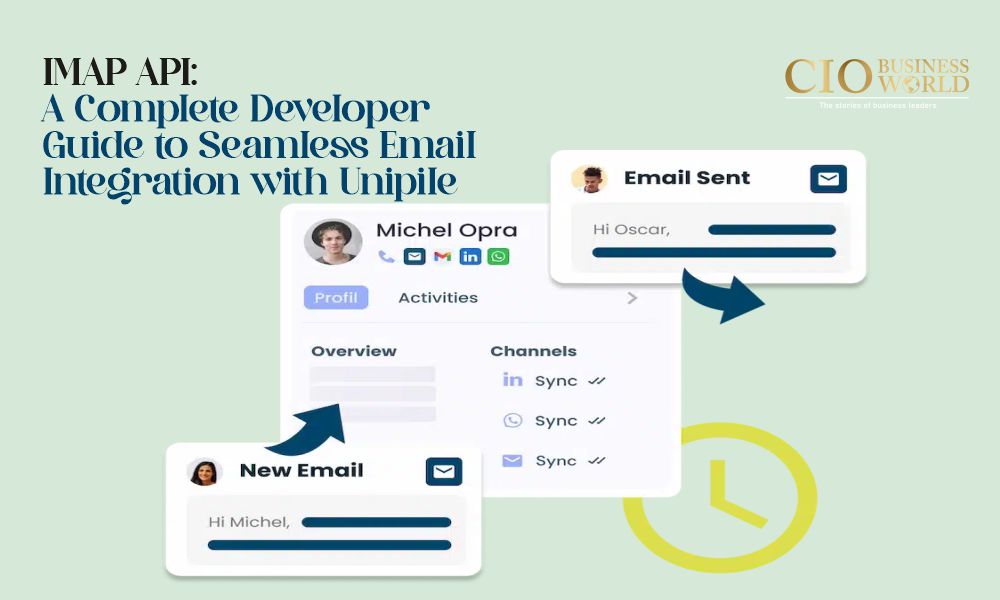
Email synchronization is at the core of every modern application, whether for CRMs, productivity tools, or communication platforms. However, integrating emails efficiently often requires developers to navigate complex protocols. That’s where IMAP API solutions come in — offering a simple, secure, and standardized way to access and manage email data across providers.
In this guide, we’ll explore how Unipile’s IMAP API transforms complex email protocols into a flexible, developer-friendly integration layer.
What Is IMAP and the IMAP API?
IMAP (Internet Message Access Protocol) enables applications to access and manage emails on remote servers without downloading them. An IMAP API extends this capability by providing an HTTP-based layer, allowing developers to retrieve, send, and organize emails through standard API requests instead of handling raw protocol commands.
Why Use an IMAP API?
Using an IMAP API offers developers:
Simplified Integration: No need to manually handle protocol-level operations.
Real-Time Synchronization: Keeps inboxes consistent across devices.
Security: Authentication and encryption built directly into the API.
Scalability: Easily manage multiple email providers and accounts.
In short, IMAP APIs eliminate complexity while enhancing performance and reliability in email workflows.
Simplifying IMAP with Unipile
Traditional IMAP requires developers to work directly with server commands — a slow and error-prone process. Unipile converts that complexity into a simple, unified HTTP API. Developers can now access real-time synchronization, webhook-based updates, and multi-provider support without managing low-level server configurations.
Supported Providers
Unipile’s IMAP API supports a wide range of providers including FastMail, Zoho Mail, GoDaddy Mail, Yandex.Mail, AOL Mail, Bluehost, Mail.com, EarthLink, Hover.com, GMX, and IONOS. This broad compatibility ensures that your application can easily integrate with users’ preferred email services.
Key Features of Unipile’s IMAP API
Unipile’s IMAP API provides everything developers need to build powerful, email-enabled applications:
1. Secure Authentication: Hosted authentication removes the need to store user credentials directly in your app, offering a secure and compliant connection.
2. Real-Time Synchronization: Keep inboxes, folders, and messages perfectly aligned across devices with instant updates.
3. Email Management: Retrieve, send, reply, delete, or organize emails by folder or label through API endpoints.
4. Automated Parsing: Extract structured data from emails automatically for analytics or workflow automation.
5. Webhook Support: Receive notifications for new emails, message reads, or clicks — perfect for building interactive experiences.
IMAP API Authentication and Security
Security is at the heart of Unipile’s infrastructure. All IMAP connections benefit from end-to-end encryption, ensuring data confidentiality. Authentication flows are handled through a hosted interface, avoiding local storage of sensitive credentials.
Unipile’s IMAP API also aligns with GDPR and SOC 2 compliance, ensuring enterprise-grade data protection.
Setting Up Unipile’s IMAP API
Integrating Unipile’s IMAP API is straightforward and can be completed in a few steps:
Create an Account: Sign up on Unipile and generate your API credentials.
Configure IMAP Settings: Provide the user’s IMAP credentials (host, user, password, and encryption).
Authenticate via API: Use the /api/v1/accounts endpoint to connect an email account securely.
Fetch Emails: Retrieve messages and folders through Unipile’s email endpoints.
Handle Events: Subscribe to webhooks for new messages or updates in real time.
With these steps, you can integrate full email capabilities in less than two days.
Unipile vs. Self-Integration
Building your own IMAP integration may seem flexible but often involves weeks of development, testing, and maintenance. Unipile eliminates that complexity.
Faster Time-to-Market: Integration completed in days, not months.
Reduced Costs: Avoid infrastructure and maintenance overhead.
Higher Reliability: Built-in error handling and real-time sync.
Scalability: Supports multiple accounts and providers effortlessly.
Compliance: End-to-end encryption and authentication out-of-the-box.
For developers, choosing Unipile’s IMAP API means focusing on building features — not maintaining servers.
Start Integrating in Days
With Unipile, connecting email accounts through IMAP becomes a fast, reliable, and secure process. Developers gain access to a unified email API supporting Gmail, Outlook, and IMAP providers in one consistent format.
? Explore more on Unipile’s IMAP API to start building your integration today.
FAQs
1. What is an IMAP API? It’s an HTTP-based interface that lets developers access, organize, and send emails programmatically without using raw IMAP commands.
2. Which providers are supported? Unipile’s IMAP API works with Gmail, Outlook, Zoho Mail, Yahoo, FastMail, and most IMAP-compatible providers.
3. How secure is Unipile’s IMAP API? It offers end-to-end encryption and hosted authentication to ensure data protection and compliance with GDPR and SOC 2.
4. Can I sync multiple accounts at once? Yes, Unipile supports multi-account synchronization, allowing apps to manage several inboxes simultaneously.
5. How fast can I integrate Unipile? Most developers integrate and test the IMAP API within two days thanks to Unipile’s SDKs and documentation.
6. Does Unipile support webhooks? Absolutely. You can receive real-time updates for new messages, email status changes, and more.
As we step further into 2025, the role of Chief Information Officers (CIOs) is evolving rapidly in response to the accelerating pace of technological advancement. The role of the CIO has expanded far beyond traditional IT management, positioning these executives at the heart of digital transformation strategies for their organizations. Digital transformation is no longer just a buzzword but a core business imperative that demands innovation, agility, and forward-thinking leadership. This shift is not simply about adopting new tools but is a comprehensive overhaul of how businesses operate, engage with customers, and utilize data.
The Evolving Role of the CIO
CIOs are no longer just stewards of technology infrastructure. Today, they play a crucial role in shaping the strategic direction of their organizations, with a focus on creating value through the intelligent application of digital technologies. In 2025, the CIO’s job requires balancing multiple priorities, including cost management, customer experience, operational efficiency, and the seamless integration of new technologies.
The growing influence of AI, machine learning, and cloud computing are central to this transformation. These technologies enable companies to automate processes, enhance decision-making, and gain deeper insights into customer behavior. As such, CIOs are tasked with overseeing the adoption and implementation of these technologies while ensuring they align with broader business goals.
Key Strategies for Digital Transformation
For CIOs leading digital transformation efforts, there are several strategies that can help drive meaningful change within their organizations:
FosteringaCultureofInnovation: Transformation starts with a mindset. CIOs must cultivate a culture of innovation within their teams, encouraging experimentation, learning from failure, and embracing change. By building an environment where new ideas are welcomed, CIOs can drive continuous improvement and keep their organizations ahead of the curve.
Prioritizing Cybersecurity: With digital transformation comes the increasing risk of cyber threats. As more business processes move online and sensitive data is digitized, safeguarding that information becomes paramount. CIOs must prioritize cybersecurity strategies to protect their organizations from potential breaches, ensuring data privacy, compliance, and resilience against threats.
EmbracingAgileMethodologies: In a rapidly evolving digital landscape, being able to adapt quickly is essential. CIOs should embrace agile frameworks to enable faster decision-making and iterative progress in projects. By breaking down large-scale transformation efforts into smaller, manageable phases, organizations can respond more swiftly to changes and challenges.
EnhancingCustomerExperience: A critical aspect of digital transformation is improving the customer experience. Today’s consumers expect seamless, personalized, and responsive interactions across multiple touchpoints. CIOs should work closely with other departments to implement technologies that help enhance the customer journey, such as AI-driven chatbots, personalized recommendations, and omnichannel support systems.
LeveragingDataandAnalytics: Data is a key asset in the digital age, and CIOs must ensure their organizations are harnessing its full potential. By implementing advanced data analytics tools and platforms, businesses can gain valuable insights into market trends, customer preferences, and operational performance, enabling data-driven decision-making.
Investing in DigitalTalent: No digital transformation strategy can succeed without the right talent. CIOs need to focus on attracting and retaining the digital skill sets necessary to drive technological change, from data scientists and AI experts to cybersecurity professionals and software developers.
The Role of Personal Branding for CIOs
In addition to their leadership in digital transformation, CIOs must also recognize the importance of building a strong personal brand, especially in a digitally connected world. As more business interactions take place online, the professional image projected by a CIO is crucial in establishing credibility and trust within and outside the organization.
One way to enhance your personal brand is through a polished and professional online presence. A key component of this is having a high-quality, approachable profile picture that reflects your leadership qualities and professionalism. Whether it’s for your company website, LinkedIn profile, or industry events, your profile picture can speak volumes about your personal brand.
With the increasing reliance on digital interactions, having a clear, professional, and polished profile image can help convey your authority, approachability, and expertise. PFP maker tools, like the one offered by Adobe, are invaluable in helping professionals, including CIOs, create stunning profile pictures that can elevate their online presence. These tools provide an easy and accessible way to craft a visually appealing profile photo that resonates with both your professional persona and personal brand.
Digital transformation in 2025 is an ongoing journey, one that requires CIOs to be strategic leaders who can drive change, foster innovation, and adapt to rapidly evolving technology. By embracing digital tools, ensuring robust cybersecurity, prioritizing customer experience, and continually leveraging data and analytics, CIOs can successfully navigate the complexities of this transformation.
Moreover, as digital interactions become more prevalent, the importance of personal branding for CIOs cannot be overstated. A professional profile picture is an essential part of that brand.
As the digital landscape continues to evolve, the role of the CIO will only grow in importance. The future of business lies in the hands of those who can successfully harness technology to create value, drive innovation, and maintain a strong digital presence.
Emergency situations strike without warning. Whether it’s a natural disaster, workplace accident, or medical crisis, the difference between chaos and controlled response often comes down to one critical factor: preparation through proper training.
When emergencies unfold, there’s no time to consult manuals or figure out procedures on the fly. The human brain, under extreme stress, relies on muscle memory and ingrained responses developed through consistent practice. This is why comprehensive emergency preparedness training isn’t just recommended—it’s essential for protecting lives and minimizing damage.
Organizations, communities, and individuals who invest in regular emergency training create a foundation of knowledge and skills that can mean the difference between tragedy and successful crisis management. Let’s explore how proper training transforms emergency preparedness from theoretical knowledge into life-saving action.
Building Muscle Memory Through Repetitive Practice
Effective emergency training goes beyond reading protocols or attending single-session seminars. It requires repeated practice that builds automatic responses. When people practice emergency procedures regularly, their bodies learn to perform critical actions without conscious thought.
Fire drills demonstrate this principle perfectly. Regular evacuation practice ensures that when a real emergency occurs, people know exactly which exits to use, where to gather, and how to move safely through potentially hazardous conditions. The same concept applies to medical emergencies, where CPR training creates the muscle memory needed to perform chest compressions at the correct depth and rhythm.
Professional first responders understand this deeply. Paramedics, firefighters, and police officers spend countless hours drilling scenarios until their responses become instinctive. This intensive preparation allows them to function effectively even in high-stress situations where clear thinking might otherwise be compromised.
Creating Coordinated Team Responses
Individual preparedness matters, but emergency situations often require coordinated group action. Training programs that involve multiple people help establish clear roles, communication protocols, and chain-of-command structures that prevent confusion during actual emergencies.
Workplace emergency response teams benefit tremendously from scenario-based training exercises. These sessions help team members understand their specific responsibilities, practice communication procedures, and identify potential problems before they occur in real situations. When everyone knows their role and trusts their teammates’ preparation, the entire response becomes more efficient and effective.
Community-level training programs create similar benefits on a larger scale. Neighborhood emergency response groups that train together develop the coordination needed to assist during natural disasters, power outages, or other widespread emergencies that might overwhelm professional first responders initially.
Identifying Weaknesses Before They Become Critical
Regular training exercises serve as testing grounds for emergency plans, revealing gaps or weaknesses that might not be obvious during planning phases. Mock emergencies often uncover communication breakdowns, equipment failures, or logistical problems that can be addressed before they compromise real emergency responses.
For example, evacuation drills might reveal that certain exit routes become congested, backup communication systems don’t function properly, or some team members need additional training in specific areas. These discoveries allow organizations to refine their procedures, upgrade equipment, or provide targeted additional training where needed.
The healthcare industry exemplifies this approach through regular code drills that simulate cardiac arrests, security threats, and natural disasters. These exercises help medical teams identify equipment placement issues, communication problems, or coordination challenges that could impact patient care during actual emergencies.
Reducing Panic Through Familiarity
Fear and panic are natural human responses to emergency situations, but they can significantly impair decision-making and physical coordination. Training helps reduce these reactions by making emergency procedures familiar and routine.
When people have practiced emergency responses multiple times, they approach actual crises with greater confidence and clearer thinking. This psychological preparation is just as important as learning physical skills or memorizing procedures. Confident, calm individuals make better decisions and can help reassure others during stressful situations.
Even in situations involving legal complications—such as accidents that might require consultation with Salt Lake City auto accident lawyers—individuals who have received basic emergency response training are better equipped to handle immediate safety concerns before addressing longer-term legal or insurance matters.
Adapting to Different Emergency Types
Comprehensive emergency preparedness training covers various scenarios because different types of emergencies require different responses. Natural disasters, medical emergencies, security threats, and technological failures each present unique challenges and require specific knowledge and skills.
Multi-scenario training helps people develop flexible thinking and adaptable responses. Someone trained in multiple emergency types can better assess situations, prioritize actions, and adapt their responses based on the specific circumstances they encounter.
This versatility proves especially valuable for individuals in leadership positions who might need to coordinate responses to unfamiliar emergency types or situations that don’t match standard protocols exactly.
Making Emergency Preparedness a Continuous Process
The most effective emergency preparedness training treats preparation as an ongoing process rather than a one-time event. Regular refresher courses, updated scenario practice, and continuous skill development ensure that emergency responses remain sharp and current.
Emergency protocols evolve as new technologies become available, lessons are learned from actual incidents, and organizational needs change. Training programs must evolve accordingly, incorporating new best practices and addressing emerging threats.
Organizations that commit to continuous emergency preparedness training create cultures where safety awareness becomes second nature, and emergency readiness becomes part of their operational identity rather than an occasional concern.
Transforming Preparation Into Protection
Emergency preparedness training transforms theoretical knowledge into practical life-saving skills. Through repetitive practice, coordinated exercises, and continuous improvement, training creates the foundation for effective emergency responses that protect lives and minimize damage.
Whether you’re developing workplace emergency procedures, participating in community preparedness programs, or simply wanting to be better prepared for personal emergencies, remember that training is the bridge between having a plan and successfully executing it when it matters most. Invest in comprehensive, ongoing emergency training—it’s preparation that could save lives, including your own.