Advertise With Us

Marc Lubner: Showing how Leaders can drive Impact and Change

Humanity lives at the core of leaders who play a crucial role in non-profit organizations by providing their expertise, resources, and leadership skills to support the organization’s mission. They are aware of the legal and ethical responsibilities associated with their involvement in non-profit activities, including potential conflicts of interest and financial transparency.

Determined with the same approach Marc Lubner, Executive Chairman and Co-founder at Smile Foundation is dedicated to assisting children and their families through an all-encompassing healthcare framework, integrating psychological assistance and surgical procedures. Moved by his deep compassion for humanity, our team at CIO Business World conducted an interview with Marc to gain insights into the complete operations of his team at Smile.

Below are the highlights of the interview:

What inspired you to pursue a career in your industry, and how did you rise to your current position as CEO?

Across three generations, my family has been actively engaged in philanthropic efforts. My personal involvement in children’s charities led to a significant turning point 23 years ago when President Nelson Mandela reached out to me to help a child in need of a complex surgery. This encounter marked the beginning of my journey in establishing Smile Foundation.

What strategies have you used to overcome gender-related challenges in your career journey?

I assess individuals based on their capabilities rather than their gender. In the realm of philanthropy, I’ve observed a greater presence of responsible and compassionate skills among women. Women in management demonstrate excellent organizational abilities and a knack for crafting sustainable, long-term solutions.

Can you highlight a significant achievement or turning point that played a pivotal role in your career trajectory?

We initiated Smile Foundation activities at a single state hospital in South Africa. However, after recognizing the importance of our comprehensive approach involving psycho- support and surgical interventions for children and their families, we expanded our services to encompass 12 academic hospitals countrywide.

How do you foster a culture of innovation and continuous improvement within your company?

We acknowledge that our “clients” experience evolving circumstances, necessitating our flexible approach to fulfil their changing needs. Our fundraising initiatives need to stay innovative and updated, prompting us to seek input from various agencies every few years. We actively engage in feedback sessions with surgeons and nurses to ensure constant quality improvements.

Can you share an example of a difficult decision you had to make and the factors you considered before making it?

I encountered a Senior Executive who excelled in financial and operational aspects but lacked a true sense of compassion for our Smile kids. As responsible caretakers, we believe that true kindness stems from a sincere and innate sense of concern. Compassion lies at the heart of who we are. Consequently, I had to make the difficult decision to part ways with her.

Read Full Magazine – The 10 Most Influential CEOs Leading the Way of Success, 2024

Kelly Bagla: Living the American Dream and Empowering Others to Do the Same

Meet Kelly Bagla, a dedicated business leader, and legal expert specializing in business formation and asset protection. With a passion for helping individuals and businesses thrive, Kelly is your trusted partner in navigating the complex legal landscape of entrepreneurship.

Kelly Bagla came to the U.S. as an immigrant seeking the American Dream. She has gone on to form her own law firm, establish multiple business enterprises and create the life of her dreams. Kelly has made it her passion to help other entrepreneurs reach their own American Dreams, not only through her legal practice, but also via her best-selling books, her online Do-It-Yourself legal forms company, and her business coaching company, professional speaking, and media appearances.

The American Dream Vs. The American Dreamer

Kelly explains that anyone can daydream. America is filled with people who spend their time on social media, imagining how great it would be to have the lifestyles portrayed by the famous and infamous they follow. These are the “American dreamers” who will accomplish little.

In contrast, The American Dream, according to Kelly, is to identify opportunities in this country, (and beyond), to envision the possibilities of what you can accomplish, to create a plan for achieving it and to be willing to invest the hard work, time, and tears, while risking your entire financial investment to go after your goal. That’s the American Dream as Kelly sees it.

According to Kelly, “Most Americans born in this country don’t see the magnitude of opportunities available to them.” Her vision for American entrepreneurs is to help open their eyes to the possibilities around them to see and seize the opportunities to start, run and grow their own successful businesses. For this reason, each of her enterprises informs, equips, and inspires entrepreneurs to live their own American Dream.

Mega Law Firm to Entrepreneurial Advocate

Kelly started her career working at the world’s largest law firm, which gave her invaluable experience and guidance from the world’s best. She has always had a heart for entrepreneurs (like her own father), and knew that she could better serve business owners with the personal attention and transparent fee structure a boutique law firm could offer. 

So, as an ambitious young lawyer, she left the mega law firm and branched out to form Bagla Law, APC, now in business for 14 years.  Her firm specializes in business formation and asset protection, and also assists businesses with mergers, acquisitions, trademarks, and assisting international companies operating in the USA. 

Leading the Way for Foreign Businesses to Thrive in the U.S. Market

International Advisory Expert and 2023 winner of the Global Law Experts, Kelly Bagla has become a leading expert in helping foreign-based companies enter the U.S. Market. Her three-fold experience as an immigrant, lawyer and entrepreneur has provided her with insight and expertise to make her ideally suited for this ever-expanding legal niche. 

As the country with the world’s largest economy, the United States offers some of the best business opportunities in the world. Bagla Law Firm helps foreign-based businesses leverage this massive market by getting on the right legal footing and setting themselves on a path to success.

Helping foreign-based business owners achieve their own American Dreams seems like the perfect combination of “paying-it-forward” and “coming full circle” for Kelly. Having come to the U.S. with dreams of her own, she is now in the position to help foreign business owners tap into the Land of Opportunity as she did. “I’ve always said that it takes a business owner to understand the needs of another business owner. I will add that it takes someone who has successfully entered the U.S. market to understand the needs of someone who wants to do the same!”

Her latest book, Doing Business in the United States, is an overview of the legal guidance she provides her own foreign-based clients planning to enter the U.S. market. The guide includes some of the key aspects of doing business and setting up in the United States. In addition is a brief review of the U.S. legal system and some of the laws most relevant to doing business in the United States. Doing Business in the United States is available on Amazon.  The book provides a great starting point for any business entering the U.S. market.  

Bagla Law Firm is exhibiting at both the Los Angeles and European Going Global Events this fall to showcase these global legal services.

Living the Dream

After decades of building her successful law firm and multiple businesses, you might think that she would be ready to put her feet up, relax and consider early retirement. If that’s what you think, then you haven’t met Kelly Bagla. For her, the American Dream is not just a destination. It is the joy of the journey! She is a dynamo and a creative visionary who continually generates ideas for improving and expanding her enterprises to better serve her clients. She finds her work challenging and fulfilling. Kelly loves what she does and has no plans to slow down any time soon. 

Up every day at 3:00 a.m., she has breakfast with her husband, Brent, afterward heading together to the gym for a strenuous workout. She then takes her beloved Pitbulls (“the girls”) for a vigorous walk in the park. A former body-building champion, Kelly thrives on exercise, good nutrition and fresh air. By 7:30 am she has fed the girls, gotten dressed and opened her office for business. It’s important to start early, especially having International and East Coast clients.  The remainder of her 10-11 hour work day is loaded with meetings, legal services, business issues and of course… dreaming up more ventures to pursue!

Each evening Kelly and Brent make time to have dinner together. Afterward, depending on clients’ needs, Kelly might work an additional 2-4 hours. “I am a woman of my word. So if I’ve promised to deliver a service by a specific date, I will work as long as it takes to deliver even sooner than promised if possible.”

So how does she do all this and have time for a satisfying personal life? Kelly would say that starting her days early with exercise gives her the energy and clarity to do so much. Great organization, maintaining a winner’s mindset, and having the right team around her also provide an important edge. And she is quick to add, “Taking time to relax, refresh, and revive makes me more effective to work hard and be more effective.”

Working hard is important to Kelly. Playing hard is just as key. Together, she and Brent plan vacations throughout the year. Some are exotic in distant lands, others are mini-breaks to catch their breath and reconnect. “We genuinely love just being together. While I am always accessible to my VIP clients, Brent and I set aside our weekends primarily to hang out together with the girls. That is my happy place!” Kelly says with a big smile.

“Having such a supportive, understanding husband who is my best confidant and advisor, not only makes this all possible, but makes me feel like I am truly living the dream!”

Coaching Entrepreneurs to Thrive in Business and Life

Kelly’s most recent business is a Coaching Company, Pitbulls ‘n Pearls, named after her four-legged jogging partners. It’s a one-stop coaching experience for all-around success in business and in life. While all of her enterprises help entrepreneurs achieve business success, Kelly founded Pitbulls ‘n Pearls to help them achieve a healthy, satisfying personal life as well. 

Pitbulls ‘n Pearls brings together groups of successful entrepreneurs (Pack Leaders) who conduct master classes for entrepreneurs who want a thriving business and a healthy life. One of the master coaches, Kelly finds great satisfaction in helping other business owners live the dream through this 360` coaching company.

Seizing Life’s Opportunities and Inspiring Others to Do the Same

Kelly lives by her life-long motto, “Grab life by the pearls!” And she plans to keep taking hold of opportunities ahead. In addition to her global focus, she has plans to expand her professional speaking business and already has her next book in mind.

Digital Narrative : Marketing Trends with Anastasia Kuzmenko

About Anastasia

Anastasia Kuzmenko is a seasoned marketing expert with over 14 years of diverse industry experience, including satellite communications, oil and gas, and aviation. She is frequently invited as a keynote speaker to prominent industry events and featured as a thought leader in various international business publications.

Anastasia Kuzmenko impressive educational background includes an Executive MBA with distinction from Hult International Business School and a Bachelor’s degree with honours in International Relations from a top-rated university in Ukraine.

Tell us more about your company.

IEC Telecom Group stands as a prominent international satellite service operator with an impressive three-decade legacy in the fields of telecommunications and network engineering.

Our expertise extends to facilitating digitalisation within the maritime industry and remote land-based locations where GSM coverage remains unavailable. Moreover, within urban network settings, we furnish robust satellite back-up solutions, ensuring seamless business continuity for our valued customers.

With offices across nine countries, we deliver our services across the globe.

What were your key achievements at IEC Telecom?

Six years ago, IEC Telecom had a diversified marketing communications system wherein each office independently formulated its strategic approach. Undertaking my role, I embarked upon the mission of centralising communications and cultivating a robust, internationally acclaimed brand with a harmonised positioning strategy.

Subsequently, the marketing framework of IEC Telecom has undergone a myriad of transformations, encompassing rebranding efforts, global PR campaigns, the cultivation of thought leadership through prominent conference participation, and the expansion of our digital footprint.

As a result, IEC Telecom has garnered international acclaim within the satellite industry, and we take pride in our accolades from Thuraya Telecommunications, a prominent global satellite communications operator, honouring us with the “Best Marketing Campaign” awards in the years 2022, 2021, and 2018.

How do you manage to deliver relevant marketing narratives for each of your target groups?

Our customer base spans across many markets, and each use case differs.

For example, for super-yacht owners, high-speed satcom means an opportunity to stream movies or conduct business on board as in the remote office. For humanitarian organisations, satellite telecommunications are about fast response and increased operational efficiency.

To deliver relevant narratives, it is essential to understand your target audience and be able to present the service in a way that answers their specific demands. Our marketing communications, therefore, are meticulously grounded on market research and customer insights to appear pertinent to each market that we service.

You have recently co-chaired a Digital CX Show in Riyadh. What is the synergy between marketing communications and digital CX?

Marketing and Customer Experience (CX) are two faces of the same coin. CX governs the operational and tactical dimensions of customer interaction, while marketing ensures the right messaging and correct brand exposure at all steps of the way.

Merely investing in the automation of customer support proves insufficient. It requires content to run. Similarly, what purpose does creativity serve if it isn’t accompanied by an efficient mechanism for engagement?

In my view, the functions of marketing and CX are intertwined, operating in tandem to achieve a harmonious synergy.

What are the current trends in digital CX and what shall we expect in the near future?

The growing digital experience market, valued at USD 11.17 billion in 2022, is expected to surpass USD 27 billion by 2030. While new technology propels growth, it is essential to leverage user insights to future-proof your marketing strategy. Here are a few key trends to consider: 

SELF-SERVICE & TRANSPARENCY

69% of customers are willing to interact with a chatbot for simple inquiries. Generative AI is fuelling these dynamics as many companies are now experimenting with integrating this new technology into their customer support applications. 

Self-service is not limited to chatbots, though. It is also about providing customers with sufficient resources to make informed decisions. Hence, invest in knowledge bases, case studies, and insight articles to boost your conversions.

PERSONALISATION & PREDICTIVE ANALYTICS

Personalisation and hyper-personalisation will maintain their momentum, driven by the fact that a substantial 91% of consumers exhibit a greater inclination to engage with brands that recognise them.

In the contemporary landscape of customer retention, addressing immediate requirements no longer suffices. It has become imperative to anticipate future needs. CX offers a wealth of data that can be leveraged to enhance digital algorithms and future-proof marketing strategies.

OMNI-CHANNEL MANAGEMENT

End-users navigate various touchpoints, such as initiating their interaction with a chatbot, seeking further assistance from an online agent, and completing their purchase through telephone transactions.

Brands that excel in orchestrating this seamless transition stand to acquire a competitive advantage. Recent studies suggest that robust omni-channel strategies have the potential to retain up to 89% of their customer base.

What guidance would you offer to aspiring marketers?

Success can’t be crafted with the same tools twice. Never stop learning, and never be afraid to experiment.

Rob Whitfield: Building a Future of Unprecedented Transformation

Imagine a world where challenges are not obstacles, but stepping stones to greatness. This is where a leader’s passion is ignited by the thrill of pushing boundaries, the joy of unraveling complexities, and the belief that every individual and organization carries within them untapped reservoirs of capability. As a certified Master Facilitator and Coach, Rob Whitfield is a symphony of expertise and facilitation that harmonizes with your business priorities, elevating your agenda to unprecedented heights.

With a portfolio adorned with successful transformations we at CIO Business World interviewed Rob to know more about his experiences and the overall journey. 

Below are the highlights of the interview: 

Brief our audience about your journey as a business leader until your current position at your company. What challenges have you had to overcome to reach where you are today?

I started in technology coding and testing at a major consulting firm and realized that people’s behavior makes or breaks business results – regardless of the technology being deployed. As a consequence, I became certified as a trainer in Coaching and Neuro Linguistic Programming, and focused on specializing in behavior change and transformation as a management consultant, partnering with organizations like Coca-Cola, General Motors, UK Border Agency, Walmart, Warner Bros., and World Bank Group to deliver a return on investment from behavior change in the workplace. 

Along the way, I have helped thousands of teams get the personal and business results they tried hard to achieve on their own, and it’s been an absolute privilege. Over the past twelve years, based in Los Angeles and traveling the world to partner with client teams, I have really been able to hone my craft, deepen our research, and put my skills to the test, coaching some of the most senior executives at Fortune 500 companies, entrepreneurs, board members, and celebrities to truly unlock their full potential as individuals and in the teams they lead.

The toughest but most rewarding obstacle I regularly overcome is to help teams open their minds to new possibilities. Many organizations, especially those who have a long history, find it incredibly difficult to change their cultures and working styles, still reliant on the now redundant hierarchical model of working. We worked with a Fortune 100 company who had planned to take their call centres remote for 10+ years but never did at the fear of losing market value during the change. 

When the pandemic happened, we partnered with them and they made that change in a matter of weeks, saving millions of dollars in the cost of physical buildings and boosted staff availability due to eliminated commuting time. Breaking down the barriers of why companies think they can’t do something and helping them move towards something exponentially better is an obstacle, but one that gets me out of bed every day and excited to support clients!

Tell us something more about your company and its mission and vision.

My personal mantra is to ignite a passion for challenge and change so that everyone achieves their full potential. I work with so many teams, executives, and organizations across the world and, unfortunately, see the same patterns of behavior and culture that lead to burn out, executives working long hours, and folks missing precious time with their families. In our applied research with teams, I have refined it into what we call Team Cohesion. 

Teams that pull together in service of their north star, have a safe space for crystal clear candor, have peer-to-peer accountability, and a ‘we win as one’ mentality, get exponentially better results in a shorter time, and more joyfully. My team and I coach teams to our proven Team Cohesion mindset using thin sliced practices, which are a toolkit of shortcuts and collaborative tools a team can apply. We constantly see incredible results and I thrive on the opportunity to help as many people as I can. It is exciting to have refined such a winning formula with our coaching; we truly cracked the code to make average teams world class.   

For me, holding client satisfaction and business outcomes as priority above all else has helped us build a strong client base. We are so confident in our methodology that we guarantee our work. 

Rather than teaching or training, like many companies, we focus on tackling business priorities and coach our clients on how to be successful in targeting what is important to them. We truly advance an organization’s agenda through our expert facilitation and team coaching. Our approach has always been to co-create solutions with our clients; we listen, we flex, and we are agile in our approach to ensure maximum impact. Many of our competitors merely try and force in solutions to problems without really tailoring solutions to the client’s needs. 

The best way for us to demonstrate early value and gain clients is to offer our free team diagnostic that shows our prospective clients how their team performs against our benchmark data set. You can try the free team diagnostic assessment here.

How do you build and manage a motivated and effective team?

Building a motivated and effective team is easier than you would think with the right support. We have helped so many teams totally transform from dysfunctional to high performing 10X teams. We have also helped teams go from being good to great; there is always room for improvement. 

Over the years, we have built and refined the methodology that makes teams world class. We partner with our clients to accelerate and elevate their results, make their work more joyful, and transform the careers of the people we work with. 

One of the foundational blocks that we commence with is shifting the team from a group of folks to a team that cares about each person in the team. When people show up as who they truly are, that gives permission for candor, and this is one of the twelve critical pillars in our methodology that will accelerate and elevate results, joy, and careers. This is the perfect foundation for the team to build on as they work on their own business challenges and we coach to the right behaviors, practices, and tools that will make them world class. I recently gave a keynote for UCLA and talked through these steps – you can watch that section of the keynote here.

Our research institute continues to identify, test, iterate, and apply new practices to enable teams to go further, faster, and more jofylly, and our resource center can be located on our website so check out Redefine Winning to find out more.

Where do you envision yourself to be in the long run, and what are your future goals for your company?

The pandemic really just highlighted a lot of the problems that had been unaddressed for years and taken as the norm. Many companies had plans for the future but never jumped in and started making practical and much needed changes, for fear of falling behind in the market. The pandemic forced everyone out of their comfort zone in a way we’ve never seen before, requiring innovation and new ways of working. Indeed, I wrote an article on how much it enabled exponential change and transformation in organizations. It was scary but also very exciting. 

We at Redefine Winning are always evolving and our extensive research always keeps us steps ahead. It’s our job to bring those ideas to the market in service of supporting our clients. We want to be able to share best practices and new ways of working with as many individuals, teams, and organizations as we can to help them have better work life balance, greater enjoyment, broader diversity and inclusion in their teams, and ultimately 10X their goals and results! AI is the next big area and our research project in that space, along with the impact it will have on teams and teaming competencies, is a must read for leaders, managers, and team members alike.

Describe in detail the values and the work culture that drives your organization.

The thing that motivates me and my team is that we know we have a key that can unlock greatness in teams. I’ve spent 30 years working with teams and have developed a really powerful set of tools and techniques to facilitate them through the rough terrain of change and out the other side to a better way of working. Their work lives are more productive and engaging, their results are exponentially better, and their work-life balance is restored. All of this is very easily achievable using the Team Cohesion mindset. When a team develops beyond just co-existing you start to feel the strength from The Power of Team. The same effort put into achieving 10 percent improvement becomes 10X the improvement and results.

Emerging Technologies, Revolutions and Crises in the Business Environment 

The Fourth Revolution

The Fourth revolution is transforming our world in unprecedented ways, with emerging technologies like artificial intelligence (AI), the Internet of Things (IoT), robotics, and 3D printing impacting every aspect of our lives. These changes create new risks and uncertainties for the workforce, as many employees fear that AI will replace their jobs or render them obsolete. However, technology has always been the driving force in the advancement of our civilization and it is an inevitable and essential reality that we have to confront and adapt to. The pace of this revolution, however, surpasses the human capacity and speed to learn, which implies that we are constantly faced with new opportunities and challenges that require us to adjust and acquire new skills. The gap between technological progress and human competencies is widening, and the urgency to find ways to bridge it is vital.

One of the most prominent examples of this technological revolution is the emergence of generative AI, which has opened new possibilities for individuals and businesses in various domains such as content creation, research, and marketing. Generative AI enables us to generate high-quality content faster and cheaper, enhance our creativity, and solve complex problems more efficiently. However, it also poses significant challenges and threats for organizations, as it can also be used for malicious purposes such as hacking, spamming, or spreading misinformation. These malicious applications can compromise our security, privacy, and trust, and cause serious harm. Therefore, it is crucial for companies to keep up with the rapid pace of change and innovation that AI brings, and to leverage its benefits while mitigating its risks.

The Slowbalization Movement

The world is becoming less connected and more fragmented as globalization gives way to slowbalization. The movement of information, talent, and goods across borders is hindered by digital firewalls, immigration bottlenecks, and ideological conflicts. These barriers affect various aspects of the global economy, such as trade, investment, and migration among the major powers. This trend, which is driven by factors such as nationalism, protectionism and technological advancements, poses significant challenges for businesses. It limits their potential for growth, innovation, and collaboration in the global market and increases the uncertainties of operating in different regions. But most importantly, it restricts the access and availability of talent for organizations and ultimately it creates a mismatch between the demand and supply of skills in the labor market and reduces the diversity of talent within organizations. This can lead to a skills crisis that can undermine the performance and sustainability of businesses. 

To overcome this challenge, businesses need to adopt a more agile and responsive talent flow. They need to foster a learning culture that supports talent development and retention to ensure that their talent is always ready, relevant, and productive in the changing world.

The Talent Disruption

Another challenge that businesses are facing is the talent disruption, which refers to the sweeping changes in the nature and structure of work and employment. This disruption is caused by various factors, such as the automation and digitalization of work; the social revolution that is shifting people from traditional full-time jobs to gig and freelancing jobs; the high living cost and interest rates that are affecting people’s income and savings; and the recent union strikes that are demanding better wages and working conditions.

The talent disruption poses a serious threat to businesses. It creates a shortage of skilled and qualified workers in many sectors and industries. It also increases the turnover and dissatisfaction of employees who are looking for more autonomy, flexibility, and purpose in their work.

The leadership crisis

The world today faces many complex and urgent issues, such as climate change, labor shortage, and global economic instability. These issues demand visionary leaders who can think creatively and innovatively. Moreover, the workforce is experiencing a social revolution, with new generations of workers who have different values and expectations than their predecessors. 

Today’s workforce want leaders who can empathize with their needs and goals, and who can foster a culture of diversity, inclusion, and equity. However, many businesses are struggling with a leadership crisis that stems from the mismatch between the traditional and the contemporary leadership styles. The traditional style relies on hierarchy, authority, control, and stability; while the contemporary style emphasizes collaboration, influence, agility, and innovation. 

A study by the World Economic Forum found that 86% of business leaders believe that there is a global leadership gap. This gap is caused by various factors, such as the increasing complexity of business, and the lack of opportunities for women and minorities to advance into leadership roles. The challenges today require leaders with qualities such as creativity, critical thinking, empathy, and courage. The traditional leadership mindset of short term high revenue and returns is not enough to solve these challenges. 

Conclusion 

The issues that modern enterprises face today all share a common solution: talent. By investing in learning and developing diverse talents, businesses and enterprises can overcome these obstacles. In this digital era, we can use creative ways to foster talent more effectively. Some of the ways to foster talent are: 

  • Create immersive learning platforms, which use technologies like virtual reality (VR), augmented reality (AR), or mixed reality (MR) to simulate realistic and engaging environments for learners. 
  • Promote talent mobility and allow them to move across different roles, teams, projects, or locations within or outside an organization. 
  • Share talent with other organizations, which means lending or borrowing talent for specific purposes or periods of time. This helps talent experience different work settings, cultures, and challenges, as well as create opportunities for collaboration and innovation. 
  • Create the leaders of the future by finding, nurturing, and supporting those who have the potential to lead and giving them the resources and tools to help them grow and lead.

As the famous author and salesman Zig Ziglar said, “The only thing worse than training employees and losing them is to not train them and keep them.” Let’s invest in talent and prepare them for the future.

Patrick Riccards: Journey of a Visionary Business Educator

We as humans have stitched our lives so perfectly together, and we’ve work hard to get where we always wanted to. Now that we’ve reached till here, one thing that we need to look back is history. History and education seeks to preserve and promote an understanding of the nation’s past. Business Leaders here, can support historical research and educational resources to become a well-informed citizen. The goal here is to enhance the overall educational experience for students and educators. 

Shaping the future of education in the US, Patrick Riccards works hard to ensure that this notion is embedded at Driving Force Institute. Patrick has produced more than 500 short films that tells the untold history of America. It is because of the team efforts the distribution channels have reached more than 50 million users today. 

Captivated by History

Personally, Patrick is captivated by history. His interest and knowledge in the subject has made him a better leader, a better builder, a better advocate, a better father, and better citizen. He believes in thinking like an historian, constantly probing issues and refusing to accept the simple answers. The leader has worked hard to ensure that this notion is embedded in DFI’s DNA and is part of everything the team does.

Revolutionizing History Education

DFI was launched because of a national survey it conducted, finding that fewer than four in 10 Americans could pass a basic multiple choice American history test. It felt an obligation to do what as it could to improve the teaching and learning of history. Four years later, the team still feels that obligation. It has learned from the setbacks and built upon the successes.

DFI isn’t the first company to use video as a teaching tool, but it is using it in innovative ways. Knowing the complexity of American history, there is no content that scares it off. Patrick wants to continue to inspire learning and exploration and reflection and understanding. 


Teaching and Learning of American History

The Driving Force Institute is focused on transforming the teaching and learning of American history, using short-form, and provocative video to make the nation’s history more interesting and relevant to today’s learners. DFI wants every learner thinking like an historian, exploring topics, asking questions, pushing back, and constantly seeking new information.

Patrick says, “The problem today is not whether we are teaching history or not. We are. Virtually every high school student in the nation has to pass a U.S. history class to graduate. The problem is HOW we teach it is boring and irrelevant to Gen Z … and many, many others. DFI seeks to show all learners WHY history matters and WHY they should care”.

500 Films and Counting

To date, Patrick has produced more than 500 short films that tell the “untold history” of USA. DFI, along with the production partner Makematic, worked with an incredible group of partners to create engaging content and develop the distribution channels to reach more than 50 million users today. The team at DFI succeeded because they aren’t afraid to tackle to messy, dark, challenging realities of the nation’s history. Patrick created relevant content by focusing on the roles of the BIPOC community and women in the development of the country. But there is still much work to be done.

Later this year, DFI embarks on a new phase in the work, Essentials. The challenge now is how to build a core video curriculum that comprehensively tells the story of its 250 years. The data is clear that today’s learners aren’t learning history through the traditional textbooks. These lessons are so important that he feels an obligation to build the video content that connects with today’s learners, and effectively teaches the essential history all Americans should know.

Collaborative Strength for Impactful Storytelling

DFI is built on collaboration. It has partnered with video production company Makematic because the skill sets complement, rather than compete, with each other. The organization has joined with content partners such as New-York Historical Association, American Battlefield Trust, Smithsonian, Bill of Rights Institute, iCivics, International Spy Museum and others because they are the leaders in telling the nation’s complicated history. And DFI is working with a network of distribution partners to help us now reach more than 50 million users. 

DFI is as strong and impactful as it is because of the strength of its partners. It is constantly push each other to improve and to explore new ideas. By learning from each other, the team generates a sense of ownership in the work, and that shows in both the final product and its impact.

Empowering Future Citizens

Ultimately, the goal is not to have a new generation that can ace a trivia night contest. But is to show why American history is so important. It is also to develop a new generation of critical thinkers. And, to make the nation and the communities stronger. 

“How can we possibly be talking about civic activism today when the majority don’t even possess a basic knowledge in civics? How can we be better educated voters and participants in our civil society, when we don’t know basic government? We just can’t.”

The Driving Force Institute is a reclamation project that succeeds when more and more of us are empowered with the knowledge and understanding that makes us better learners, better adults, and better citizens. It is committed to producing the educational content to help us get there. 

Fearless Leadership

Patrick words are, “Embrace failure. As a first-time CEO, I believed I needed to have all of the answers and needed to get everything right on the first try. I quickly learned that one can’t innovate or grow or have lasting impact if he is afraid of failure. Those setbacks often provide us with the greatest insights and inspirations out there. Today, I celebrate failure as part of the learning process. We fail fast. We fail forward. We never replicate the same failures. And we are far better for it.”

Aspiring CEOs also need to fully understand the difference between being a boss and being a leader. A true leader encourages disagreement and discussion. He builds, as Lincoln did, a “team of rivals” that ensures the best thinking and best implementation possible. And she understands how to bring the best out of her team, while taking ultimately responsibility for what they do.

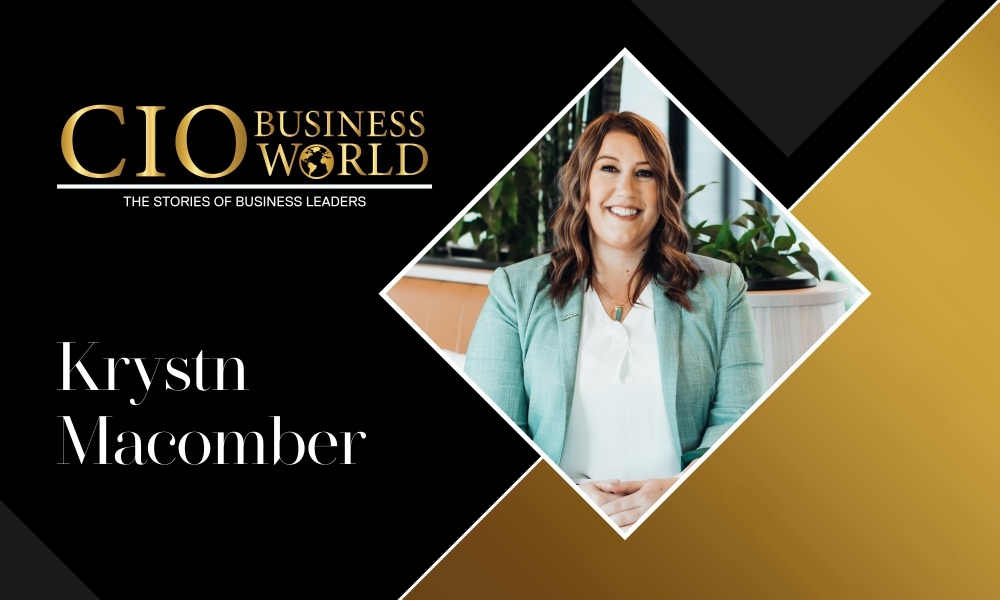
Krystn Macomber: From Athlete to Entrepreneur: The Journey of a Visionary CEO

Krystn Macomber knows winning.

Going back to her days as a D1 basketball player at the University of Richmond, the Founder and CEO of Summit Strategy, a game-changing proposal development and marketing consulting firm, understands what it means to earn wins for her clients no matter the challenge.

“I’ve always been ambitious,” said Krystn. “As a kid growing up in the mountains of North Carolina, I’ve always had big dreams and set lofty goals for myself. This first manifested for me in sports where I became an elite basketball player, but this theme of embracing challenges has played out throughout my professional career.”

While Krystn’s roots are in South Appalachia, her career began when she moved to Washington, D.C. after finishing her undergraduate degree in business. She quickly worked her way through the corporate world, scaling the ranks until she became a prolific proposal manager,  and writer, and leader  for federal government contracts. As each position transitioned to the next, Krystn realized she had a natural ability to build teams, departments, and processes.

It was during these years that Krystn’s vision for what would become Summit Strategy emerged.

“What I deeply wanted was to captain my own ship,” she said. “I wanted to lead a team of driven, forward-thinking professionals who cared about winning for their clients as much as I do. While the experience in corporate America was invaluable, I didn’t want to spend my career advancing someone else’s financial interests. I wanted my working years spent leaving a dent in my industry and being a difference maker to my team and to my clients.”

Founded on the principles of care, innovation, and commitment, Summit Strategy swiftly established itself as a force in the market. A 100% woman-owned enterprise, Summit has taken on more than just turning a profit. For Krystn, she and her team carry the responsibility of redefining industry norms and fostering real change.

“At Summit Strategy, we believe we’re more than just another small business,” she said. “I want to reach the end of my working years knowing I made a real impact and changed the way my peers, colleagues, and competitors do business.”

On the business side, Krystn’s vision for Summit Strategy is clear – to set the new industry standard for integrated sales + marketing solutions that empower professional service firms with effective growth strategies through game changing strategic planning, proposal support, branding + marketing with purpose, and best practices training. By helping firms tell their stories, fueling their potential, and achieving sustainable competitive advantage, Summit Strategy is shaping a generation of industry leaders who pioneer positive social impact.

For Krystn, pushing Summit Strategy to be both a cultural difference maker and a financial powerhouse are one in the same. Winning for her clients means shifting the industry towards increased equity for everyone involved. This task can feel like scaling a mountain over and over again, Krystn said, but it’s a challenge Krystn is willing to continually take on.

“The challenge has been to navigate running a small business while maintaining my vision of what a proposal development and marketing consulting business could be. It’s at times been lonely, frustrating, and exhausting while at the same time exciting and affirming that it’s exactly what I want to be doing. It’s hard to think beyond the day-to-day operations and expectations to exceed, but I’m embracing the challenge every day to continue focusing on the bigger picture.”

So far, this perspective has paid off for Krystn with Summit seeing more than 800 percent growth in its first year and another 50 percent growth projected in year 2. With the focus on growth, Krystn is spending much of her time traveling to conferences and events promoting the message that incorporating engaging storytelling into your marketing and proposal writing will win more business.

“We aim to be a major player in proposal development, especially in the government contracting (GovCon) sector,” said Krystn Macomber. “There’s serious room for growth there, and we believe our GovCon clients can distance themselves from their competitors with the right proposal guidance and strategy.”

However, Krystn and her team also believe in empowering entrepreneurs with the tools they need to succeed, and it’s why Krystn Macomber has taken on the role of mentor and thought leader for many young professionals breaking into the industry. It’s all part of Summit’s core ethos – caring every day.

“I can’t stress enough how important it is to care,” Krystn Macomber said. “Care about your clients. Care about your team. Care about your industry. If your sole focus is the bottom line and earning money for your shareholders, you’ve missed an incredible opportunity to make the world just a little less crappy. See yourself as an agent for change, as someone who has been put in place for a reason and has a chance to make a real difference.”

The best advice she can give to these young, ambitious pros to start winning for themselves? Don’t settle.

“Don’t settle for the status quo. Most of the time, things are the way they are because people lack imagination and vision. The reality is, though, the status quo exists until someone decides to challenge it. There’s no reason that person can’t be you.”

Daniel Fincham: Transforming Personal Struggle into Digital Hope at Recoverlution

If you have to venture anything, dare to be strong and courageous. For a business leader he has to focus on compassionate and informed leadership. Additionally collaborate with experts, data-driven decision-making, and adaptability to impact the lives of those in recovery. 

Today we uncover the story of one such leader, Daniel Fincham, with a remarkable journey from personal struggle to purpose-driven success. His career in the technology industry was driven by an early fascination with the transformative power of technology. As the CEO of Recoverlution, he has leveraged his unique blend of tech expertise and personal experience to pioneer a groundbreaking platform that offers hope, support, and digital innovation to individuals on the path to recovery. 

Thus we at CIO Business Leaders interviewed to Daniel to know more about the impact he has to transform lives. Below are the highlights of the interview:

What inspired you to pursue a career in your industry, and how did you rise to your current position as CEO?

At a young age, I’d always marvelled at technology. Its seemingly never-ending ability to surprise people, to do things unthinkable just years before and its endless possibility to innovate. I soon realised that technology can do a lot of the hard work for you when used effectively. From simply improving a process to revolutionising or disrupting an industry, technology is power and can help and serve people at scale.

At 36 I was a VP at a software company that I’d grown up with.  To most, I would have been viewed as successful.  I excelled in education, sport, have great friends and come from a loving family.  After travelling the world I landed in Copenhagen; found my career and a place to be at my happiest. In reflection, that this was a foreign residence seems more likely hiding than a happy place.  Having met my wife on holiday, I moved back to the UK and in the following 10 years we married, had 3 wonderful children and built a dream house.  

I’d never felt comfortable in my own skin and had been drinking to negate worry, anxiety or focus on where I was going or where I belong. I couldn’t connect with a purpose, or what life was about so I just let it take me where it would.  When I reached the finished line there was no celebration.  The goalposts just moved.  I was exhausted and took off the mask. Before I had a chance to even breathe, I was hit by the tirade of bullets I’d missed from the comfort of my hiding place. But as I took cover, the airstrike would this time ensure I had no safety and I would be ripped apart to a point of submission. Almost.

Rehab, redundancy, divorce and multiple times of sanctuary in hospital and jail all haunted me for the next 9 months. In June 2020, At 37, I made it to recovery and 6 weeks later, I started Recoverlution.

I’d struggled to find a place to start, a place to understand why I was who I was. Whether that was sat at my desk and Googling for help, listening to others stigmatised opinions or talking to medical professionals – I couldn’t find a digital home to start getting well. So I researched everything – nutrition, exercise, meditation, sleep, spiritual principles, philosophy, music, you name it, I wanted to know about it. And the more I applied to my life, the better I felt. As I started to engage with the recovery community, I noticed it cobbled together with differing technologies. The first thing I was asked on an AA Zoom meeting was for my name and phone number so I could be added to a WhatsApp group and it just felt bonkers. But it was the people I feel in love with, you cannot define a person with addition, but what was synonymous was our drive to help the still suffering and grow together. Ironically, you’ll not find a more sober or spiritually well community anywhere in the world, and this community is 100M+ worldwide. So I used my background to start Recoverlution and bring together educational content, a community platform and a dedicated to addiction wellness hub – free to join anonymously and available anytime anywhere. You can find the information you need, you can connect or build your recovery tribe and continue to build your recovery capital all in one safe space.

Can you highlight a significant achievement or turning point that played a pivotal role in your career trajectory?

We launched Recoverlution in July 2022 and our community started to grow. But what we soon noticed, was that it wasn’t just the member we needed on the platform, it was the people who support people in recovery. The service providers, the charities, the rehabs, health services and peer support groups. The more we talked with these people, the more we understood their universal digital challenges. They cant use WhatsApp (as an example) for legal reasons, so they were immediately disconnected from their people who create groups regardless. I’ve been through rehabs, and had to tell them that people had died before they were aware, just from peer communication. 

Soon after, I dropped off their mailing list so they don’t know how I’m doing, how their services perform or if im even alive. So this year we are launching Recoverlution Spaces to connect the eco-system with its community. An easy-to-use technology that enables any supporting organization to showcase their services and reach the right people. I only knew about 1% of the support available to me at any given time and yet there are so many ways to recovery out there. We then embower the organization to not only grow their support systems but to they onboard their people, to maintain lifelong and safe communication and to learn from their alumni’s, cohorts, and peer groups.

How do you foster a culture of innovation and continuous improvement within your company?

As a platform built for people in recovery, by people in recovery. We very much live and breath what we stand for. Recoverlution isn’t just a technology but a philosophy that strives to shine a light on the transformational power that recovery has to change lives. As the sum of all our parts, we learn from our members, partners, medical professionals and organisations to understand what it is they do and how they long to deliver it online and then creatively bring that together in a way that is intuitive, universal and ready for anyone to use. The journey of people in recovery is very much unkown and by having all the people in one place, we can learn as to what actually works at every stage of the recovery cycle to enable the amazing supporting ecosystem to better their own offerings.

We know that there is no magic wand to recovery and that its very unique to the individual. Over time, Recoverlution proposes a pioneering approach to addiction recovery – an ‘AI Journey For Recovery’. This innovation seeks to revolutionise the path to recovery by integrating Artificial Intelligence (AI) into our existing platform to create personalised recovery routes. Rather than a one-size-fits-all solution, this unique tool uses AI algorithms to map out individualised recovery plans grounded on each user’s unique persona and behavioural patterns derived from their interaction with the Recoverlution system. You don’t have to hit rock bottom or spend thousands on short term rehabilitation if you can bring people into lifelong recovery sooner.

Can you share an example of a difficult decision you had to make and the factors you considered before making it?

I was very early into my own recovery journey when I started Recoverlution and I was high on the pink fluffy cloud we elegantly talk about in recovery. And with that wave, I wanted to help people immediately. Whether that was employing everyone I could, or getting the technology to people as quickly as we could. As a result, we probably launched to soon, without a lot of the research and functionality I speak of here. So we had to slow up a bit, build relationships with the eco-system and hire more effectively. I soon learnt that start-ups are tough work, especially in this economic market. A huge challenge has therefore been cash flow. We are building a huge platform, and we want to lower as many barriers to entry as we can. 

For that reason, unlike your marketing platforms like Facebook, we don’t productise our members and have a freemium model that enables anyone to get started and they can pay for things they would ordinarily pay for like Wellness Apps or Zoom licenses. This is a costly way to build software and so the challenge that we’ve now accepted is to focus on a B2B2C route, whereby we build the technology for the ecosystem, that there is inherent value to pay for, and then they bring the communities – it’s a self-sustaining ecosystem.

How To Determine If A Leader Deserves Your Alligence

“My daughter was murdered. I want to start a charity to support women in domestic violence.”

“My nephew died of a rare form of cancer and my sisters family lost everything trying to be there for him through the entire time. I want to start a charity to support families, so they don’t need to worry about finances during this time.” 

Compelling, right? These all sound like incredible causes to support, right?

I am frequently sought out by passionate, motivated, and well intended individuals wanting to start a charity. All are grounded in a deep desire to not have anyone else go through that hardship again. 

I work with them. Usually for 1-2 sessions. Almost never any more. 

Occasionally those who see a need and wish to exploit it for their own gains come along as well. Those people are usually shockingly transparent about their desire to drive fancy cars and live a lifestyle of the rich and famous for bestowing their good deeds upon their community. 

I will work with them, for a fee. Usually 1-5 sessions (their belief in their superiority usually propels them further than those with altruistic intentions). Never more.

Both have three critical, and limiting, elements in common. 

  1. None have been willing to sacrifice what it takes to build something that is not going to generate sizeable funds potentially ever, and certainly not right away.  No matter how much they believed in themselves and/or their cause, the amount of effort required to launch their charity has always been insurmountable. 
  2. None of them have been willing to share limelight. I have suggested strategic partnerships to create exposure, build brand awareness etc. None wanted to share even a small amount of the success they ‘knew’ was coming. 
  3. All have been unwilling to put themselves last. Even just for a short while. Most would say it’s unfair to have to put yourself last anyway. Most will never understand it isn’t about fair.

They all possess a compelling story, have a great deal of passion, and they’ve all had some form of charisma.

To create something new in the NPO world, you must lead differently. The success of your mission requires others to buy in. Literally, and for what? They receive nothing tangible in return. They receive nothing but the belief in the cause and personal joy in supporting it, and you. They must choose to follow, unlike when someone is employed and is obligated to. 

Due to this reality, using a leader in this situation is a great way to exhibit the three best ways to determine whether a leader deserves your allegiance, or not.

The true value of a leader is not the ‘great founding story’. Nor charm or charisma. All of those are smoke and mirrors. The true value is in what lies behind the scenes where most people don’t see. 

Inspiration is the magnet through which most people are drawn to leaders and their cause in the first place. True inspiration doesn’t fade days or weeks after hearing a moving story. 

Common inspirational traits i.e.  bravery, humility, an inspirational story etc. move people but they are all utilized by most leaders including those who will utilize them to deceive. 

 I will dive into the three most important ‘tells’ which show those from the outside if the leader is a: worthy of following and b: whether the inspiration is true, or surface only.

True inspiration is shown, not told. 

We can all hear and inspirational story and be moved for a period, but the feelings fade and the motivation expires as our psyche becomes more accustomed to their story.

You can gain many clues to the quality of leader when you hear them speak. 

Actively ask yourself the following questions.

  1. Do they live the strength they exemplified in their story? Is the ‘healing’ they attested to fictional and told with vigor to create a response without it being truly achieved?  What is the purpose of the story? What do they want from you? 
  2. Are they allowing the audience to feel or are they ensuring the audience feels what they want them to?

Secure/ transparent leaders will tell their story and let you feel what you will. 

Less secure leaders will speak about their feelings to curate the same feelings in you. 

Are they who they say they are? 

When determining whether a leader is as stellar as they seem, I would counsel everyone to look beyond the public face and learn about what goes on behind the scenes. Many would argue their private life is not anyone else’s business. I would agree, most times. However, when someone is asking you to trust them, give up your personal time, go out on a limb and align your name with theirs, it is now your business. 

We all have different faces required to navigate different situations appropriately, but what I believe the most inspiring leaders have, is complete alignment between all ‘faces’. Sure, there may be more profanity slipping out behind the scenes and occasionally relieving awkwardly placed itches, but again, it is about their actions. 

If they promote honestly, are they honest? If they promote generosity, are they generous in the ways they are asking you to be? If they demand professionalism, do they conduct themselves in a way that makes you happy to have your name attached? 

When words and actions do not align, that is a red flag. When words and actions do align, that is a leader to consider following. Why? Because it is incredibly difficult to live like that. To live by your word, you will be choosing being honourable over what is comfortable, over what is convenient etc. repeatedly. That is a leader, who will be true to the mission through mistakes, learning curves and all challenges. That is a leader you can count on.

Do they give credit for the good and take the blame for the bad?

This is something to watch carefully for. It is incredibly telling as most people will put self preservation ahead of everything. If you observe the opposite, you can be sure of two things. 

  1. They have a sizeable amount of humility. 
  2. They are willing to put the group ahead of themselves.
  3. They don’t care about what is considered ‘fair’ when it comes to them taking blame and passing up on credit. Protecting and elevating their team will always be most important.

In a world where everyone must sell themselves as a leader or risk never getting a promotion, being seen as an under achiever etc. It has become more important to critically decipher between those who are genuinely what they say they are and those to be wary of. 

When you align yourself with an organization, remember you are aligning your reputation, and those of all connected to you as well.  

Be careful. Be critical. Don’t be impulsive and remember someone you can trust will not be afraid of you taking note of all the above.

Ingrid Reyes: Navigating the Creative Currents of Advertising

Branding is an art, and if combined both, it can truly become a success story. Today, advertising agencies are responsible for creating and implementing marketing and advertising campaigns for clients. A true business leader encourages creativity and fosters an environment where innovative ideas can flourish to stay competitive in the marketing industry. 

Beyond the boardrooms and creative pitches lies the story of one such creative woman, Ingrid Reyes, who has fueled her business knowledge at M&A Creative Agency USA. With a legacy extending to diverse sectors, including, the alcoholic beverage industry, food, technology, finance, telecommunications, and entertainment, Ingrid now oversees the agency’s operations, fostering client relationships, and charting growth strategies.

This influence brought CIO Business World to interview Ingrid, to know about her journey. 

Below are the highlights of the interview:

What inspired you to pursue a career in your industry, and how did you rise to your current position as CEO?

Greetings, readers! I’m Ingrid Reyes, I’m thrilled to share my journey with you – the winding path that led me to the exhilarating world of advertising and ultimately to the pinnacle of my career as Partner and CEO, Americas of M&A Creative Agency USA. As I reflect on my story, I’m reminded of the remarkable experiences that have shaped me into advertising executive I am today.

With over two decades in the advertising industry, my dedication to excellence has become synonymous with my name. I take immense pride in not one, but two Golden Effie awards and a prestigious Silver Cannes Lion award, standing as a testament to my commitment to crafting campaigns that resonate and endure.

Yet, I’ve never allowed success to breed complacency. Embracing the spirit of continuous growth, I recently embarked on a transformative journey at the Stanford Graduate School of Business. The Entrepreneurship Leadership Initiative Program empowered me with innovation and entrepreneurial skills, vital in navigating the dynamic landscape of advertising.

Beyond the boardrooms and creative pitches, my heart beats for the world of wine. A serendipitous encounter with Champagne during my late teens ignited a profound passion that has traversed continents and cultures. This passion has found a vibrant outlet on Instagram, where I engage with fellow enthusiasts and wineries under the moniker @Delicious_Journey_. This platform not only fuels my wine knowledge but also forms connections that enrich my understanding of the art.

A pivotal chapter began when I met my business partner, Luis Marques, Founder and Global CEO of M&A Creative Agency based in Europe, an exceptional award-winning European ad agency and we decided to join forces to launch a US division. M&A Creative USA specializes in the beverage industry, our collaboration was a perfect fusion of my passion for wine and my advertising prowess. 

We opened offices in the U.S., spanning Napa Valley, New York, Los Angeles. The agency is headquartered in Portugal, in Lisbon and Aveiro, and we have offices in France as well, in Bordeaux, from each corner we’re revolutionizing wine marketing on a global scale. At M&A Creative Agency, I lead operations, overseeing all clients, and mapping growth strategies.

As I reflect on my journey, I’m immensely grateful for the experiences that have molded me into the advertising leader I am today. My story is one of passion, growth, and an unrelenting commitment to excellence. It’s an honor to share this narrative with you, and I’m excited to continue pushing boundaries and shaping the future of advertising and wine marketing.

As a female CEO, what strategies have you used to overcome gender-related challenges in your career journey?

Embracing the role of a female CEO has been both a privilege and a challenge, and the strategies I’ve employed to surmount gender-related obstacles have been instrumental in shaping my career journey. Through perseverance, innovation, and unwavering self-belief, I’ve navigated these challenges with determination.

One key strategy has been to cultivate a strong sense of self-confidence. In a landscape where gender biases sometimes linger, I’ve learned to trust my abilities and insights. By consistently showcasing my expertise and asserting my viewpoints, I’ve demonstrated that gender does not determine competence.

Connecting with like-minded individuals who champion diversity and equality has provided me with invaluable support and perspective. Engaging with mentors who have encountered similar challenges has armed me with strategies for navigating through complex situations.

Furthermore, I’ve embraced adaptability as a core strength. The business world is ever-evolving, and my willingness to embrace change has allowed me to stay agile in the face of adversity. Flexibility has not only enabled me to overcome gender-related hurdles but has also positioned me as a force for innovation within my organization.

Lastly, celebrating my successes and milestones has been a personal strategy to combat imposter syndrome. As a female CEO, it’s crucial to recognize and internalize achievements, reinforcing the fact that I belong in the leadership position I hold.

In essence, my journey as a female CEO has been about defying limitations, breaking stereotypes, and carving a path that future generations can follow without the same barriers. Through self-assuredness, strategic networking, adaptability, open dialogue, a commitment to diversity, and self-celebration, I’ve risen above gender-related challenges, embracing my role with pride, and forging ahead toward new horizons.

Can you highlight a significant achievement or turning point that played a pivotal role in your career trajectory?

I recount a pivotal juncture that carved a new path in my advertising career—a moment that stands as a testament to the fusion of determination, innovation, and seizing opportunities when they arise.

The scene was set at a high-stakes new business pitch presentation, I’ve done a dozens of them, this day the air buzzed with a blend of excitement and tension as I stood before a room filled with global auto industry veterans and decision-makers from Fiat who had just bought Daimler Chrysler. As I stood in the boardroom in the highrise of the Chysler building in Detroit, in a room full of automotive male executives, the tension was palpable.  

The pitch was for a groundbreaking campaign that we had meticulously crafted, we had worked on it for weeks—a campaign that embodied the spirit of our agency and promised to redefine the way Chrysler engaged with their audience in the middle of a great recession in 2007.

As I stepped up to the podium, I felt a surge of confidence. The months of tireless research, brainstorming, and refining the concept were about to culminate in this pivotal presentation. With every slide that I clicked through, I could see the spark of interest in the eyes of the clients, including Fiat’s CEO. The narrative flowed seamlessly, capturing their attention and painting a vivid picture of the campaign’s potential impact.

But it wasn’t just the content that spoke volumes; it was the synergy among our team members that resonated. We had united our diverse strengths, perspectives, and skills to create something truly remarkable. The energy in the room was electric, and it was clear that our passion for the project was contagious.

The Q&A session that followed was a revelation. The clients’ inquiries delved beyond the surface, probing into the heart of our strategy, our creative choices, and our commitment to pushing boundaries. It was during this exchange that I realized the immense power of our collective effort. The campaign wasn’t merely a proposal; it was a testament to our ability to innovate and transform ideas into impactful solutions.

As the meeting concluded, the applause and accolades that echoed in the room were a validation of our hard work. That moment marked a turning point, a profound realization that our campaign had not only resonated but had ignited a spark of excitement that set it apart.

Reflecting back, I understand that the turning point wasn’t just about a single pitch—it was the culmination of years of dedication, lessons learned, and an unyielding belief in the power of creativity. It was a testament to the magic that happens when talented individuals collaborate seamlessly, pushing each other to achieve greatness.

As I navigate my advertising career that pivotal moment remains etched in my memory. It serves as a constant reminder that embracing challenges, believing in the strength of a united team, and harnessing the force of innovative ideas can shape not only campaigns but also entire trajectories. It’s a story of perseverance, creativity, and the realization that seizing a pivotal moment can lead to a legacy of transformation and success.

How do you foster a culture of innovation and continuous improvement within your company?

Fostering a culture of innovation and continuous improvement isn’t just a strategy—it’s a way of life. At M&A Creative, we’ve woven these principles into the very fabric of our operations, igniting a creative spark that fuels our every endeavor.

It all starts with a mindset—a shared belief that complacency has no place in an industry as dynamic as advertising. We encourage our team to embrace change, to challenge conventions, and to see every project as an opportunity for growth. It’s about cultivating a hunger for progress that propels us forward.

Transparency plays a pivotal role. We’ve dismantled the traditional hierarchy, creating an environment where ideas flow freely, regardless of one’s title. From interns to senior executives, everyone’s voice matters. This inclusivity not only fosters creativity but also empowers our team to take ownership of their contributions.

Innovation isn’t confined to brainstorming sessions; it’s woven into our daily operations. We allocate time for dedicated exploration—moments when team members can pursue passion projects or delve into emerging trends. These initiatives are the seeds of innovation, often sprouting into groundbreaking campaigns that push the boundaries of creativity.

Learning is a cornerstone of our culture. We’re committed to staying ahead of the curve, whether it’s adopting cutting-edge technologies or understanding the pulse of consumer behavior. Regular workshops, training sessions, and industry conferences are part of our routine. By staying informed, we arm ourselves with the tools needed to create campaigns that resonate.

Our agency isn’t just a workplace—it’s a dynamic ecosystem where innovation thrives. The culture of continuous improvement isn’t imposed from above; it’s embraced collectively. 

As I reflect on our journey, I realize that fostering a culture of innovation and continuous improvement isn’t a destination; it’s an ongoing expedition. It’s about empowering our team to think beyond boundaries, to challenge norms, and to embrace every project as an opportunity to innovate. It’s a commitment to staying agile, staying curious, and always pushing the envelope of creativity.

Can you share an example of a difficult decision you had to make and the factors you considered before making it?

Before the world of advertising, I had another career—in the realm of Interior Design, a childhood dream. I devoted six years to this realm, weaving together luxury and creativity with clients like The Four Seasons Santa Barbara and St. Regis Princeville, Hawaii, even Hollywood’s luminaries.

Yet, amid all the success, a whisper of something unfulfilled lingered, an unfulfillment I couldn’t fill. The yearning for the corporate world emerged, and a profound decision loomed. To start anew in advertising, a domain unfamiliar, it would bear its cost—beginning from ground-zero once more, starting a new career. Amidst the scales of career continuity and personal happiness, interior design fell short, and so a leaped into the enigmatic landscape of advertising which had been calling me.

Once I made that decision, I never looked back, a new career unveiled, I went from working in boutique agencies to global giants, each step added layers of knowledge and mastery. A journey from supervisor to director, VP to EVP, culminating in Director of North America and the Caribbean for Mindshare in New York, which is part of the formidable WPP conglomerate of global agencies and at that time #1 worldwide. Leading at the helm of renowned brands such as American Express, Kimberly Clark, and Sprint, and successfully leading diverse teams spanning North America and the Caribbean.

Then, a return to Los Angeles marked a pivotal turn. The birth of my marketing and communications consulting venture, a space that incubated growth. 

Yet, destiny had another script in mind. An encounter with Luis Marques, the visionary behind M&A Creative Agency, rewrote the tale.

In our partnership, I found my stride, a home for my expertise as the CEO for North and South America. The trajectory bends in unforeseen ways, and as I reflect, it’s evident that the heart always knows its path. From a childhood dream to scaling the summits of design and advertising, the journey continues with new stories to unfold.